


Photo-induced copper mediated copolymerization of activated-ester methacrylate polymers and their use as reactive precursors to prepare multi-dentate ligands for the water transfer of inorganic nanoparticles
文献信息
发布日期
2020-03-19
DOI
10.1039/D0PY00212G
影响因子
5.582
作者
Binh T. Mai, Markus J. Barthel, Aidin Lak, Tommaso Avellini, Ana Maria Panaite, Emille M. Rodrigues, Luca Goldoni, Teresa Pellegrino
查看原文
摘要
Multi-dentate ligands enabling a quick and high yield water transfer of inorganic nanocrystals (NCs) via a ligand exchange process is of great interest to promote the applications of NCs in the biomedical field. Here, we describe a facile two-step protocol for the synthesis of polymeric multi-dentate ligands that are suitable for the water transfer of hydrophobic colloidal inorganic nanocrystals (NCs). This protocol first exploits the photo-induced atom transfer radical (photo-ATRP) copolymerization of ester-activated N-succinimidyl methacrylate and oligoethylene glycol methyl ether methacrylate. A high monomer conversion rate along with a fair control over the polymerization is confirmed by size exclusion chromatography and nuclear magnetic resonance spectroscopy. In the second step, the activated carboxyl moieties of the copolymers are reacted with nucleophilic agents such as 2-aminoethylphosphonic acid or histamine dihydrochloride via a post-polymerization reaction to generate phosphonic- or amino-based multi-dentate ligands, respectively. As shown here, polymers comprising poly-phosphonic acid moieties are suitable as multi-dentate ligands for water transfer of multiple varieties of NCs with distinct compositions including iron oxide nanoparticles, CdSe@CdS quantum dots (QDs) and up-converting nanoparticles (UCNPs). Meanwhile the polymers containing histamine groups are also able to strongly coordinate to the surface of semiconductor QDs, thus enabling their water transfer. Notably, the NCs exhibit long-term stability in physiological media (saline) upon water transfer, while their size, shape, magnetic properties, and optical properties were also maintained. The UCNPs could be imaged when excited under an infrared laser while the QDs show a bright fluorescence signal under UV irradiation. QDs coated with a poly-phosphonic acid-based ligand resulted in a more homogeneous coating as demonstrated by the narrow band on gel electrophoresis, along with a higher quantum yield (QY ∼48%) in comparison with the polyimidazole-based ones (QY ∼31%). The aqueous IONPs instead were proven to provide a transversal relaxation making them useful as contrast agents in magnetic resonance imaging. The water transfer procedure is straightforward thanks to the full solubility of the amphiphilic polymer in the NC chloroform solution. This enables the right interaction between the anchoring moieties on the polymer chains and the surface of NCs, thus replacing the surfactant molecules. The gram scale production of the polymer together with the very simple steps of the water transfer protocol enables a quick translation of the protocol for large scale production of aqueous stabilized nanoparticles.
期刊推荐

Journal of Asian Natural Products Research
Critical Reviews in Solid State and Materials Sciences

Chinese Journal of Chemistry

Bioorganic & Medicinal Chemistry
Polycyclic Aromatic Compounds

Acta Metallurgica Sinica-English Letters

Cellulose

Medicinal Chemistry Research

NDT & E International
Atomization and Sprays
相关文献
Phthalimide analogs for antimalarial drug discovery
Charu Upadhyay, Poonam, Sumit Kumar, Brijesh Rathi
2021-08-13
Review Article
DOI: 10.1039/D1MD00244A
Selective degradation-inducing probes for studying cereblon (CRBN) biology
2021-07-06
Research Article
DOI: 10.1039/D0MD00382D
Structural evolution of toll-like receptor 7/8 agonists from imidazoquinolines to imidazoles
Deepender Kaushik, Arshpreet Kaur
2021-05-14
Review Article
DOI: 10.1039/D1MD00031D
Pyridazinone derivatives as potential anti-inflammatory agents: synthesis and biological evaluation as PDE4 inhibitors
Ingrid Allart-Simon, Aurélie Moniot, Nicolo Bisi, Miguel Ponce-Vargas, Sandra Audonnet, Marie Laronze-Cochard, Janos Sapi, Eric Hénon, Frédéric Velard, Stéphane Gérard
2021-03-01
Research Article
DOI: 10.1039/D0MD00423E
Phenyl bioisosteres in medicinal chemistry: discovery of novel γ-secretase modulators as a potential treatment for Alzheimer's disease
H. Ratni, K. Baumann, P. Bellotti, X. A. Cook, L. G. Green, T. Luebbers, M. Reutlinger, A. F. Stepan, W. Vifian
2021-04-12
Research Article
DOI: 10.1039/D1MD00043H
Target 2035 – update on the quest for a probe for every protein
Susanne Müller, Suzanne Ackloo, Arij Al Chawaf, Hartmut Beck, Shaunna Beedie, Ulrich A. K. Betz, Gustavo Arruda Bezerra, Paul E. Brennan, David Brown, Peter J. Brown, Alex N. Bullock, Adrian J. Carter, Apirat Chaikuad, Mathilde Chaineau, Alessio Ciulli, Ian Collins, Jan Dreher, Kristina Edfeldt, Aled M. Edwards, Ursula Egner, Stephen M. Fuchs, Matthew D. Hall, Ingo V. Hartung, Alexander Hillisch, Stephen H. Hitchcock, Evert Homan, Natarajan Kannan, James R. Kiefer, Stefan Knapp, Milka Kostic, Stefan Kubicek, Andrew R. Leach, Sven Lindemann, Hisanori Matsui, Jordan L. Meier, Maurice Michel, Maxwell R. Morgan, Anke Mueller-Fahrnow, Dafydd R. Owen, Benjamin G. Perry, Saul H. Rosenberg, Kumar Singh Saikatendu, Cora Scholten, Sujata Sharma, Anton Simeonov, Michael Sundström, Matthew H. Todd, Claudia Tredup, Timothy M. Willson, Georg E. Winter
2021-12-03
Opinion
DOI: 10.1039/D1MD00228G
Comprehensive overview of biased pharmacology at the opioid receptors: biased ligands and bias factors‡
Jolien De Neve, Thomas M. A. Barlow, Dirk Tourwé, Frédéric Bihel, Frédéric Simonin, Steven Ballet
2021-04-21
Review Article
DOI: 10.1039/D1MD00041A
Anti-amyloidogenic indolizino[3,2-c]quinolines as imaging probes differentiating dense-core, diffuse, and coronal plaques of amyloid-β
Kyeonghwan Kim, Jeong Hwa Lee, Sunmi Kim, Songmin Lee, Donghee Lee, Hye Yun Kim, Ikyon Kim, YoungSoo Kim
2021-10-11
Research Article
DOI: 10.1039/D1MD00030F
Recent developments on MOF-based platforms for antibacterial therapy
Yiwei Liu, Luyi Zhou, Ying Dong, Rui Wang, Ying Pan, Shuze Zhuang, Dong Liu, Jianqiang Liu
2021-04-09
Review Article
DOI: 10.1039/D0MD00416B
您可能还喜欢
化合物问答
什么是2-氨基戊烷(CAS号:63493-28-7)?
2-氨基戊烷,又名pentan-2-amine,是一种有机化合物,分子式为C5H11NH2。它是一种无色透明液体,有氨味。该化合物在工业和研究中有一定的应用。
63493-28-7pentan-2-amine
化合物问答
反式-4-[4-[[[5-[(3,4-二氟苯基)氨基]-1,3,4-恶二唑-2-基]羰基]氨基]苯基]环己烷乙酸(CAS号:892489-52-0)的物理化学性质是什么?
该化合物为白色固体,分子量为552.31 g/mol。它在水中溶解度较低,在有机溶剂如乙腈、乙酸乙酯中有较好的溶解性。该化合物具有较高的化学稳定性,对酸和碱具有...
892489-52-0Trans-4-[4-[[[5-[(3,...
化合物问答
如何处理含有Pyrotinib dimaleate(CAS号:1397922-61-0)的废料?
处理含有Pyrotinib dimaleate 的废料时,应遵循当地的法规要求。首先,收集废料并进行分类,确保没有与其他化学品混合。然后,采取适当的物理和化学处...
1397922-61-0(2E)-N-(4-{[3-Chloro...
化合物问答
在合成中是否有4-(5-5-乙基-1,2,4-噁二唑-3-基)苯甲酸乙酯(CAS号:1166756-79-1)的替代品?
在合成过程中,可以考虑使用其他结构类似的化合物作为替代品,例如苯甲酸酯类化合物,如2-乙基-5-甲基噁二唑基苯甲酸乙酯等。这些替代品可能具有相似的化学性质,但在...
1166756-79-1Ethyl 4-(5-ethyl-1,2...
化合物问答
如何处理含有1-((叔丁氧基羰基)氨基)环丁烷甲酸甲酯(CAS号:880166-10-9)的废料?
处理含有该化合物的废液时,应先确保其完全反应并转化为无害物质。对于未反应的化合物,建议采用中和处理后进行蒸馏回收,剩余物可使用化学氧化法或焚烧法进行无害化处理。...
880166-10-9Methyl 1-({[(2-methy...
化合物问答
2-({[3,5-二(三氟甲基)苯基]磺酰基}氨基)-4-(甲基硫代)丁酸甲酯(CAS号:175202-21-8)的市场或研究趋势如何?
目前该化合物主要应用于药物合成领域,尤其在开发新型抗癌药物方面具有潜在应用。随着制药行业的持续发展,对于高效、低毒的合成中间体需求增加,预计该化合物的研究和应用...
175202-21-8Methyl N-{[3,5-bis(t...
化合物问答
N,N-乙烯双(碘乙酰胺)(CAS号:7250-43-3)的物理化学性质是什么?
N,N-乙烯双(碘乙酰胺)是一种白色或类白色固体,易溶于乙醇、丙酮等有机溶剂,但在水中溶解度较低。该化合物具有较高的反应活性,可以与其他含有活性氢的化合物发生酰...
7250-43-3N,N'-1,2-Ethanediylb...
化合物问答
7-Fluoro-1H-spiro[furo[3,4-c]pyridine-3,4'-piperidine](CAS号:1283090-73-2)通常如何合成?
该化合物可以通过环合反应合成,首先合成吡啶和哌啶的衍生物,然后在合适的条件下进行环合反应得到目标化合物。常用的催化剂包括某些金属盐类,产率一般在70%-90%之...
1283090-73-27-Fluoro-1H-spiro[fu...
化合物问答
处理3-乙酰滇乌碱(CAS号:80787-51-5)时应注意哪些实验室安全事项?
在处理3-乙酰滇乌碱时,应穿戴适当的个人防护装备(PPE),如实验服、手套(丁腈手套或PVC手套)、护目镜和口罩。实验应在通风橱中进行,以减少吸入或皮肤接触的风...
80787-51-54-Methylaconitane-1,...
化合物问答
如何储存2-溴-5-硝基-4-羧酸(CAS号:1053655-82-5)?
2-溴-5-硝基-4-羧酸应存放在阴凉、干燥、通风良好的地方,远离火源和热源。避免与还原剂、碱性物质接触。储存容器应密封,防止吸湿。
1053655-82-52-Bromo-5-nitropyrid...
来源期刊
Polymer Chemistry

CiteScore:
8.6
自引率:
7.3%
年发文量:
457
Polymer Chemistry welcomes submissions in all areas of polymer science that have a strong focus on macromolecular chemistry. Manuscripts may cover a broad range of fields, yet no direct application focus is required.
推荐化合物
![2-Methyl-2-propanyl [2-(2-oxa-6-azaspiro[3.3]hept-6-yl)ethyl]carbamate structure](https://cnstatic.chemtradehub.com/structs/141/1415562-38-7-c0a4.webp "2-Methyl-2-propanyl [2-(2-oxa-6-azaspiro[3.3]hept-6-yl)ethyl]carbamate structure")
2-Methyl-2-propanyl [2-(2-oxa-6-azaspiro[3.3]hept-6-yl)ethyl]carbamate
CAS号:
1415562-38-7
分子式:
C12H22N2O3
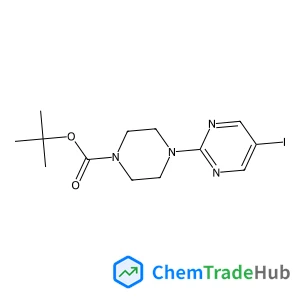
2-Methyl-2-propanyl 4-(5-iodo-2-pyrimidinyl)-1-piperazinecarboxylate
CAS号:
1027616-32-5
分子式:
C13H19IN4O2
推荐供应商





免责声明
本页面提供的学术期刊信息仅供参考和研究使用。我们与任何期刊出版商均无关联,也不处理投稿事宜。如有投稿相关咨询,请直接联系相关期刊出版商。
如发现页面信息有误,请发送邮件至 support@chemtradehub.com 联系我们。我们将及时核实并处理您的问题。