


Silicone dielectric elastomers optimized by crosslinking pattern – a simple approach to high-performance actuators
文献信息
发布日期
2020-03-24
DOI
10.1039/D0PY00223B
影响因子
5.582
作者
Codrin Tugui, George T. Stiubianu, Maria Cazacu
查看原文
摘要
Silicone elastomers are one of the most promising materials for dielectric elastomer transducers (DETs). In the context of the intense research that is being done to improve the electromechanical performances, in terms of dielectric permittivity, Young's modulus and dielectric strength, through increasingly complex, sophisticated approaches, the simple way of optimizing the base polymer seems to have remained less explored. Depending on the real-world applications, these materials can easily be optimized in terms of mechanical and electromechanical properties by using appropriate molecular weight and crosslinking pattern. To demonstrate this, multiple series of silicone elastomer films differing by crosslinking pattern and molecular weight were prepared. Various crosslinking chemistries, more or less common for silicones, were addressed: condensation, dehydrocoupling, hydrosilylation and thiol–ene addition, leading to networks with end-crosslinked or bridged chains topologies, in the latter case the bridges having different lengths and flexibilities. The uniaxial and cyclic stress–strain tests showed a substantial change in the mechanical behaviour through variation of the two structural parameters mentioned. In addition, the crosslinking density determined by solvent swelling method correlate to the mechanical behaviour. Thus, the UV cured elastomeric networks, series R3, showed the lowest Young's modulus, ranging from 0.06 MPa to 0.32 MPa depending on the molecular weight of the involved polymer. By using same polymers as for series R3 but with a different crosslinking pattern based on hydrosilylation reaction of vinyl groups, series R5, the resulting elastomers exhibited a Young's modulus of about twenty times larger and an elongation at break below 50%. The data collected for the series of silicone films demonstrates the choice of optimum molecular weight and crosslinking pattern leads to elastomers without mechanical losses, dielectric strength over 100 V μm−1 or lateral strain of 15% at only 20 V μm−1. This twofold chemical optimization results in materials with targeted properties that can easily be adapted for real-life applications.
期刊推荐

Journal of Chemical Sciences

Chinese Journal of Chemistry
Acta Metallurgica Sinica-English Letters
Biocatalysis and Biotransformation
Electroanalysis

Bioorganic & Medicinal Chemistry

Critical Reviews in Solid State and Materials Sciences
Polycyclic Aromatic Compounds
Journal of Asian Natural Products Research
Medicinal Chemistry Research
相关文献
Recent developments on MOF-based platforms for antibacterial therapy
Yiwei Liu, Luyi Zhou, Ying Dong, Rui Wang, Ying Pan, Shuze Zhuang, Dong Liu, Jianqiang Liu
2021-04-09
Review Article
DOI: 10.1039/D0MD00416B
SF5- and SCF3-substituted tetrahydroquinoline compounds as potent bactericidal agents against multidrug-resistant persister Gram-positive bacteria
Neetu Dayal
2021-08-10
Research Article
DOI: 10.1039/D1MD00211B
Design, synthesis, crystal structure and anti-plasmodial evaluation of tetrahydrobenzo[4,5]thieno[2,3-d]pyrimidine derivatives
Kavita Pal, Md Kausar Raza, Jenny Legac, Md. Ataur Rahman, Shoaib Manzoor, Philip J. Rosenthal, Nasimul Hoda
2021-05-18
Research Article
DOI: 10.1039/D1MD00038A
Recent advances in the discovery of potent RNA-dependent RNA-polymerase (RdRp) inhibitors targeting viruses
Sahil Mishra, Shreya
2020-12-23
Review Article
DOI: 10.1039/D0MD00318B
The role of small molecules in cell and gene therapy
Lewis L. Brayshaw, Carlos Martinez-Fleites, Takis Athanasopoulos, Thomas Southgate, Laurent Jespers, Christopher Herring
2020-12-24
Review Article
DOI: 10.1039/D0MD00221F
Recent advances in the development of covalent inhibitors
Hyunsoo Kim, Yoon Soo Hwang, Mingi Kim
2021-05-04
Review Article
DOI: 10.1039/D1MD00068C
Cucurbit[8]uril-based supramolecular hydrogels for biomedical applications
Zeyu Wang, Mingju Shui, Ian W. Wyman, Qing-Wen Zhang, Ruibing Wang
2021-03-10
Review Article
DOI: 10.1039/D1MD00019E
Synthesis and antitumour evaluation of indole-2-carboxamides against paediatric brain cancer cells
Shahinda S. R. Alsayed, Amreena Suri, Anders W. Bailey, Samuel Lane, Chiang-Ching Huang, Li-Fang Yu, Michael Kassiou, Hendra Gunosewoyo
2021-08-23
Research Article
DOI: 10.1039/D1MD00065A
您可能还喜欢
化合物问答
什么是2-氨基戊烷(CAS号:63493-28-7)?
2-氨基戊烷,又名pentan-2-amine,是一种有机化合物,分子式为C5H11NH2。它是一种无色透明液体,有氨味。该化合物在工业和研究中有一定的应用。
63493-28-7pentan-2-amine
化合物问答
反式-4-[4-[[[5-[(3,4-二氟苯基)氨基]-1,3,4-恶二唑-2-基]羰基]氨基]苯基]环己烷乙酸(CAS号:892489-52-0)的物理化学性质是什么?
该化合物为白色固体,分子量为552.31 g/mol。它在水中溶解度较低,在有机溶剂如乙腈、乙酸乙酯中有较好的溶解性。该化合物具有较高的化学稳定性,对酸和碱具有...
892489-52-0Trans-4-[4-[[[5-[(3,...
化合物问答
如何处理含有Pyrotinib dimaleate(CAS号:1397922-61-0)的废料?
处理含有Pyrotinib dimaleate 的废料时,应遵循当地的法规要求。首先,收集废料并进行分类,确保没有与其他化学品混合。然后,采取适当的物理和化学处...
1397922-61-0(2E)-N-(4-{[3-Chloro...
化合物问答
在合成中是否有4-(5-5-乙基-1,2,4-噁二唑-3-基)苯甲酸乙酯(CAS号:1166756-79-1)的替代品?
在合成过程中,可以考虑使用其他结构类似的化合物作为替代品,例如苯甲酸酯类化合物,如2-乙基-5-甲基噁二唑基苯甲酸乙酯等。这些替代品可能具有相似的化学性质,但在...
1166756-79-1Ethyl 4-(5-ethyl-1,2...
化合物问答
如何处理含有1-((叔丁氧基羰基)氨基)环丁烷甲酸甲酯(CAS号:880166-10-9)的废料?
处理含有该化合物的废液时,应先确保其完全反应并转化为无害物质。对于未反应的化合物,建议采用中和处理后进行蒸馏回收,剩余物可使用化学氧化法或焚烧法进行无害化处理。...
880166-10-9Methyl 1-({[(2-methy...
化合物问答
2-({[3,5-二(三氟甲基)苯基]磺酰基}氨基)-4-(甲基硫代)丁酸甲酯(CAS号:175202-21-8)的市场或研究趋势如何?
目前该化合物主要应用于药物合成领域,尤其在开发新型抗癌药物方面具有潜在应用。随着制药行业的持续发展,对于高效、低毒的合成中间体需求增加,预计该化合物的研究和应用...
175202-21-8Methyl N-{[3,5-bis(t...
化合物问答
N,N-乙烯双(碘乙酰胺)(CAS号:7250-43-3)的物理化学性质是什么?
N,N-乙烯双(碘乙酰胺)是一种白色或类白色固体,易溶于乙醇、丙酮等有机溶剂,但在水中溶解度较低。该化合物具有较高的反应活性,可以与其他含有活性氢的化合物发生酰...
7250-43-3N,N'-1,2-Ethanediylb...
化合物问答
7-Fluoro-1H-spiro[furo[3,4-c]pyridine-3,4'-piperidine](CAS号:1283090-73-2)通常如何合成?
该化合物可以通过环合反应合成,首先合成吡啶和哌啶的衍生物,然后在合适的条件下进行环合反应得到目标化合物。常用的催化剂包括某些金属盐类,产率一般在70%-90%之...
1283090-73-27-Fluoro-1H-spiro[fu...
化合物问答
处理3-乙酰滇乌碱(CAS号:80787-51-5)时应注意哪些实验室安全事项?
在处理3-乙酰滇乌碱时,应穿戴适当的个人防护装备(PPE),如实验服、手套(丁腈手套或PVC手套)、护目镜和口罩。实验应在通风橱中进行,以减少吸入或皮肤接触的风...
80787-51-54-Methylaconitane-1,...
化合物问答
如何储存2-溴-5-硝基-4-羧酸(CAS号:1053655-82-5)?
2-溴-5-硝基-4-羧酸应存放在阴凉、干燥、通风良好的地方,远离火源和热源。避免与还原剂、碱性物质接触。储存容器应密封,防止吸湿。
1053655-82-52-Bromo-5-nitropyrid...
来源期刊
Polymer Chemistry

CiteScore:
8.6
自引率:
7.3%
年发文量:
457
Polymer Chemistry welcomes submissions in all areas of polymer science that have a strong focus on macromolecular chemistry. Manuscripts may cover a broad range of fields, yet no direct application focus is required.
推荐化合物
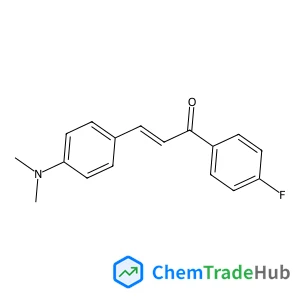
![1-(2-Chlorophenyl)-6-[(2S)-3,3,3-trifluoro-2-methylpropyl]-1,7-dihydro-4H-pyrazolo[3,4-d]pyrimidin-4-one structure](https://cnstatic.chemtradehub.com/structs/794/794568-91-5-0c34.webp "1-(2-Chlorophenyl)-6-[(2S)-3,3,3-trifluoro-2-methylpropyl]-1,7-dihydro-4H-pyrazolo[3,4-d]pyrimidin-4-one structure")
-1,2-cyclohexanediamine structure](https://cnstatic.chemtradehub.com/structs/928/928769-12-4-a4f0.webp "N,N'-Bis[3-(2-methoxyphenyl)-2-hydroxybenzyl](1R,2R)-1,2-cyclohexanediamine structure")
推荐供应商






免责声明
本页面提供的学术期刊信息仅供参考和研究使用。我们与任何期刊出版商均无关联,也不处理投稿事宜。如有投稿相关咨询,请直接联系相关期刊出版商。
如发现页面信息有误,请发送邮件至 support@chemtradehub.com 联系我们。我们将及时核实并处理您的问题。