


![4-[(2-Fluoro-4-methylphenyl)amino]-6-[4-(2-hydroxyethyl)-1-piperazinyl]-7-methoxy-3-cinnolinecarboxamide structure](https://cnstatic.chemtradehub.com/structs/104/1041852-85-0-fb1c.webp "4-[(2-Fluoro-4-methylphenyl)amino]-6-[4-(2-hydroxyethyl)-1-piperazinyl]-7-methoxy-3-cinnolinecarboxamide structure")
An alternative biorefinery approach to address microalgal seasonality: blending with spent coffee grounds
文献信息
发布日期
2020-05-29
DOI
10.1039/D0SE00164C
影响因子
6.367
作者
Andre Prates Pereira, Tao Dong, Eric P. Knoshaug, Nick Nagle, Ryan Spiller, Bonnie Panczak, Christopher J. Chuck, Philip T. Pienkos
查看原文
摘要
An effective method for the production of fuels and chemicals from microalgae is to ferment the carbohydrate fraction, extract the lipids and convert the resulting solids through hydrothermal liquefaction (HTL). In this process, known as Combined Algal Processing (CAP), multiple fuel precursors are produced effectively. However, one of the key challenges associated with a microalgae-based biorefinery is the reduced productivity of algae in the colder seasons. In this investigation, the potential for spent coffee grounds (SCG), a potentially valuable waste stream, to be blended with biomass from the microalgae Scenedesmus acutus (HCSD) to make up for the productivity shortfalls in periods of lower microalgae productivity to maximize the capacity for downstream equipment throughout the year was evaluated. Two different blend ratios were compared to only microalgae biomass or SCG, one representing winter season (40% microalgae and 60% SCG – blend 1) and another representing autumn and early spring (60% microalgae and 40% SCG – blend 2). Pretreatment of the blends showed higher monosaccharide release yields compared to microalgae alone, with an increase in mannose and galactose specifically. In the fermentation of the pretreated slurries, all the monosaccharides were consumed, resulting in ethanol titers of up to 23 g L−1 for the SCG blend, compared to 14 g L−1 ethanol for the algae alone. The lipid extraction from the blends resulted in yields of 95.5–99.7% (which translates to 173.8–193.5 kg per tonne of dry biomass processed in this biorefinery scenario) compared to 92.2% in HCSD (216.2 kg per tonne of dry biomass) and 68.1% in SCG (90.8 kg per tonne of dry biomass) alone. The residual solids left after fermentation and lipid extraction were converted via hydrothermal liquefaction (HTL) to produce bio-crude. The bio-crude yield was higher for microalgae (24.6%) than for the two blend cases (blend 1–17.5% and blend 2–19.7%). Theoretical energy calculations showed that the addition of SCG gave similar yields of fuel (gallon of gasoline equivalents) from the blends when compared to microalgae alone (94.7–96.5% depending on the blend of SCG). This work demonstrates that SCG can be easily incorporated with microalgae into a combined processing methodology and can therefore be used effectively during periods of lower availability of microalgae maintaining maximum operating levels of the conversion process equipment year-round. Moreover, co-processing algae with SCG not only leads to increased ethanol titers in the fermentation but also improves the lipid extraction yields.
期刊推荐
Chemistry of Materials
Heterocyclic Communications
Advances in Cement Research
Advanced Composite Materials
Main Group Metal Chemistry
Bio-Medical Materials and Engineering

Journal of Computer-Aided Molecular Design

Construction and Building Materials
Current Medicinal Chemistry
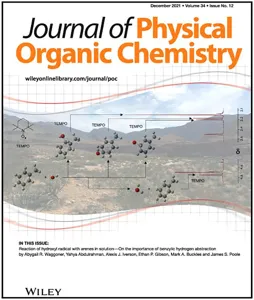
Journal of Physical Organic Chemistry
相关文献
Unraveling the kinetics of the structural development during polymerization-induced self-assembly: decoupling the polymerization and the micelle structure
Rintaro Takahashi, Shotaro Miwa, Ji Ha Lee, Shota Fujii, Noboru Ohta, Kazuo Sakurai
2020-01-14
Paper
DOI: 10.1039/C9PY01810G
Synthesis and self-assembly of polyethersulfone-based amphiphilic block copolymers as microparticles for suspension immunosensors
Weibin Hu, Xiaohong He, Yun Bai, Li Zheng, Yiguo Hu, Pan Wang, Xiaobo Liu, Kun Jia
2020-01-06
Paper
DOI: 10.1039/C9PY01701A
Self-healing magnetic nanocomposites with robust mechanical properties and high magnetic actuation potential prepared from commodity monomers via graft-from approach
Hurik Muradyan, Davoud Mozhdehi, Zhibin Guan
2020-02-04
Communication
DOI: 10.1039/C9PY01700C
Mesochiral phases from the self-assembly of chiral block copolymers
Kai-Chieh Yang, Po-Ting Chiu, Rong-Ming Ho
2020-01-22
Perspective
DOI: 10.1039/C9PY01797F
RAFT dispersion polymerisation of lauryl methacrylate in ethanol–water binary mixtures: synthesis of diblock copolymer vesicles with deformable membranes
R. R. Gibson, E. J. Cornel, O. M. Musa, A. Fernyhough, S. P. Armes
2020-01-29
Paper
DOI: 10.1039/C9PY01768B
Zwitterionic copolymerization of γ-butyrolactone with 3,3-bis(chloromethyl) oxacyclobutane catalyzed by scandium triflates
2020-01-27
Paper
DOI: 10.1039/C9PY01532A
Enzyme-mediated reversible deactivation radical polymerization for functional materials: principles, synthesis, and applications
Qingyun Xiong, Xiaoyuan Zhang, Wenfeng Wei, Zhiqiang Su
2020-02-14
Review Article
DOI: 10.1039/D0PY00136H
Ring opening copolymerization of ε-caprolactone and diselenic macrolide carbonate for well-defined poly(ester-co-carbonate): kinetic evaluation and ROS/GSH responsiveness
Jiahao Wang, Chuanhao Sun, Jieni Hu, Yanling Huang, Yunxiang Lu, Yan Zhang
2020-01-07
Paper
DOI: 10.1039/C9PY01788G
您可能还喜欢
化合物问答
处理2-异丙基-5-羧基-1,3-二氧六环(CAS号:116193-72-7)时应注意哪些实验室安全事项?
处理2-异丙基-5-羧基-1,3-二氧六环时应注意以下安全事项:1. 戴上防护眼镜和手套,避免直接接触皮肤和眼睛。2. 在通风橱中操作,确保空气流通。3. 防止...
116193-72-72-Isopropyl-1,3-diox...
化合物问答
2-Hydroxy-N,N-dimethyl-2-phenylacetamide(CAS号:2019-71-8)的市场或研究趋势如何?
该化合物在制药和精细化工领域具有一定的应用,特别是在药物合成中作为中间体。随着环保意识的提高,市场对更安全、更环保的化学品的需求增加,因此该化合物的研究趋势倾向...
2019-71-82-Hydroxy-N,N-dimeth...
化合物问答
4-(1H-吡唑-3-基)哌啶(CAS号:278798-08-6)应用于哪些行业?
4-(1H-吡唑-3-基)哌啶在医药领域有潜在应用,可用于合成药物中间体。此外,在聚合物和传感器领域也有一定的应用前景,可以作为功能材料的一部分。
278798-08-64-(1H-Pyrazol-3-yl)p...
化合物问答
什么是三氯噻嗪(CAS号:133-67-5)?
三氯噻嗪是一种化学物质,其英文名称为6-Chloro-3-(dichloromethyl)-3,4-dihydro-2H-1,2,4-benzothiadiaz...
133-67-56-Chloro-3-(dichloro...
化合物问答
阿螺旋霉素(CAS号:467214-20-6)通常如何合成?
阿螺旋霉素的合成通常采用生物发酵技术,首先从特定的链霉菌提取前体物质,然后通过一系列化学修饰步骤,如酰胺化、环化等,最终得到阿螺旋霉素。常用的催化剂包括有机酸等...
467214-20-6Alvespimycin Hydroch...
化合物问答
什么是2-(二甲基氨基)-5-硝基苯甲酸(CAS号:4405-28-1)?
2-(二甲基氨基)-5-硝基苯甲酸是一种化学化合物,其分子式为C9H11N2O4。该化合物具有一定的生物活性和化学性质,常用于医药、农药及研究领域。
4405-28-12-(Dimethylamino)-5-...
化合物问答
1-苯基-1H-吡唑-4-甲酸甲酯(CAS号:7188-96-7)应用于哪些行业?
1-苯基-1H-吡唑-4-甲酸甲酯主要应用于医药行业,用作合成其他药物的中间体。此外,它还可能在聚合物、传感器等领域有应用。
7188-96-7Methyl 1-phenyl-1h-p...
化合物问答
1-(三异丙基甲硅烷基氧基)环丙烷羧酸甲酯(CAS号:83010-83-7)应用于哪些行业?
该化合物主要用于有机合成中间体领域,特别是在医药合成中作为关键中间体。它也可用于聚合物合成和传感器材料制备。由于其特殊的环丙烷结构和甲硅烷基氧基团,它在半导体材...
83010-83-77-Methoxy-8-nitroqui...
215319-47-4Balanophonin, (+)-
化合物问答
如何处理含有对甲苯氧基乙酸肼(CAS号:36304-39-9)的废料?
含有对甲苯氧基乙酸肼的废料应首先通过中和或沉淀等方法进行预处理,以降低其毒性。然后,可以采用焚烧或交由专业废物处理公司进行安全处置。根据当地法规和环境标准,务必...
36304-39-92-(4-Methylphenoxy)a...
来源期刊
推荐化合物
![9-Ethyl-3-{(E)-[ethyl(2-methylphenyl)hydrazono]methyl}-9H-carbazole structure](https://cnstatic.chemtradehub.com/structs/127/1274948-12-7-301f.webp "9-Ethyl-3-{(E)-[ethyl(2-methylphenyl)hydrazono]methyl}-9H-carbazole structure")
推荐供应商




免责声明
本页面提供的学术期刊信息仅供参考和研究使用。我们与任何期刊出版商均无关联,也不处理投稿事宜。如有投稿相关咨询,请直接联系相关期刊出版商。
如发现页面信息有误,请发送邮件至 support@chemtradehub.com 联系我们。我们将及时核实并处理您的问题。