






![2,9-Dichloro-5,12-dihydroquinolino[2,3-b]acridine-7,14-dione structure](https://cnstatic.chemtradehub.com/structs/308/3089-17-6-750b.webp "2,9-Dichloro-5,12-dihydroquinolino[2,3-b]acridine-7,14-dione structure")
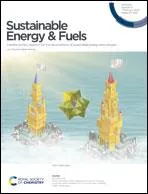
High performance binder-free Fe–Ni hydroxides on nickel foam prepared in piranha solution for the oxygen evolution reaction
文献信息
发布日期
2020-10-26
DOI
10.1039/D0SE01253J
影响因子
6.367
作者
Choel-Hwan Shin, Yi Wei, Gisang Park, Joonhee Kang
查看原文
摘要
Nickel foam (NF) can be directly utilized as an electrochemical electrode because of its conductive, rigid and porous structure. Herein, a novel robust binder-free Fe–Ni hydroxide-loaded NF electrode is prepared by simple corrosion of NF in a home-made piranha solution with an Fe3+ precursor. The roughened NF surface observed after the sample treatment indicates the formation of active species associated with amorphous Fe-hydroxide and/or FeNi-hydroxide particles. The piranha solution-corroded NF electrode generates more hydroxide groups compared to the water-corroded NF electrode, and exhibits remarkable electrochemical oxygen evolution reaction activity in alkaline medium with a low overpotential of 245 mV at 10 mA cm−2. It also maintains low working potential below 267 mV at 10 mA cm−2 over 500 h operation without any sign of degradation, indicating excellent long-term stability, which can be attributed to the robust binder-free electrode and the cooperative synergistic interaction between Fe-hydroxides and Ni-hydroxides in the FeNi hybrid composite of individually incompetent OER components, generated over the NF. The role of Fe doped in Ni(OH)2 is theoretically studied by DFT calculations, and it is found that the adsorption free energies of OH* and OOH* are significantly reduced by the addition of Fe into Ni(OH)2, accelerating the OER compared to bare Ni(OH)2. Furthermore, when the active electrode is equipped with a solar cell, a high current density of 23–24 mA cm−2 is observed for 10 h under AM 1.5G 1 sun irradiation, suggesting high possibility for the production of green hydrogen from renewable solar energy.
相关文献
Porous MnO nanoplate–graphene hybrid as a high-capacity anode material for lithium ion batteries and its safety characteristics
Xiang-Ning Song, Qian Ma, Yuan Yuan, Ke-Feng Wan, Hong-Zhe Zhang, Lang Huang
2023-12-22
Paper
DOI: 10.1039/D3NJ04986H
Solution-processed filamentous copper phthalocyanine films for enhanced NO2 gas sensing at room temperature
Ziyang Cui, Lu Wang, Yangyang Zhu, Yiqun Zhang, Li Juan Wang
2023-12-07
Paper
DOI: 10.1039/D3NJ05597C
Palladium-catalyzed α-arylation/β-elimination of sulfones
Mengzhao Yu, Luqiong Duan, Xinwei Zhang, Qian Zhang, Hongzhen Wang, Xiaolei Huang
2023-12-11
Communication
DOI: 10.1039/D3NJ04668K
153Sm-labeled Fe3O4@lapatinib nanoparticles as a potential therapeutic agent for breast cancer: synthesis, quality control, and in vivo evaluation
Thanh Minh Pham, Dong Vu Cao, Ho Hong Quang Dang, Phuoc Minh Thanh Mai, Thanh Binh Nguyen, Ngoc Bao Nam Dinh, Thi Khanh Giang Nguyen, Thi Mai Huong Le, Van Dat Doan, Duc Thuan Nguyen
2023-12-11
Paper
DOI: 10.1039/D3TB01957H
Silver(i)-catalyzed stereoselective Meyer–Schuster-type rearrangement: synthesis of densely substituted α-iodo α,β-unsaturated thioesters
José L. Lopes, Lucas L. Baldassari, Diogo S. Lüdtke
2023-12-07
Paper
DOI: 10.1039/D3NJ05144G
A high performance and long-cycling bi-functional carbon electrode derived from Phyllanthus emblica (amla) for potassium ion batteries and supercapacitors
Chandra Sekhar Bongu, Arthi Gopalakrishnan, Chandra Shekhar Sharma
2023-12-01
Paper
DOI: 10.1039/D3NJ04362B
Probing the effect of substituents and solvent on [Mn(R-sal-N-1,5,8,12)]BPh4: a systematic investigation of SCO properties
Sen-Yu Zhang, Hao-Ze Zhang, Hua-wei Zhou, Sheng-Ze Zhao, Yong-Hua Li, Chao Tang, Shi Wang
2023-12-20
Paper
DOI: 10.1039/D3NJ03277A
Immunological strip sensor for the rapid determination of niacin in dietary supplements and foods
2023-12-07
Paper
DOI: 10.1039/D3TB02209A
Bio-conjugated carbon dots for the bimodal detection of prostate cancer biomarkers via sandwich fluorescence and electrochemical immunoassays
Jyoti Korram, Amarnath Chellachamy Anbalagan, Anannya Banerjee
2023-12-11
Paper
DOI: 10.1039/D3TB02090H
Emerging perspectives on 3D printed bioreactors for clinical translation of engineered and bioprinted tissue constructs
Madhumithra Thangadurai, Sai Sadhananth Srinivasan, Muthu Parkkavi Sekar, Swaminathan Sethuraman, Dhakshinamoorthy Sundaramurthi
2023-11-17
Review Article
DOI: 10.1039/D3TB01847D
您可能还喜欢
化合物问答
什么是5-Fluoro-4-iodo-2-methylaniline(CAS号:307306-08-7)?
5-氟-4-碘-2-甲氨基苯属于芳香族化合物,其分子式为C8H7FN2I。该化合物具有一定的反应活性,在有机合成和药物化学领域有一定的应用。
307306-08-75-Fluoro-4-iodo-2-me...
化合物问答
4-氟-3-硝基三氟甲苯(CAS号:367-86-2)通常如何合成?
4-氟-3-硝基三氟甲苯通常通过将三氟甲基苯在酸性条件下催化氧化为三氟甲基硝基苯,然后进行氟化反应得到目标化合物。该过程需要使用催化剂,如三氟乙酸,反应产率较高...
367-86-21-Fluoro-2-nitro-4-(...
化合物问答
6-氯-9-(2,3,5-三苯甲酰氧基-2-C-甲基-beta-D-呋喃核糖基)-9H-嘌呤(CAS号:205171-05-7)的物理化学性质是什么?
该化合物为白色至类白色晶体,分子量约为1046.95。它在水中几乎不溶,在有机溶剂如乙腈和甲醇中具有一定的溶解性。该化合物具有良好的化学稳定性和生物活性。
205171-05-76-Chloro-9-(2-C-meth...
化合物问答
如何储存6-氟喹啉-4-羧酸(CAS号:220844-73-5)?
6-氟喹啉-4-羧酸应储存在阴凉、干燥、通风良好的地方,避免阳光直射。储存在密闭容器中,避免与空气中的水分接触。储存温度应控制在室温以下,避免高温。
220844-73-56-Fluoroquinoline-4-...
化合物问答
(2S,2'S,3S,3'S)-3,3'-di-tert-butyl-4,4'-bis(2,6-dimethoxyphenyl)-2,2',3,3'-tetrahydro-2,2'-bibenzo[d][1,3]oxaphosphole(CAS号:1435940-21-8)通常如何合成?
该化合物通常通过芳香族化合物的亲核取代反应合成,首先将2,6-二甲氧基苯基引入到双环结构中,然后通过特定条件下的还原或氧化反应引入二叔丁基。反应过程中使用了钯作...
1435940-21-8(2S,2'S,3S,3'S)-4,4'...
化合物问答
如何储存KY02111(CAS号:1118807-13-8)?
KY02111应储存于阴凉、干燥、通风良好的地方,避免阳光直射和高温环境。应使用合适的密闭容器储存,并确保容器密封良好,防止水分和潮气进入。在储存期间,应注意检...
1118807-13-8N-(6-chlorobenzo[d]t...
化合物问答
如何储存4-(4-氯苯氧基)丁酸乙酯(CAS号:59227-79-1)?
4-(4-氯苯氧基)丁酸乙酯应储存在阴凉、干燥、通风良好的地方,远离火源和热源。避免阳光直射,防止容器破裂导致泄漏。储存时应保持容器密封,避免与空气中的水蒸气接...
59227-79-1Ethyl 4-(4-chlorophe...
化合物问答
4-庚基苯乙酮(CAS号:37593-03-6)安全吗?
4-庚基苯乙酮相对安全,但在使用和储存时仍需注意。应避免吸入其蒸气,避免皮肤接触,使用时需佩戴防护眼镜和手套。储存时应远离火源和热源,保持容器密封,放置于阴凉、...
37593-03-61-(4-Heptylphenyl)et...
化合物问答
什么是乙基2-氨基-4-(3-溴苯基)噻吩-3-羧酸乙酯(CAS号:438218-48-5)?
乙基2-氨基-4-(3-溴苯基)噻吩-3-羧酸乙酯是一种有机化合物,分子式为C16H12BrN2O2S。它是一种含有噻吩环、氨基、溴苯基和羧酸酯结构的化合物。这...
438218-48-5ethyl 2-amino-4-(3-b...
化合物问答
什么是(9ci)-2-氨基-6-甲基-苯甲酰胺(CAS号:1885-31-0)?
(9ci)-2-氨基-6-甲基-苯甲酰胺是一种化学化合物,其英文名称为2-Amino-6-methylbenzamide,CAS号为1885-31-0。该化合物...
1885-31-02-Amino-6-methylbenz...
来源期刊
推荐化合物
推荐供应商




免责声明
本页面提供的学术期刊信息仅供参考和研究使用。我们与任何期刊出版商均无关联,也不处理投稿事宜。如有投稿相关咨询,请直接联系相关期刊出版商。
如发现页面信息有误,请发送邮件至 support@chemtradehub.com 联系我们。我们将及时核实并处理您的问题。