



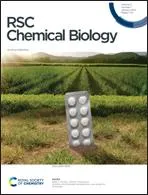
Reactive oxygen species, proinflammatory and immunosuppressive mediators induced in COVID-19: overlapping biology with cancer
文献信息
发布日期
2021-06-30
DOI
10.1039/D1CB00042J
影响因子
0
作者
查看原文
摘要
This review analyzes the published literature linking the different mechanisms focused on oxidative stress and inflammation that contribute to COVID-19 disease severity. The objective is to bring together potential proinflammatory mechanisms of COVID-19 pathogenesis and address mitigation strategies using naturally occurring compounds and FDA-approved drugs. Outstanding questions addressed include the following: What is the mechanistic basis for linking enhanced vulnerability in COVID-19 to increased oxidative damage and proinflammatory mediators (e.g., cytokines), especially in high-risk people? Can we repurpose anti-inflammatory and immunomodulatory agents to mitigate inflammation in COVID-19 patients? How does 2-deoxy-D-glucose function as an anti-COVID drug? COVID-19, cancer biology, and immunotherapy share many mechanistic similarities. Repurposing drugs that already have been FDA-approved for mitigating inflammation and immunosuppression in cancer may be a way to counteract disease severity, progression, and chronic inflammation in COVID-19. What are the long-term effects of reactive oxygen species-inducing immune cells and sustained inflammation in so-called long-haulers (long COVID) after recovery from COVID-19? Can we use mitochondria-targeted agents prophylactically to prevent inflammation and boost immunity in long-haulers? Addressing the oxidative chemical biology of COVID-19 and the mechanistic commonalities with cancer may provide new insights potentially leading to appropriate clinical trials and new treatments.
相关文献
Zeolitic polyoxometalates metal organic frameworks (Z-POMOF) with imidazole ligands and ε-Keggin ions as building blocks; computational evaluation of hypothetical polymorphs and a synthesis approach
L. Marleny Rodriguez Albelo, A. Rabdel Ruiz-Salvador, Dewi W. Lewis, Ariel Gómez, Pierre Mialane, Jérome Marrot, Anne Dolbecq, Alvaro Sampieri, Caroline Mellot-Draznieks
2010-06-30
Paper
DOI: 10.1039/C004234J
Effect of comonomer content on the crystallization kinetics and morphology of biodegradable poly(3-hydroxybutyrate-co-3-hydroxyhexanoate)
Haoyuan Cai, Zhaobin Qiu
2009-08-26
Paper
DOI: 10.1039/B907677H
NMR and DFT study on media effects on proton transfer in hydrogen bonding: concept of molecular probe with an application to ionic and super-polar liquids
Vytautas Balevicius, Zofia Gdaniec, Kestutis Aidas
2009-07-27
Paper
DOI: 10.1039/B819666D
Laser-induced 3D alignment and orientation of quantum state-selected molecules
Iftach Nevo, Lotte Holmegaard, Jens H. Nielsen, Jonas L. Hansen, Frank Filsinger, Gerard Meijer, Jochen Küpper
2009-08-25
Paper
DOI: 10.1039/B910423B
An in-depth theoretical approach to the design of Cu(ii) hybrid-spin magnets
Julia Romanova, Tsveta Miteva, Anela Ivanova, Alia Tadjer, Martin Baumgarten
2009-08-21
Paper
DOI: 10.1039/B908858J
Vibrational relaxation of NO (v = 1–16) with NO, N2O, NO2, He and Ar studied by time-resolved Fourier transform infrared emission
Gus Hancock, Marc Morrison, Mark Saunders
2009-07-23
Paper
DOI: 10.1039/B909195E
Understanding underlying processes in formic acidfuelcells
Sunghyun Uhm, Hye Jin Lee
2009-08-04
Perspective
DOI: 10.1039/B909525J
Molecular dynamics simulation of 13C NMR powder lineshapes of CO in structure I clathrate hydrate
H. Mohammadi-Manesh, Saman Alavi, Tom K. Woo, Mahmud Ashrafizaadeh, Bijan Najafi
2009-07-31
Paper
DOI: 10.1039/B905233J
您可能还喜欢
化合物问答
4-[[6-(3-苯基苯基)-7H-嘌呤-2-基]氨基]苯磺酰胺(CAS号:2079895-42-2)适用哪些法规指南?
该化合物需遵循REACH法规以确保其安全使用和管理。同时,根据其潜在的生物降解性和毒性,也需要符合GHS分类中的相应要求。此外,若用于医药或食品相关领域,则还需...
2079895-42-24-{[6-(3-Biphenylyl)...
化合物问答
反式-度骨化醇(CAS号:74007-20-8)的物理化学性质是什么?
反式-度骨化醇是一种脂溶性维生素D3的衍生物,呈无色或白色结晶性粉末,不溶于水,溶于乙醇、丙酮、氯仿等有机溶剂。其分子式为C28H44O,分子量为404.65。...
74007-20-8trans-Doxercalcifero...
化合物问答
莲花掌苷(CAS号:59282-56-3)的市场或研究趋势如何?
莲花掌苷作为一种天然产物,近年来在抗炎、抗癌等生物活性研究方面显示出一定的潜力,因此市场需求逐渐增长。市场动态方面,随着天然产物开发的深入,预计该化合物的研究会...
59282-56-3Lindleyin
化合物问答
2-溴-6-(吡咯烷-1-基)吡啶-4-硼酸频那醇酯(CAS号:1150271-64-9)应用于哪些行业?
2-溴-6-(吡咯烷-1-基)吡啶-4-硼酸频那醇酯在医药领域有着广泛的应用,它可以用作药物合成中的中间体。此外,它还可以用于有机合成,特别是在构建复杂杂环化合...
1150271-64-92-Bromo-6-(1-pyrroli...
化合物问答
什么是methyl 2-(4-bromophenyl)-3-methylbutanoate(CAS号:1061284-70-5)?
methyl 2-(4-溴苯基)-3-甲基丁酸甲酯是一种化学物质,分子式为C12H13BrO2。它是一种有机化合物,具有一定的挥发性和易燃性。
1061284-70-52-(4-Bromo-phenyl)-3...
化合物问答
CJC1-295(CAS号:863288-34-0)的物理化学性质是什么?
CJC1-295是一种具有复杂肽链结构的化合物,其分子量约为1875 Da。该化合物在水中具有一定的溶解性,但在有机溶剂中的溶解性不佳。它是一种反应活性化合物,...
863288-34-0L-tyrosyl-D-alanyl-L...
化合物问答
三正丁基锍碘(CAS号:18146-62-8)的市场或研究趋势如何?
三正丁基锍碘作为一种重要的有机硫化合物,主要用于有机合成中作为亲电试剂。近年来,由于其在合成中的广泛应用,市场对其需求持续增长。此外,随着绿色化学的发展,对其替...
18146-62-8Tributylsulfonium io...
化合物问答
雌二醇-[13C3]同位素内标(CAS号:1261254-48-1)通常如何合成?
雌二醇-[13C3]同位素内标通常通过在雌二醇分子中引入[13C3]同位素来合成。常见的方法是通过化学标记反应,如与[13C3]标记的甲基溴化物进行亲核取代反应...
1261254-48-117beta-Estradiol-2,3...
化合物问答
N1-(2-吡啶甲基)-N2-(2-甲基-1-萘基)草酰胺(CAS号:2611225-93-3)的物理化学性质是什么?
N1-(2-吡啶甲基)-N2-(2-甲基-1-萘基)草酰胺为固体化合物,具有良好的结晶形态,分子量为340.34 g/mol。该化合物在水中的溶解度较低,但在有...
2611225-93-3N-(2-Methyl-1-naphth...
化合物问答
如何处理含有十五碳烯酸甲酯(顺-10)(C15:1)标准品(CAS号:90176-52-6)的废料?
含有十五碳烯酸甲酯(顺-10)(C15:1)标准品的废料应首先进行适当收集和储存,避免与其他化学品混合。然后,可采用焚烧或交由专业废物处理公司进行处理。处理过程...
90176-52-6(Z)-10-Pentadecenoic...
来源期刊
推荐化合物
![5-Acetyl-2,3-dihydrobenzo[b]furan structure](https://cnstatic.chemtradehub.com/structs/908/90843-31-5-eea4.webp "5-Acetyl-2,3-dihydrobenzo[b]furan structure")
推荐供应商




免责声明
本页面提供的学术期刊信息仅供参考和研究使用。我们与任何期刊出版商均无关联,也不处理投稿事宜。如有投稿相关咨询,请直接联系相关期刊出版商。
如发现页面信息有误,请发送邮件至 support@chemtradehub.com 联系我们。我们将及时核实并处理您的问题。