



Computational approaches to dissociative chemisorption on metals: towards chemical accuracy
文献信息
发布日期
2021-03-30
DOI
10.1039/D1CP00044F
影响因子
3.676
作者
查看原文
摘要
We review the state-of-the-art in the theory of dissociative chemisorption (DC) of small gas phase molecules on metal surfaces, which is important to modeling heterogeneous catalysis for practical reasons, and for achieving an understanding of the wealth of experimental information that exists for this topic, for fundamental reasons. We first give a quick overview of the experimental state of the field. Turning to the theory, we address the challenge that barrier heights (Eb, which are not observables) for DC on metals cannot yet be calculated with chemical accuracy, although embedded correlated wave function theory and diffusion Monte-Carlo are moving in this direction. For benchmarking, at present chemically accurate Eb can only be derived from dynamics calculations based on a semi-empirically derived density functional (DF), by computing a sticking curve and demonstrating that it is shifted from the curve measured in a supersonic beam experiment by no more than 1 kcal mol−1. The approach capable of delivering this accuracy is called the specific reaction parameter (SRP) approach to density functional theory (DFT). SRP-DFT relies on DFT and on dynamics calculations, which are most efficiently performed if a potential energy surface (PES) is available. We therefore present a brief review of the DFs that now exist, also considering their performance on databases for Eb for gas phase reactions and DC on metals, and for adsorption to metals. We also consider expressions for SRP-DFs and briefly discuss other electronic structure methods that have addressed the interaction of molecules with metal surfaces. An overview is presented of dynamical models, which make a distinction as to whether or not, and which dissipative channels are modeled, the dissipative channels being surface phonons and electronically non-adiabatic channels such as electron–hole pair excitation. We also discuss the dynamical methods that have been used, such as the quasi-classical trajectory method and quantum dynamical methods like the time-dependent wave packet method and the reaction path Hamiltonian method. Limits on the accuracy of these methods are discussed for DC of diatomic and polyatomic molecules on metal surfaces, paying particular attention to reduced dimensionality approximations that still have to be invoked in wave packet calculations on polyatomic molecules like CH4. We also address the accuracy of fitting methods, such as recent machine learning methods (like neural network methods) and the corrugation reducing procedure. In discussing the calculation of observables we emphasize the importance of modeling the properties of the supersonic beams in simulating the sticking probability curves measured in the associated experiments. We show that chemically accurate barrier heights have now been extracted for DC in 11 molecule–metal surface systems, some of which form the most accurate core of the only existing database of Eb for DC reactions on metal surfaces (SBH10). The SRP-DFs (or candidate SRP-DFs) that have been derived show transferability in many cases, i.e., they have been shown also to yield chemically accurate Eb for chemically related systems. This can in principle be exploited in simulating rates of catalyzed reactions on nano-particles containing facets and edges, as SRP-DFs may be transferable among systems in which a molecule dissociates on low index and stepped surfaces of the same metal. In many instances SRP-DFs have allowed important conclusions regarding the mechanisms underlying observed experimental trends. An important recent observation is that SRP-DFT based on semi-local exchange DFs has so far only been successful for systems for which the difference of the metal work function and the molecule's electron affinity exceeds 7 eV. A main challenge to SRP-DFT is to extend its applicability to the other systems, which involve a range of important DC reactions of e.g. O2, H2O, NH3, CO2, and CH3OH. Recent calculations employing a PES based on a screened hybrid exchange functional suggest that the road to success may be based on using exchange functionals of this category.
期刊推荐
Journal of the American Chemical Society
Accounts of Chemical Research

Bulletin of the Chemical Society of Japan

Anti-Corrosion Methods and Materials

Chemistry of Heterocyclic Compounds
Chemical & Pharmaceutical Bulletin
Journal of the Chinese Chemical Society

Biopolymers

Ferroelectrics
Advances in Colloid and Interface Science
相关文献
The vicinal F–C–C–F moiety as a tool for influencing peptide conformation
Martin Schüler, David O'Hagan, Alexandra M. Z. Slawin
2005-07-14
Communication
DOI: 10.1039/B506010A
Evidence of carbon–carbon bond formation on GaAs(100) via Fischer–Tropsch methyleneinsertion reaction mechanism
Neil T. Kemp, Nagindar K. Singh
2005-08-02
Communication
DOI: 10.1039/B506195D
A simple synthesis of mesoporous carbons with tunable mesopores using a colloidal template-mediated vapor deposition polymerization
Jyongsik Jang, Byungkwon Lim, Moonjung Choi
2005-07-22
Communication
DOI: 10.1039/B506265A
Directional control of π-stacked building blocks for crystal engineering: the 1,8-naphthalimide synthon
Daniel L. Reger, J. Derek Elgin, Radu F. Semeniuc, Perry J. Pellechia, Mark D. Smith
2005-07-14
Communication
DOI: 10.1039/B504998A
Ketonization of the remarkably strongly acidic elongated enol generated by flash photolytic decarboxylation of p-benzoylphenylacetic acid in aqueous solution
Yvonne Chiang, A. Jerry Kresge, Ikenna Onyido, John P. Richard, Peter Wan, Musheng Xu
2005-07-27
Communication
DOI: 10.1039/B506706E
2-Phenallyl as a versatile protecting group for the asymmetric one-pot three-component synthesis of propargylamines
Nina Gommermann, Paul Knochel
2005-07-26
Communication
DOI: 10.1039/B507810E
Amphiphilic p-sulfonatocalix[4]arene-coated CdSe/ZnS quantum dots for the optical detection of the neurotransmitter acetylcholine
Takashi Jin, Fumihiko Fujii, Hiroshi Sakata, Mamoru Tamura, Masataka Kinjo
2005-07-11
Communication
DOI: 10.1039/B506608E
Total synthesis of buergerinin F via effective construction of the asymmetric quaternary carbons using an enantioselective aldol reaction
Isamu Shiina, Yo-ichi Kawakita, Ryoutarou Ibuka, Kazutoshi Yokoyama, Yu-suke Yamai
2005-07-14
Communication
DOI: 10.1039/B507401K
Immobilization of ionic liquid with polyelectrolyte as carrier
Yanfei Shen, Yuanjian Zhang, Qixian Zhang, Tianyan You, Ari Ivaska
2005-07-20
Communication
DOI: 10.1039/B507688A
您可能还喜欢
化合物问答
4-[[6-(3-苯基苯基)-7H-嘌呤-2-基]氨基]苯磺酰胺(CAS号:2079895-42-2)适用哪些法规指南?
该化合物需遵循REACH法规以确保其安全使用和管理。同时,根据其潜在的生物降解性和毒性,也需要符合GHS分类中的相应要求。此外,若用于医药或食品相关领域,则还需...
2079895-42-24-{[6-(3-Biphenylyl)...
化合物问答
反式-度骨化醇(CAS号:74007-20-8)的物理化学性质是什么?
反式-度骨化醇是一种脂溶性维生素D3的衍生物,呈无色或白色结晶性粉末,不溶于水,溶于乙醇、丙酮、氯仿等有机溶剂。其分子式为C28H44O,分子量为404.65。...
74007-20-8trans-Doxercalcifero...
化合物问答
莲花掌苷(CAS号:59282-56-3)的市场或研究趋势如何?
莲花掌苷作为一种天然产物,近年来在抗炎、抗癌等生物活性研究方面显示出一定的潜力,因此市场需求逐渐增长。市场动态方面,随着天然产物开发的深入,预计该化合物的研究会...
59282-56-3Lindleyin
化合物问答
2-溴-6-(吡咯烷-1-基)吡啶-4-硼酸频那醇酯(CAS号:1150271-64-9)应用于哪些行业?
2-溴-6-(吡咯烷-1-基)吡啶-4-硼酸频那醇酯在医药领域有着广泛的应用,它可以用作药物合成中的中间体。此外,它还可以用于有机合成,特别是在构建复杂杂环化合...
1150271-64-92-Bromo-6-(1-pyrroli...
化合物问答
什么是methyl 2-(4-bromophenyl)-3-methylbutanoate(CAS号:1061284-70-5)?
methyl 2-(4-溴苯基)-3-甲基丁酸甲酯是一种化学物质,分子式为C12H13BrO2。它是一种有机化合物,具有一定的挥发性和易燃性。
1061284-70-52-(4-Bromo-phenyl)-3...
化合物问答
CJC1-295(CAS号:863288-34-0)的物理化学性质是什么?
CJC1-295是一种具有复杂肽链结构的化合物,其分子量约为1875 Da。该化合物在水中具有一定的溶解性,但在有机溶剂中的溶解性不佳。它是一种反应活性化合物,...
863288-34-0L-tyrosyl-D-alanyl-L...
化合物问答
三正丁基锍碘(CAS号:18146-62-8)的市场或研究趋势如何?
三正丁基锍碘作为一种重要的有机硫化合物,主要用于有机合成中作为亲电试剂。近年来,由于其在合成中的广泛应用,市场对其需求持续增长。此外,随着绿色化学的发展,对其替...
18146-62-8Tributylsulfonium io...
化合物问答
雌二醇-[13C3]同位素内标(CAS号:1261254-48-1)通常如何合成?
雌二醇-[13C3]同位素内标通常通过在雌二醇分子中引入[13C3]同位素来合成。常见的方法是通过化学标记反应,如与[13C3]标记的甲基溴化物进行亲核取代反应...
1261254-48-117beta-Estradiol-2,3...
化合物问答
N1-(2-吡啶甲基)-N2-(2-甲基-1-萘基)草酰胺(CAS号:2611225-93-3)的物理化学性质是什么?
N1-(2-吡啶甲基)-N2-(2-甲基-1-萘基)草酰胺为固体化合物,具有良好的结晶形态,分子量为340.34 g/mol。该化合物在水中的溶解度较低,但在有...
2611225-93-3N-(2-Methyl-1-naphth...
化合物问答
如何处理含有十五碳烯酸甲酯(顺-10)(C15:1)标准品(CAS号:90176-52-6)的废料?
含有十五碳烯酸甲酯(顺-10)(C15:1)标准品的废料应首先进行适当收集和储存,避免与其他化学品混合。然后,可采用焚烧或交由专业废物处理公司进行处理。处理过程...
90176-52-6(Z)-10-Pentadecenoic...
来源期刊
Physical Chemistry Chemical Physics

CiteScore:
5.5
自引率:
10.3%
年发文量:
3036
Physical Chemistry Chemical Physics (PCCP) is an international journal co-owned by 19 physical chemistry and physics societies from around the world. This journal publishes original, cutting-edge research in physical chemistry, chemical physics and biophysical chemistry. To be suitable for publication in PCCP, articles must include significant innovation and/or insight into physical chemistry; this is the most important criterion that reviewers and Editors will judge against when evaluating submissions. The journal has a broad scope and welcomes contributions spanning experiment, theory, computation and data science. Topical coverage includes spectroscopy, dynamics, kinetics, statistical mechanics, thermodynamics, electrochemistry, catalysis, surface science, quantum mechanics, quantum computing and machine learning. Interdisciplinary research areas such as polymers and soft matter, materials, nanoscience, energy, surfaces/interfaces, and biophysical chemistry are welcomed if they demonstrate significant innovation and/or insight into physical chemistry. Joined experimental/theoretical studies are particularly appreciated when complementary and based on up-to-date approaches.
推荐化合物
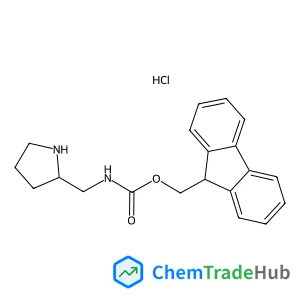
(S)-(9H-Fluoren-9-yl)methyl (pyrrolidin-2-ylmethyl)carbamate hydrochloride
CAS号:
1217813-15-4
分子式:
C20H23ClN2O2
![4-Chloro-2-{[(2-chlorophenoxy)acetyl]amino}benzoic acid structure](https://cnstatic.chemtradehub.com/structs/351/351424-20-9-9467.webp "4-Chloro-2-{[(2-chlorophenoxy)acetyl]amino}benzoic acid structure")

推荐供应商




免责声明
本页面提供的学术期刊信息仅供参考和研究使用。我们与任何期刊出版商均无关联,也不处理投稿事宜。如有投稿相关咨询,请直接联系相关期刊出版商。
如发现页面信息有误,请发送邮件至 support@chemtradehub.com 联系我们。我们将及时核实并处理您的问题。