









![9H-Fluoren-9-ylmethyl [(2S)-1-hydroxy-3-(1H-indol-3-yl)-2-propanyl]carbamate structure](https://cnstatic.chemtradehub.com/structs/153/153815-60-2-a67d.webp "9H-Fluoren-9-ylmethyl [(2S)-1-hydroxy-3-(1H-indol-3-yl)-2-propanyl]carbamate structure")
Structure and thermodynamics of empty clathrate hydrates below the freezing point of water
文献信息
发布日期
2021-07-13
DOI
10.1039/D1CP00893E
影响因子
3.676
作者
Fernando J. A. L. Cruz, José P. B. Mota
查看原文
摘要
Recently prepared as a new H2O phase, ice XVI was obtained by degassing a Ne-sII clathrate hydrate under vacuum, however very little is known of that crystalline solid under temperatures (T ≤ 220 K) and pressures (p ≤ 5000 bar) relevant for the Earth's environment and geochemistry. In this work, atomically detailed calculations using long time-scale molecular simulations, seldom paralelled before, are employed to probe empty sII clathrate hydrates. It is found that the volumetric response to an applied pressure–temperature gradient is accurately described by the Parsafar and Mason equation of state with an accuracy of at least 99.7%. Structural deformation induced upon the crystals is interpreted by monitoring the unit cell length and isobaric thermal expansivity, whilst benchmarked against previous neutron diffraction measurements of ice XVI and hexagonal ice under room pressure conditions; a critical comparison is established with other sII guest occupied lattices (CH4, CO2 and CnH2n+2 with n = 2, 3, 4), often found in permafrost regions and in the margins of continental shelves. Such an analysis reveals that empty sII frameworks are slightly more stable to thermal deformation than their sI analogues and that hexagonal ice is the structurally most stable of the condensed H2O phases addressed here. Of paramount importance for the oil and natural gas industries, heat capacities obtained from enthalpy profiles are identical for the sI and sII empty clathrates up to 2000 bar and diverge by only ∼7.3% at 5000 bar. The canonical tetrahedral symmetry of water-bonded networks is analysed in terms of an angular and a distance order parameters, which are observed to decrease (increase) as pressure (temperature) increases (decreases). The results now being reported constitute a landmark for future studies dealing with high-pressure and very low-temperature conditions, characteristic of the Earth's permafrost environment and other planetary interiors, whilst contributing to expand our knowledge regarding the recently discovered ice XVI phase.
期刊推荐
相关文献
Ammonium ions in alkali metal halide crystals: Tunnelling and spin relaxation
J. Tomkinson, M. T. F. Telling
2006-08-31
Paper
DOI: 10.1039/B608590C
Chemisorption of HCl to the MgO(001) surface: A DFT study
Andreas Markmann, Jacob L. Gavartin, Alexander L. Shluger
2006-08-22
Paper
DOI: 10.1039/B608719A
Vibrational spectrum of the spin crossover complex [Fe(phen)2(NCS)2] studied by IR and Raman spectroscopy, nuclear inelastic scattering and DFT calculations
Kate L. Ronayne, Hauke Paulsen, Andreas Höfer, Andrew C. Dennis, Aleksandr I. Chumakov, Volker Schünemann, Heiner Winkler, Hartmut Spiering, Azzedine Bousseksou, Philipp Gütlich, Alfred X. Trautwein, John J. McGarvey
2006-09-25
Paper
DOI: 10.1039/B610634J
An NMR and relativistic DFT investigation of one-bond nuclear spin–spin coupling in solid triphenyl group-14 chlorides
Mathew J. Willans, Bryan A. Demko, Roderick E. Wasylishen
2006-05-10
Paper
DOI: 10.1039/B603937E
Is perturbation DFT approach applicable to purely repulsive fluids?
Shiqi Zhou, Andrej Jamnik
2006-07-14
Paper
DOI: 10.1039/B606401A
First steps towards dissolution of NaSO4− by water
Barbara Jagoda-Cwiklik, Pavel Jungwirth
2006-08-07
Communication
DOI: 10.1039/B609941F
Probing the validity of the Derjaguin approximation for heterogeneous colloidal particles
Samuel Rentsch, Ramon Pericet-Camara, Georg Papastavrou, Michal Borkovec
2006-04-24
Paper
DOI: 10.1039/B602145J
Doppler-free/Doppler-sliced ion imaging
Cunshun Huang, Sridhar A. Lahankar, Myung Hwa Kim, Bailin Zhang, Arthur G. Suits
2006-09-25
Communication
DOI: 10.1039/B612324D
An FT-IRRAS study of nitrophenyl mono- and multilayers electro-deposited on gold by reduction of the diazonium salt
Alejandra Ricci, Cecilia Bonazzola, Ernesto J. Calvo
2006-08-24
Communication
DOI: 10.1039/B609497J
您可能还喜欢
化合物问答
什么是2-Bromo-1-(pyrimidin-2-yl)ethanone hydrobromide(CAS号:1588441-02-4)?
2-Bromo-1-(pyrimidin-2-yl)ethanone hydrobromide是一种有机化合物,分子式为C6H5Br2N2O2。它是一种溴代化合...
1588441-02-42-Bromo-1-(2-pyrimid...
化合物问答
在合成中是否有1-正-丁基-3-甲基咪唑鎓三氟甲烷磺酸盐(CAS号:174899-66-2)的替代品?
在合成中,可以考虑使用1-正-丁基-3-甲基咪唑鎓溴酸盐或1-正-丁基-3-甲基咪唑鎓氯酸盐作为替代品。这些化合物在性能上与1-正-丁基-3-甲基咪唑鎓三氟甲烷...
174899-66-21-Butyl-3-methyl-1H-...
化合物问答
2-methyl-5-thiophen-2-ylfuran-3-carboxylic acid(CAS号:651005-90-2)的市场或研究趋势如何?
目前,2-methyl-5-thiophen-2-ylfuran-3-carboxylic acid的研究主要集中在药物化学和新型材料领域。随着生物医药和有机合...
651005-90-22-Methyl-5-(thien-2-...
化合物问答
格列吡嗪杂质H(CAS号:13554-93-3)的主要用途是什么?
格列吡嗪杂质H主要作为药物中间体或副产物存在,并无特定的工业应用。在药物生产中,它可能需要被处理掉以保证最终药物的质量。
13554-93-3Ethyl (2-(4-((cycloh...
化合物问答
如何储存(9ci)-4-甲氧基-1H-苯并咪唑-2-乙腈(CAS号:317817-41-7)?
(9ci)-4-甲氧基-1H-苯并咪唑-2-乙腈应储存在阴凉、干燥、通风良好的地方,避免阳光直射。使用密封的玻璃或塑料容器储存,并确保容器的密封性良好,以防止挥...
317817-41-7(4-Methoxy-1H-benzim...
化合物问答
4,5,9,10-四氢苯芘(CAS号:781-17-9)应用于哪些行业?
4,5,9,10-四氢苯芘在医药行业用于作为某些药物的中间体,在聚合物行业用作添加剂提升材料的热稳定性,在传感器领域作为传感器的敏感材料,在半导体行业中用作掺杂...
781-17-94,5,9,10-Tetrahydrop...
化合物问答
处理叶酸-D4(CAS号:171777-72-3)时应注意哪些实验室安全事项?
处理叶酸-D4时应佩戴个人防护装备(PPE),如手套和实验服。操作应在通风橱内进行,以避免吸入蒸汽或粉尘。如果不慎泄露,应立即用大量清水冲洗,并通知安全人员。参...
171777-72-3Folic Acid-d4
化合物问答
如何处理含有6-溴-2-(三氟乙酰基)-1,2,3,4-四氢异喹啉(CAS号:252331-63-8)的废料?
含有该化合物的废料应收集到专用的容器中,并进行密封以防止挥发和泄漏。在处理前,需进行危险性评估,以确定是否需要进行化学处理。最终处置需遵循当地的危险废物管理规定...
252331-63-81-(6-bromo-3,4-dihyd...
化合物问答
4,5-二氟-2-甲氧基苯甲醛(CAS号:145742-34-3)的主要用途是什么?
4,5-二氟-2-甲氧基苯甲醛主要用作有机合成中的中间体,特别是在制药和农药领域。它可以作为合成其他有机化合物的原料。
145742-34-34,5-difluoro-2-metho...
化合物问答
5-溴-6-三氟甲基吲哚(CAS号:1198475-24-9)安全吗?
5-溴-6-三氟甲基吲哚作为一种化学试剂,具有一定的毒性,需要在通风橱中操作,并采取适当的安全措施以避免吸入、皮肤接触和眼睛刺激。应避免与皮肤和眼睛直接接触,并...
1198475-24-95-bromo-6-(trifluoro...
来源期刊
Physical Chemistry Chemical Physics

CiteScore:
5.5
自引率:
10.3%
年发文量:
3036
Physical Chemistry Chemical Physics (PCCP) is an international journal co-owned by 19 physical chemistry and physics societies from around the world. This journal publishes original, cutting-edge research in physical chemistry, chemical physics and biophysical chemistry. To be suitable for publication in PCCP, articles must include significant innovation and/or insight into physical chemistry; this is the most important criterion that reviewers and Editors will judge against when evaluating submissions. The journal has a broad scope and welcomes contributions spanning experiment, theory, computation and data science. Topical coverage includes spectroscopy, dynamics, kinetics, statistical mechanics, thermodynamics, electrochemistry, catalysis, surface science, quantum mechanics, quantum computing and machine learning. Interdisciplinary research areas such as polymers and soft matter, materials, nanoscience, energy, surfaces/interfaces, and biophysical chemistry are welcomed if they demonstrate significant innovation and/or insight into physical chemistry. Joined experimental/theoretical studies are particularly appreciated when complementary and based on up-to-date approaches.
推荐化合物
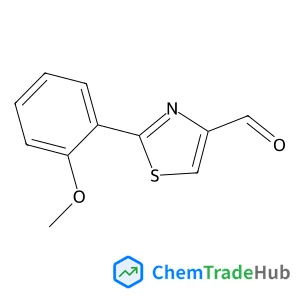
![4-[(1-Methyl-1H-pyrrol-2-yl)methylene]-1,3(2H,4H)-isoquinolinedione structure](https://cnstatic.chemtradehub.com/structs/110/1104546-89-5-a600.webp "4-[(1-Methyl-1H-pyrrol-2-yl)methylene]-1,3(2H,4H)-isoquinolinedione structure")
4-[(1-Methyl-1H-pyrrol-2-yl)methylene]-1,3(2H,4H)-isoquinolinedione
CAS号:
1104546-89-5
分子式:
C15H12N2O2
![4-{1-[4-(4,4,5,5-Tetramethyl-1,3,2-dioxaborolan-2-yl)phenyl]cyclopropyl}morpholine structure](https://cnstatic.chemtradehub.com/structs/120/1206594-08-2-7afb.webp "4-{1-[4-(4,4,5,5-Tetramethyl-1,3,2-dioxaborolan-2-yl)phenyl]cyclopropyl}morpholine structure")
推荐供应商








免责声明
本页面提供的学术期刊信息仅供参考和研究使用。我们与任何期刊出版商均无关联,也不处理投稿事宜。如有投稿相关咨询,请直接联系相关期刊出版商。
如发现页面信息有误,请发送邮件至 support@chemtradehub.com 联系我们。我们将及时核实并处理您的问题。