




Molecular dynamics simulation of extension-induced crystallization of branched bimodal HDPE: Unraveling the effects of short-chain branches
文献信息
发布日期
2021-08-17
DOI
10.1039/D1CP01067K
影响因子
3.676
作者
Yiran Cao, Li Zhao, Jieqi Wang, Yunqi Shao, Xuelian He
查看原文
摘要
Bimodal HDPE models were designed for extension-induced crystallization imitating the architecture of industrial bimodal HDPE copolymerized with ethylene and 1-butene, 1-hexene, or 1-octene. Crystallites of bimodal HDPE experienced the emergence of precursors, shish nuclei, and lamellae. The compact conformation of branched polymers impeded the rolling-over, deposition, and folding of chains on the substrate, and thus the formation of nuclei and lamella. Moreover, this retardation was intensified with the rising branch density and length, causing a depression of crystallinity and an increment of tie-chains concentration. Besides, when branches were all located on long chains, the compact conformation enlarged the resistance to the disentanglement of main chains, thus relatively fewer branched long chains were involved in the precursors or nuclei, resulting in the attenuation of lamella formation. Furthermore, for ethyl branched polymers, the coexistent orthorhombic and monoclinic crystallites were built up, and a few expanded monoclinic cells occurred for butyl branches because of the larger butyl reeling into lamella, while hexagonal crystals were created for ethyl/1-hexyl copolymers because of cocrystallization. Additionally, relative to ethyl, larger butyl and hexyl were preferential to be repelled outside crystals to form tie-chains, and hexyl branched polymers acquired relatively fewer tie-chains because of hexagonal eutectoid.
相关文献
Kinetic Monte Carlo simulations of self-organization of Ge islands on Si(001)
Paramita Ghosh, Nidhi Gupta, Monika Dhankhar, Madhav Ranganathan
2021-08-09
Paper
DOI: 10.1039/D1CP00069A
Vacancy-triggered and dopant-assisted NO electrocatalytic reduction over MoS2
Chao Wu
2021-08-16
Paper
DOI: 10.1039/D1CP02764F
Mechanical properties of nonstoichiometric cubic titanium carbide TiCy
2021-08-16
Paper
DOI: 10.1039/D1CP02697F
Wide-angle X-ray scattering and molecular dynamics simulations of supercooled protein hydration water
Maddalena Bin, Rafat Yousif, Sharon Berkowicz, Sudipta Das, Daniel Schlesinger, Fivos Perakis
2021-07-12
Paper
DOI: 10.1039/D1CP02126E
Mechanistic insight into oxygen vacancy migration in SrFeO3−δ from DFT+U simulations
Musa Alaydrus
2021-08-13
Paper
DOI: 10.1039/D1CP02452C
Fitting potential energy and induced dipole surfaces of the van der Waals complex CH4–N2 using non-product quadrature grids
Yulia N. Kalugina, Iouli E. Gordon
2021-08-04
Paper
DOI: 10.1039/D1CP02161C
Direct evidence for a radiation-induced synthesis of acetonitrile and isoacetonitrile from a 1 : 1 CH4⋯HCN complex at cryogenic temperatures: is it a missing link between inorganic and prebiotic astrochemistry?
Anastasia D. Volosatova, Mariia A. Lukianova, Pavel V. Zasimov, Vladimir I. Feldman
2021-08-10
Paper
DOI: 10.1039/D1CP01598B
Experimental and computational investigation of the bond energy of thorium dicarbonyl cation and theoretical elucidation of its isomerization mechanism to the thermodynamically most stable isomer, thorium oxide ketenylidene cation, OTh+CCO
Arjun Kafle, P. B. Armentrout
2021-12-07
Paper
DOI: 10.1039/D1CP04263G
Transient absorption spectroscopy of the electron transfer step in the photochemically activated polymerizations of N-ethylcarbazole and 9-phenylcarbazole
Georgia L. Thornton, Ryan Phelps, Andrew J. Orr-Ewing
2021-08-05
Paper
DOI: 10.1039/D1CP03137F
您可能还喜欢
化合物问答
如何储存1,2-环己二酮环乙缩醛(CAS号:4746-96-7)?
1,2-环己二酮环乙缩醛应储存在阴凉、干燥、通风良好的地方,避免阳光直射。建议使用密封容器保存,并保持环境温度在室温范围内,远离火源和热源。
4746-96-71,4-Dioxaspiro[4.5]d...
化合物问答
Ecopladib(CAS号:381683-92-7)的市场或研究趋势如何?
Ecopladib作为一种新型的药物,主要应用于治疗高胆固醇等疾病。目前,市场和研究趋势显示,Ecopladib因其独特的药理作用而受到关注。随着对心血管疾病治...
381683-92-7Ecopladib
化合物问答
2,3-Dimethyl-3H-imidazo[4,5-c]pyridine(CAS号:52538-09-7)通常如何合成?
2,3-二甲基-3H-咪唑[4,5-c]吡啶通常通过咪唑和2,3-二甲基吡啶的缩合反应合成。具体来说,将咪唑和2,3-二甲基吡啶在适当的溶剂中进行加热或加压反应...
52538-09-72,3-Dimethyl-3H-imid...
化合物问答
2,3,4,5-tetrahydro-1H-3-苯并氮杂环;盐酸盐(CAS号:17379-01-0)的市场或研究趋势如何?
该化合物在药物化学和有机合成中有一定的应用。近年来,随着对新型药物化合物的需求增加,该化合物的研究趋势主要集中在探索其生物活性,尤其是其在神经系统疾病治疗中的潜...
17379-01-02,3,4,5-Tetrahydro-1...
68-90-6(2-Ethyl-1-benzofura...
化合物问答
如何储存盐酸甘氨酸丁酯(CAS号:13048-99-2)?
盐酸甘氨酸丁酯应储存在阴凉、干燥、通风良好的地方,避免阳光直射和高温环境,温度应控制在25℃以下。储存容器应密封,避免与空气中的水分和酸性物质接触,以防发生水解...
13048-99-2Butyl glycinate hydr...
化合物问答
什么是2-Iodo-N,N-dimethylbenzamide(CAS号:54616-46-5)?
2-碘-N,N-二甲基苯胺是一种有机化合物,化学名为2-Iodo-N,N-dimethylbenzamide。其分子式为C<sub>9</sub>H<sub>1...
54616-46-52-Iodo-N,N-dimethylb...
16817-90-6N-Cyclohexylglycinam...
化合物问答
5-溴-2-(4H-1,2,4-三唑-4-基)吡啶(CAS号:959240-99-4)的市场或研究趋势如何?
随着医药、农药和新材料领域的发展,该化合物作为关键中间体的应用日益增多。特别是在药物合成中,由于其独特的化学性质,可以用于合成多种药物分子。未来的研究趋势可能集...
959240-99-45-Bromo-2-(4H-1,2,4-...
化合物问答
2,4-二溴-6-三氟甲基嘧啶(CAS号:785778-00-9)通常如何合成?
2,4-二溴-6-三氟甲基嘧啶通常通过溴化反应合成。首先,将6-三氟甲基嘧啶与溴化剂(如液溴)在适当的溶剂(如二氯甲烷、四氢呋喃)中反应,加入适当的催化剂(如四...
785778-00-92,4-Dibromo-6-(trifl...
来源期刊
Physical Chemistry Chemical Physics

CiteScore:
5.5
自引率:
10.3%
年发文量:
3036
Physical Chemistry Chemical Physics (PCCP) is an international journal co-owned by 19 physical chemistry and physics societies from around the world. This journal publishes original, cutting-edge research in physical chemistry, chemical physics and biophysical chemistry. To be suitable for publication in PCCP, articles must include significant innovation and/or insight into physical chemistry; this is the most important criterion that reviewers and Editors will judge against when evaluating submissions. The journal has a broad scope and welcomes contributions spanning experiment, theory, computation and data science. Topical coverage includes spectroscopy, dynamics, kinetics, statistical mechanics, thermodynamics, electrochemistry, catalysis, surface science, quantum mechanics, quantum computing and machine learning. Interdisciplinary research areas such as polymers and soft matter, materials, nanoscience, energy, surfaces/interfaces, and biophysical chemistry are welcomed if they demonstrate significant innovation and/or insight into physical chemistry. Joined experimental/theoretical studies are particularly appreciated when complementary and based on up-to-date approaches.
推荐化合物
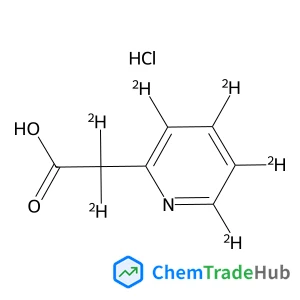
2,2-dideuterio-2-(3,4,5,6-tetradeuterio-2-pyridyl)acetic acid;hydrochloride
CAS号:
1329799-67-8
分子式:
C7H2ClD6NO2
![(3R,5R)-1-[(Benzyloxy)carbonyl]-5-methyl-3-piperidinecarboxylic acid structure](https://cnstatic.chemtradehub.com/structs/126/1269757-29-0-c552.webp "(3R,5R)-1-[(Benzyloxy)carbonyl]-5-methyl-3-piperidinecarboxylic acid structure")
(3R,5R)-1-[(Benzyloxy)carbonyl]-5-methyl-3-piperidinecarboxylic acid
CAS号:
1269757-29-0
分子式:
C15H19NO4
![N-[2-(4-Hydroxyphenoxy)-4-nitrophenyl]methanesulfonamide structure](https://cnstatic.chemtradehub.com/structs/109/109032-22-6-7c88.webp "N-[2-(4-Hydroxyphenoxy)-4-nitrophenyl]methanesulfonamide structure")
推荐供应商




免责声明
本页面提供的学术期刊信息仅供参考和研究使用。我们与任何期刊出版商均无关联,也不处理投稿事宜。如有投稿相关咨询,请直接联系相关期刊出版商。
如发现页面信息有误,请发送邮件至 support@chemtradehub.com 联系我们。我们将及时核实并处理您的问题。