


Atmospheric oxidation of fluoroalcohols initiated by ˙OH radicals in the presence of water and mineral dusts: mechanism, kinetics, and risk assessment
文献信息
发布日期
2021-04-29
DOI
10.1039/D1CP01324F
影响因子
3.676
作者
Feng-Yang Bai, Ming-Shuai Deng, Mei-Yan Chen, Lian Kong, Shuang Ni, Xiu-Mei Pan
查看原文
摘要
The transport and formation of fluorinated compounds are greatly significant due to their possible environmental risks. In this work, the ˙OH-mediated degradation of CF3CF2CF2CH2OH and CF3CHFCF2CH2OH in the presence of O2/NO/NO2 was studied by using density functional theory and the direct kinetic method. The formation mechanisms of perfluorocarboxylic/hydroperfluorocarboxylic acids (PFCAs/H-PFCAs), which were produced from the reactions of α-hydroxyperoxy radicals with NO/NO2 and the ensuing oxidation of α-hydroxyalkoxy radicals, were clarified and discussed. The roles of water and silica particles in the rate constants and ˙OH reaction mechanism with fluoroalcohols were investigated theoretically. The results showed that water and silica particles do not alter the reaction mechanism but obviously change the kinetic properties. Water could retard fluoroalcohol degradation by decreasing the rate constants by 3–5 orders of magnitude. However, the heterogeneous ˙OH-rate coefficients on the silica particle surfaces, including H4SiO4, H6Si2O7, and H12Si6O18, are larger than that of the naked reaction by 1.20–24.50 times. This finding suggested that these heterogeneous reactions may be responsible for the atmospheric loss of fluoroalcohols and the burden of PFCAs. In addition, fluoroalcohols could be exothermically trapped by H12Si6O18, H6Si2O7, and H4SiO4, in which the chemisorption on H12Si6O18 is stronger than that on H6Si2O7 or H4SiO4. The global warming potentials and radiative forcing of CF3CF2CF2CH2OH/CF3CHFCF2CH2OH were calculated to assess their contributions to the greenhouse effect. The toxicities of individual species were also estimated via the ECOSAR program and experimental measurements. This work enhances the understanding of the environmental formation of PFCAs and the transformation of fluoroalcohols.
期刊推荐
Organic Process Research & Development
Nature Medicine
Journal of Peptide Science
Drug Discovery Today
Russian Journal of Bioorganic Chemistry
Russian Journal of Coordination Chemistry
Current Opinion in Colloid & Interface Science
Saudi Pharmaceutical Journal
Russian Journal of General Chemistry
Russian Journal of Applied Chemistry
相关文献
Facile preparation of polycarbonates from bio-based eugenol and 2-methoxy-4-vinylphenol
Mengqian Huang, De Bai, Qin Chen, Changbo Zhao, Tianhua Ren, Caijuan Huang, Michael North, Haibo Xie
2020-06-30
Communication
DOI: 10.1039/D0PY00291G
Designing self-propagating polymers with ultrasensitivity through feedback signal amplification
Jiajia Tan, Jinming Hu, Shiyong Liu
2021-10-12
Minireview
DOI: 10.1039/D1PY01095F
Introduction to chemistry for covalent adaptable networks
Filip Du Prez, Julia Kalow
2020-07-10
Editorial
DOI: 10.1039/D0PY90102D
Facile synthesis of well-controlled poly(1-vinyl imidazole) by the RAFT process
Bo Fan, Jing Wan, Alasdair McKay, Zhenyuan Qu, San H. Thang
2020-07-28
Paper
DOI: 10.1039/D0PY00985G
Divergence of polycondensation by a tandem reaction based on sequential conjugate substitutions
Keito Hagiwara
2020-07-08
Communication
DOI: 10.1039/D0PY00648C
Tellurophene-containing π-conjugated polymers with unique heteroatom–heteroatom interactions by post-element-transformation of an organotitanium polymer
Hiroki Nishiyama, Feng Zheng, Shinsuke Inagi, Hiroyuki Fueno, Ikuyoshi Tomita
2020-07-07
Communication
DOI: 10.1039/D0PY00724B
Chiral amines as initiators for ROP and their chiral induction on poly(2-aminoisobutyric acid) chains
Matthias Rohmer, Özgün Ucak, Rahul Fredrick, Wolfgang H. Binder
2021-09-29
Paper
DOI: 10.1039/D1PY01021B
Alginate-based diblock polymers: preparation, characterization and Ca-induced self-assembly
Amalie Solberg, Ingrid V. Mo, Finn L. Aachmann, Christophe Schatz, Bjørn E. Christensen
2021-09-09
Paper
DOI: 10.1039/D1PY00727K
High-performance polyamides with engineered disorder
Julien Cretenoud, Sandor Balog, Véronique Michaud, Jean-Marc Chenal, Olivier Lame, Christopher J. G. Plummer, Holger Frauenrath
2021-10-15
Paper
DOI: 10.1039/D1PY01225H
您可能还喜欢
化合物问答
(5-氨基吡唑-3-基)乙酸(CAS号:174891-10-2)的物理化学性质是什么?
(5-氨基吡唑-3-基)乙酸是一种无色至白色固体,分子量为174.15 g/mol。它在水中具有较好的溶解性,在有机溶剂中的溶解度较低。该化合物具有较好的反应活...
174891-10-2(3-Amino-1H-pyrazol-...
化合物问答
3-氟-4,5-二氯苯胺(CAS号:35754-38-2)适用哪些法规指南?
3-氟-4,5-二氯苯胺受到多项法规指南的约束,包括但不限于GHS(全球化学品统一分类和标签制度)的危险分类标准、欧盟的REACH法规(注册、评估、授权和限制)...
35754-38-23,4-Dichloro-5-fluor...
化合物问答
什么是(R)-(+)-2,2',6,6'-四甲氧基-4,4'-联(二(3,5-二甲苯基基)膦基)-3,3'-二联吡啶(CAS号:442905-33-1)?
这是一种有机化合物,化学名为(R)-(+)-2,2',6,6'-四甲氧基-4,4'-联(二(3,5-二甲苯基基)膦基)-3,3'-二联吡啶,CAS号为44290...
442905-33-14,4'-Bis[bis(3,5-dim...
化合物问答
1-氨基-2-氰基萘(CAS号:3100-67-2)应用于哪些行业?
1-氨基-2-氰基萘在医药、聚合物、传感器和半导体等行业中有应用。在医药领域,它可用作中间体合成某些药物。在聚合物行业,它可以用于制备具有特定性能的聚合物。此外...
3100-67-21-Amino-2-naphthonit...
化合物问答
如何处理含有1-溴-4-(异丙氧基甲基)苯(CAS号:98446-84-5)的废料?
处理含1-溴-4-(异丙氧基甲基)苯的废料时,首先应确保废液收集在防渗漏的容器中,避免泄露。然后,可以考虑采用化学降解法或物理吸附法进行处理。在特定条件下,可通...
98446-84-51-Bromo-4-(isopropox...
化合物问答
6-Chloro-8-(trifluoromethyl)chroman-4-one(CAS号:1344889-75-3)的主要用途是什么?
6-氯-8-三氟甲基-2,3-二氢-4H-色喃-4-酮主要用于有机合成中的中间体,也可作为研究试剂使用。
1344889-75-36-Chloro-8-(trifluor...
化合物问答
7-乙氧基-2-萘酚(CAS号:57944-44-2)通常如何合成?
7-乙氧基-2-萘酚通常通过N-乙氧基化反应合成,首先将2-萘酚与乙醇钠在乙醇中反应生成7-乙氧基-2-萘酚钠盐,再通过酸化进一步得到7-乙氧基-2-萘酚。该合...
57944-44-27-Ethoxy-2-naphthol
化合物问答
4-(1,1-二氧硫代吗啉)丁醇(CAS号:59801-41-1)适用哪些法规指南?
该化合物需遵循一系列的法规指南,包括但不限于GHS全球统一分类和标签制度,其分类可能包括易燃液体和可能危害水生环境。在欧洲,还需遵循REACH法规,确保物质和混...
59801-41-14-(4-Hydroxybutyl)th...
化合物问答
4-甲氧基苄基叠氮甲酸酯(CAS号:25474-85-5)的物理化学性质是什么?
4-甲氧基苄基叠氮甲酸酯是一种无色液体,具有一定的挥发性。其分子量为198.16,熔点为-69°C,沸点为105°C。该化合物在水中溶解度较低,在有机溶剂如乙醇...
25474-85-54-Methoxybenzyl carb...
化合物问答
如何处理含有4-氯-2-氟嘧啶(CAS号:51422-00-5)的废料?
含有4-氯-2-氟嘧啶的废料应按照危险废物处理。首先,应收集并分类这些废料,避免与其他废物混合。然后,可以采用焚烧处理或者交由专业机构进行处置。在处理过程中,需...
51422-00-54-Chloro-2-fluoropyr...
来源期刊
Physical Chemistry Chemical Physics

CiteScore:
5.5
自引率:
10.3%
年发文量:
3036
Physical Chemistry Chemical Physics (PCCP) is an international journal co-owned by 19 physical chemistry and physics societies from around the world. This journal publishes original, cutting-edge research in physical chemistry, chemical physics and biophysical chemistry. To be suitable for publication in PCCP, articles must include significant innovation and/or insight into physical chemistry; this is the most important criterion that reviewers and Editors will judge against when evaluating submissions. The journal has a broad scope and welcomes contributions spanning experiment, theory, computation and data science. Topical coverage includes spectroscopy, dynamics, kinetics, statistical mechanics, thermodynamics, electrochemistry, catalysis, surface science, quantum mechanics, quantum computing and machine learning. Interdisciplinary research areas such as polymers and soft matter, materials, nanoscience, energy, surfaces/interfaces, and biophysical chemistry are welcomed if they demonstrate significant innovation and/or insight into physical chemistry. Joined experimental/theoretical studies are particularly appreciated when complementary and based on up-to-date approaches.
推荐化合物
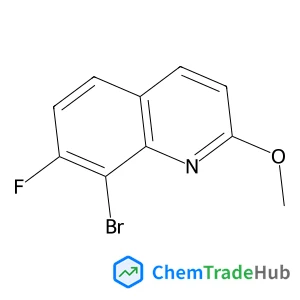
![1-oxaspiro[4.4]nonan-6-one structure](https://cnstatic.chemtradehub.com/structs/134/134179-01-4-e051.webp "1-oxaspiro[4.4]nonan-6-one structure")
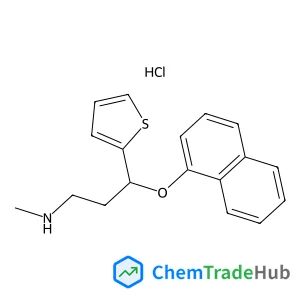
N-Methyl-3-(1-naphthyloxy)-3-(2-thienyl)-1-propanamine hydrochloride (1:1)
CAS号:
1188266-11-6
分子式:
C18H20ClNOS
推荐供应商





免责声明
本页面提供的学术期刊信息仅供参考和研究使用。我们与任何期刊出版商均无关联,也不处理投稿事宜。如有投稿相关咨询,请直接联系相关期刊出版商。
如发现页面信息有误,请发送邮件至 support@chemtradehub.com 联系我们。我们将及时核实并处理您的问题。