





Contrasting effect of 1-butanol and 1,4-butanediol on the triggered micellar self-assemblies of C16-type cationic surfactants
文献信息
发布日期
2021-08-09
DOI
10.1039/D1CP01666K
影响因子
3.676
作者
Vinod Kumar, Rajni Verma, Dwarkesh Satodia, Debes Ray, Ketan Kuperkar, Vinod Kumar Aswal, Katie R. Mitchell-Koch, Pratap Bahadur
查看原文
摘要
The self-assembly in aqueous solutions of three quaternary salt-based C16-type cationic surfactants with different polar head groups and identical carbon alkyl chain viz., cetylpyridinium bromide (CPB), cetyltrimethylammonium tosylate (CTAT), and cetyltriphenylphosphonium bromide (CTPPB) in the presence of 1-butanol (BuOH) and 1,4-butanediol (BTD) was investigated using tensiometry, 2D-nuclear Overhauser enhancement spectroscopy (2D-NOESY) and small angle neutron scattering (SANS) techniques. The adsorption parameters and micellar characteristics evaluated at 303.15 K distinctly showed that BuOH promotes the mixed micelle formation while BTD interfered with the micellization phenomenon. The SANS data fitted using an ellipsoid (as derived by Hayter and Penfold using the Ornstein-Zernike equation and the mean spherical approximation) and wormlike micellar models offered an insight into the micelle size/shape and aggregation number (Nagg) in the examined systems. The evaluated descriptors presented a clear indication of the morphology transition in cationic micelles as induced by the addition of the two alcohols. We also offer an investigation into the acceptable molecular interactions governing the differences in micelle morphologies, using the non-invasive 2D-NOESY technique and molecular modeling. The experimental observations elucidated from computational simulation add novelty to this work. Giving an account to the structural complexity in the three cationic surfactants, the molecular dynamics (MD) simulation was performed for CPB micelles in an aqueous solution of alcohols that highlighted the micelle solvation and structural transition, which is further complemented in terms of critical packing parameter (PP) for the examined systems.
相关文献
Phenothiazine-based small-molecule organic solar cells with power conversion efficiency over 7% and open circuit voltage of about 1.0 V using solvent vapor annealing
Yogajivan Rout, Rajneesh Misra, Rahul Singhal, Subhayan Biswas, Ganesh D. Sharma
2018-01-30
Paper
DOI: 10.1039/C7CP08308D
A potential material for hydrogen storage: a Li decorated graphitic-CN monolayer
Yong-Dao Chen, Song Yu, Wen-Hui Zhao, Shun-Fang Li, Xiang-Mei Duan
2018-04-25
Paper
DOI: 10.1039/C8CP01145A
Effects of CNT size on the desalination performance of an outer-wall CNT slit membrane
Elisa Y. M. Ang, Teng Yong Ng, Rongming Lin, Zishun Liu, K. R. Geethalakshmi
2018-04-19
Paper
DOI: 10.1039/C8CP01191E
Structural, electronic and adhesion characteristics of zinc/silica interfaces: ab initio study on zinc/β-cristobalite
Alexey Koltsov, Jean-Michel Mataigne
2018-01-29
Paper
DOI: 10.1039/C7CP08636A
Unexpected protonation state of Glu197 discovered from simulations of tacrine in butyrylcholinesterase
Xiao Wan, Yuan Yao, Lei Fang, Junjun Liu
2018-05-08
Paper
DOI: 10.1039/C8CP01566J
The effect of different organic solvents on sodium ion storage in carbon nanopores
Sharif Khan, Tomonori Ohba, Qiong Cai
2018-02-05
Paper
DOI: 10.1039/C7CP04878E
Asymmetric triphenylamine–phenothiazine based small molecules with varying terminal acceptors for solution processed bulk-heterojunction organic solar cells
Srikanth Revoju, Subhayan Biswas, Bertil Eliasson, Ganesh D. Sharma
2018-02-01
Paper
DOI: 10.1039/C7CP08653A
Structural dynamics upon photoexcitation-induced charge transfer in a dicopper(i)–disulfide complex
Mateusz Rebarz, Martin Rohrmüller, Shirly Espinoza, Miroslav Kloz, Norman Kretzschmar, Adam Neuba, Jochen Ortmeyer, Roland Schoch, Matthias Bauer, Wolf Gero Schmidt, Gerald Henkel
2018-02-12
Paper
DOI: 10.1039/C7CP04880G
Vibrational satellites of C2S, C3S, and C4S: microwave spectral taxonomy as a stepping stone to the millimeter-wave band
Marie-Aline Martin-Drumel, Kin Long Kelvin Lee, John F. Stanton, Carl A. Gottlieb
2018-04-11
Paper
DOI: 10.1039/C8CP01102H
Substituent control of the ultrafast twisted intramolecular charge transfer rate in dimethylaminochalcone derivatives
2018-02-06
Paper
DOI: 10.1039/C7CP08239H
您可能还喜欢
化合物问答
2-(甲基磺酰基)嘧啶-5-胺(CAS号:56621-92-2)适用哪些法规指南?
该化合物适用的法规指南包括GHS(全球化学品统一分类和标签制度)分类为特定目标器官毒性-单次接触类别3;根据欧盟REACH法规,该化合物需要进行注册和评估;在美...
56621-92-22-(Methylsulfonyl)py...
化合物问答
在合成中是否有4-(4-氯苯基)-1H-咪唑(CAS号:35512-29-9)的替代品?
在合成中,可以考虑使用一些类似的化合物作为4-(4-氯苯基)-1H-咪唑的替代品,如4-(4-溴苯基)-1H-咪唑或4-(4-甲氧基苯基)-1H-咪唑。这些化合...
35512-29-94-(4-Chlorophenyl)-1...
化合物问答
什么是N~2~-甲基丙氨酸酰胺(CAS号:32012-16-1)?
N~2~-甲基丙氨酸酰胺是一种有机化合物,其化学名为2-(Methylamino)propanamide。它是一种酰胺类化合物,分子式为C4H10N2O,相对分...
32012-16-12-(Methylamino)propa...
化合物问答
如何处理含有N-苄基-3-氨基氧杂环丁烷草酸盐(CAS号:1956341-96-0)的废料?
处理含有N-苄基-3-氨基氧杂环丁烷草酸盐(CAS号:1956341-96-0)的废料时,应首先确保遵循相关法规要求,如GHS和REACH等。通常,废液应先进行...
1956341-96-0N-Benzyloxetan-3-ami...
化合物问答
4-bromo-2-chloro-6-methylbenzoic acid(CAS号:877149-07-0)的物理化学性质是什么?
4-溴-2-氯-6-甲基苯甲酸是一种固体化合物,具有较高的熔点和较低的沸点。它的分子量为261.03 g/mol。该化合物在水中几乎不溶,在有机溶剂中溶解度适中...
877149-07-04-Bromo-2-chloro-6-m...
化合物问答
2-[(2,5-二氯-4-嘧啶)氨基]-N-甲基苯甲酰胺(CAS号:761440-08-8)通常如何合成?
该化合物通常通过缩合反应合成,典型的方法是将2,5-二氯嘧啶与N-甲基苯甲酰胺在碱性条件下进行偶联反应。常用的碱包括NaH、LDA等强碱。该合成路线具有较高的选...
761440-08-82-[(2,5-dichloropyri...
4752-10-71,4-Dichlorophthalaz...
化合物问答
在合成中是否有3,5-二溴-4-甲基苯胺(CAS号:13194-73-5)的替代品?
3,5-二溴-4-甲基苯胺在某些合成路线中可能没有直接替代品。然而,在某些应用场景下,可以考虑使用其他类似结构的化合物如3,5-二溴-4-硝基苯胺或3,5-二碘...
13194-73-53,5-Dibromo-4-methyl...
化合物问答
2-氯喹啉-4-羧酸甲酯(CAS号:62482-26-2)的主要用途是什么?
2-氯喹啉-4-羧酸甲酯主要用于有机合成和药物合成领域,作为中间体或原料。它在合成某些药物和染料时具有重要作用。此外,该化合物还可能用于某些特定的化学研究中。
62482-26-2Methyl 2-chloro-4-qu...
化合物问答
i>]吡啶(CAS号:474708-88-8)安全吗?
6-溴-8-氯咪唑[1,2-a]吡啶在操作过程中需要谨慎以确保安全。该化合物具有一定的毒性,吸入其蒸气或粉尘可能导致呼吸道刺激。处理时应佩戴适当的防护装备,如手...
474708-88-86-Bromo-8-chloroimid...
来源期刊
Physical Chemistry Chemical Physics

CiteScore:
5.5
自引率:
10.3%
年发文量:
3036
Physical Chemistry Chemical Physics (PCCP) is an international journal co-owned by 19 physical chemistry and physics societies from around the world. This journal publishes original, cutting-edge research in physical chemistry, chemical physics and biophysical chemistry. To be suitable for publication in PCCP, articles must include significant innovation and/or insight into physical chemistry; this is the most important criterion that reviewers and Editors will judge against when evaluating submissions. The journal has a broad scope and welcomes contributions spanning experiment, theory, computation and data science. Topical coverage includes spectroscopy, dynamics, kinetics, statistical mechanics, thermodynamics, electrochemistry, catalysis, surface science, quantum mechanics, quantum computing and machine learning. Interdisciplinary research areas such as polymers and soft matter, materials, nanoscience, energy, surfaces/interfaces, and biophysical chemistry are welcomed if they demonstrate significant innovation and/or insight into physical chemistry. Joined experimental/theoretical studies are particularly appreciated when complementary and based on up-to-date approaches.
推荐化合物
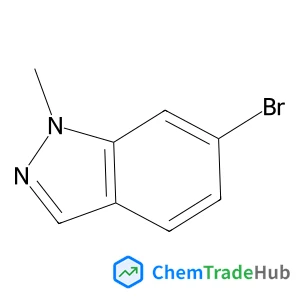
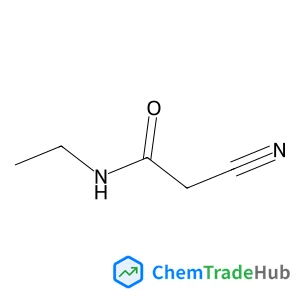
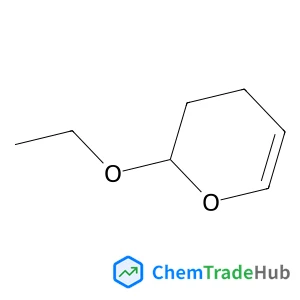
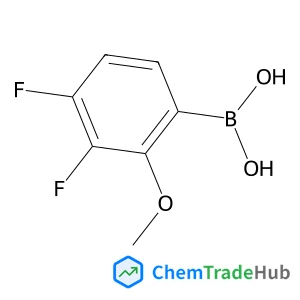
推荐供应商


免责声明
本页面提供的学术期刊信息仅供参考和研究使用。我们与任何期刊出版商均无关联,也不处理投稿事宜。如有投稿相关咨询,请直接联系相关期刊出版商。
如发现页面信息有误,请发送邮件至 support@chemtradehub.com 联系我们。我们将及时核实并处理您的问题。