


A global transform for the general formulation of liquid viscosities with significant linearizing benefits: a case study on ionic liquid mixtures
文献信息
发布日期
2021-09-04
DOI
10.1039/D1CP02033A
影响因子
3.676
作者
Javad Hekayati, Sona Raeissi
查看原文
摘要
Among the different thermophysical properties of significant importance in the study of transport phenomena, viscosity has long defied attempts at presenting a unified model applicable to both pure compounds and binary mixtures within extended temperature and composition ranges. Similar to the role that ln(Psat.)–T−1 profiles play in linearizing vapor pressure data, here it is contended for the first time that it is highly beneficial to study viscosity in the space, as opposed to the commonly used logarithmic space. Within this framework, the groundbreaking Lewis–Squires model is modified and extended to mixtures by studying 184 binary systems with 89 distinct ILs and 17 polar and nonpolar solutes. The dataset covers a total of 1104 isotherms with 10 909 data points, having quite an extensive range of viscosities, from 0.447 to 113 733 (mPa s). Breaking a highly regarded convention upheld for decades, the proposed model does not stipulate the availability of pure state viscosity and/or volumetric data over the whole temperature range, which acts as a bottleneck for the current literature models that have all been cast in the same mold inspired by thermodynamic mixing rules. In practice, without utilizing any volumetric properties, a single pure solvent viscosity datum at any reference temperature is the only requirement in the interpolative mode, which is complemented by the binary viscosity data at the reference isotherm of choice in the extrapolative mode of the proposed model that is concurrently applicable to both pure components and binary mixtures. An AARD of 2.82% was obtained in estimating the binary viscosity data using the new algorithm, while deviations of 13.58%, 6.79%, 6.17%, and 3.41% were obtained for the Grunberg and Nissan, Fang and He, Jouyban–Acree, and Eyring-MTSM models, respectively. Moreover, for extrapolation of the binary data measured at room temperature, a capability exclusive to the proposed model, an overall AARD of 5.66% was obtained for the mixtures of interest. With significant inherent flexibility, the new methodology could also be employed to represent the uncommon composition dependence of certain IL systems exhibiting multiple local extrema, with AARDs close to half of those of the current models.
期刊推荐
Drug and Chemical Toxicology
European Journal of Medicinal Chemistry
Synthetic Communications
Applied Clay Science
Pharmaceutical Chemistry Journal
Progress in Materials Science

Annual Review of Public Health
Crystal Research and Technology
Journal of Dispersion Science and Technology
Journal of Natural Products
相关文献
Facile fabrication of Ir/CNT/rGO nanocomposites with enhanced electrocatalytic performance for the hydrogen evolution reaction
Yuntian Ma, Zhelun Xiong, Minghui Liang
2020-04-30
Communication
DOI: 10.1039/D0SE00350F
Sulfur vacancies promoting Fe-doped Ni3S2 nanopyramid arrays as efficient bifunctional electrocatalysts for overall water splitting
Li-Wei Dong, Bo Song
2020-04-27
Paper
DOI: 10.1039/D0SE00344A
An in situ formed LiF protective layer on a Li metal anode with solvent-less cross-linking
Hyunjin Kim, Jeeyoung Yoo
2020-05-02
Communication
DOI: 10.1039/D0SE00357C
Structural analysis of drug–DNA adducts by tandem mass spectrometry
Paula Iannitti-Tito, Allan Weimann, Geoffrey Wickham, Margaret M. Sheil
2000-03-14
Paper
DOI: 10.1039/A908920I
Chemiluminescence determination of iodide and/or iodine using a luminol–hexadecyltrimethylammonium chloride reversed micelle system following on-line oxidation and extraction
Terufumi Fujiwara, Imdad U. Mohammadzai, Hidekazu Inoue, Takahiro Kumamaru
2000-03-20
Paper
DOI: 10.1039/A910311M
Highly efficient and stable perovskite solar cell prepared from an in situ pre-wetted PbI2 nano-sheet array film
Zhaoqian Li, Yong Ding, Linhua Hu, Xu Pan, Songyuan Dai
2017-03-10
Paper
DOI: 10.1039/C7SE00080D
Effects of polymeric coatings on the service life of bismuth telluride-based thermoelectric materials
2017-06-23
Paper
DOI: 10.1039/C7SE00136C
您可能还喜欢
化合物问答
处理2-异丙基-5-羧基-1,3-二氧六环(CAS号:116193-72-7)时应注意哪些实验室安全事项?
处理2-异丙基-5-羧基-1,3-二氧六环时应注意以下安全事项:1. 戴上防护眼镜和手套,避免直接接触皮肤和眼睛。2. 在通风橱中操作,确保空气流通。3. 防止...
116193-72-72-Isopropyl-1,3-diox...
化合物问答
2-Hydroxy-N,N-dimethyl-2-phenylacetamide(CAS号:2019-71-8)的市场或研究趋势如何?
该化合物在制药和精细化工领域具有一定的应用,特别是在药物合成中作为中间体。随着环保意识的提高,市场对更安全、更环保的化学品的需求增加,因此该化合物的研究趋势倾向...
2019-71-82-Hydroxy-N,N-dimeth...
化合物问答
4-(1H-吡唑-3-基)哌啶(CAS号:278798-08-6)应用于哪些行业?
4-(1H-吡唑-3-基)哌啶在医药领域有潜在应用,可用于合成药物中间体。此外,在聚合物和传感器领域也有一定的应用前景,可以作为功能材料的一部分。
278798-08-64-(1H-Pyrazol-3-yl)p...
化合物问答
什么是三氯噻嗪(CAS号:133-67-5)?
三氯噻嗪是一种化学物质,其英文名称为6-Chloro-3-(dichloromethyl)-3,4-dihydro-2H-1,2,4-benzothiadiaz...
133-67-56-Chloro-3-(dichloro...
化合物问答
阿螺旋霉素(CAS号:467214-20-6)通常如何合成?
阿螺旋霉素的合成通常采用生物发酵技术,首先从特定的链霉菌提取前体物质,然后通过一系列化学修饰步骤,如酰胺化、环化等,最终得到阿螺旋霉素。常用的催化剂包括有机酸等...
467214-20-6Alvespimycin Hydroch...
化合物问答
什么是2-(二甲基氨基)-5-硝基苯甲酸(CAS号:4405-28-1)?
2-(二甲基氨基)-5-硝基苯甲酸是一种化学化合物,其分子式为C9H11N2O4。该化合物具有一定的生物活性和化学性质,常用于医药、农药及研究领域。
4405-28-12-(Dimethylamino)-5-...
化合物问答
1-苯基-1H-吡唑-4-甲酸甲酯(CAS号:7188-96-7)应用于哪些行业?
1-苯基-1H-吡唑-4-甲酸甲酯主要应用于医药行业,用作合成其他药物的中间体。此外,它还可能在聚合物、传感器等领域有应用。
7188-96-7Methyl 1-phenyl-1h-p...
化合物问答
1-(三异丙基甲硅烷基氧基)环丙烷羧酸甲酯(CAS号:83010-83-7)应用于哪些行业?
该化合物主要用于有机合成中间体领域,特别是在医药合成中作为关键中间体。它也可用于聚合物合成和传感器材料制备。由于其特殊的环丙烷结构和甲硅烷基氧基团,它在半导体材...
83010-83-77-Methoxy-8-nitroqui...
215319-47-4Balanophonin, (+)-
化合物问答
如何处理含有对甲苯氧基乙酸肼(CAS号:36304-39-9)的废料?
含有对甲苯氧基乙酸肼的废料应首先通过中和或沉淀等方法进行预处理,以降低其毒性。然后,可以采用焚烧或交由专业废物处理公司进行安全处置。根据当地法规和环境标准,务必...
36304-39-92-(4-Methylphenoxy)a...
来源期刊
Physical Chemistry Chemical Physics

CiteScore:
5.5
自引率:
10.3%
年发文量:
3036
Physical Chemistry Chemical Physics (PCCP) is an international journal co-owned by 19 physical chemistry and physics societies from around the world. This journal publishes original, cutting-edge research in physical chemistry, chemical physics and biophysical chemistry. To be suitable for publication in PCCP, articles must include significant innovation and/or insight into physical chemistry; this is the most important criterion that reviewers and Editors will judge against when evaluating submissions. The journal has a broad scope and welcomes contributions spanning experiment, theory, computation and data science. Topical coverage includes spectroscopy, dynamics, kinetics, statistical mechanics, thermodynamics, electrochemistry, catalysis, surface science, quantum mechanics, quantum computing and machine learning. Interdisciplinary research areas such as polymers and soft matter, materials, nanoscience, energy, surfaces/interfaces, and biophysical chemistry are welcomed if they demonstrate significant innovation and/or insight into physical chemistry. Joined experimental/theoretical studies are particularly appreciated when complementary and based on up-to-date approaches.
推荐化合物
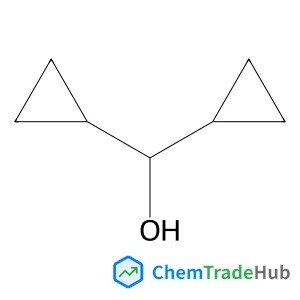
![2-[1-(4-Chlorobenzyl)-1H-indol-3-yl]-2-oxo-N-(6-quinolinyl)acetamide structure](https://cnstatic.chemtradehub.com/structs/501/501921-61-5-756a.webp "2-[1-(4-Chlorobenzyl)-1H-indol-3-yl]-2-oxo-N-(6-quinolinyl)acetamide structure")
2-[1-(4-Chlorobenzyl)-1H-indol-3-yl]-2-oxo-N-(6-quinolinyl)acetamide
CAS号:
501921-61-5
分子式:
C26H18ClN3O2
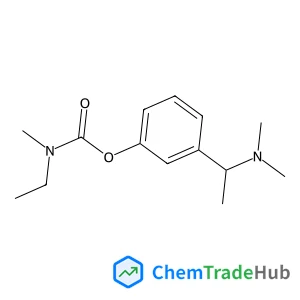
推荐供应商






免责声明
本页面提供的学术期刊信息仅供参考和研究使用。我们与任何期刊出版商均无关联,也不处理投稿事宜。如有投稿相关咨询,请直接联系相关期刊出版商。
如发现页面信息有误,请发送邮件至 support@chemtradehub.com 联系我们。我们将及时核实并处理您的问题。