


Thermodynamic and structural features of chlorodifluoromethane (a sI–sII dual hydrate former) + external guest (N2 or CH4) hydrates and their significance for greenhouse gas separation
文献信息
发布日期
2021-07-13
DOI
10.1039/D1CP02327F
影响因子
3.676
作者
Junghoon Mok, Junkyu Lim, Wonjung Choi, Soyeong Yun, Joonseop Lee, Gyeol Ko, Yongwon Seo
查看原文
摘要
In this study, a new sI–sII dual hydrate former [chlorodifluoromethane (CHClF2); an important greenhouse gas with a global warming potential of 1810], which forms sI hydrate by itself and forms sII hydrate in the presence of external help guests such as CH4 and N2, was introduced and closely investigated for its potential significance in gas hydrate-based gas separation. The phase equilibria of CHClF2 hydrate, binary CHClF2 (5%) + N2 (95%) hydrate, and binary CHClF2 (5%) + CH4 (95%) hydrate were measured to examine the formation conditions and thermodynamic stability regions of CHClF2 + external guest hydrates. Nuclear magnetic resonance and in situ Raman spectroscopic results confirmed the formation of sII hydrates for CHClF2 + external guest (N2 or CH4) mixtures. Powder X-ray diffraction patterns clearly demonstrated a structural transition of sI to sII hydrates and a preferential incorporation of CHClF2 molecules in the hydrate phase when external guests (N2 or CH4) were involved in CHClF2 hydrate formation. The measured dissociation enthalpy values of CHClF2 hydrate, binary CHClF2 (5%) + N2 (95%) hydrate, and binary CHClF2 (5%) + CH4 (95%) hydrate using a high-pressure micro-differential scanning calorimeter also indicated preferential CHClF2 enclathration. The experimental results provide new insights into the thermodynamic and structural features of the CHClF2 (sI–sII dual hydrate former) + external guest hydrates for understanding and designing the hydrate-based CHClF2 separation process.
期刊推荐
New Journal of Chemistry
Journal of Saudi Chemical Society
Russian Journal of Coordination Chemistry
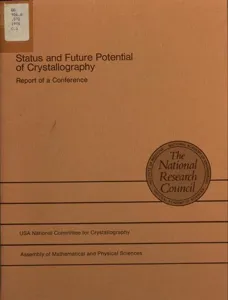
Crystallography Reports
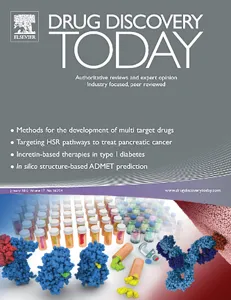
Drug Discovery Today

Chemistry Education Research and Practice
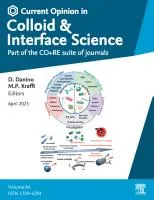
Current Opinion in Colloid & Interface Science
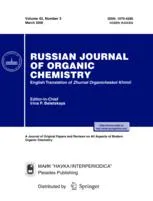
Russian Journal of Organic Chemistry
Journal of Peptide Science

Saudi Pharmaceutical Journal
相关文献
Comparing molecular photofragmentation dynamics in the gas and liquid phases
Stephanie J. Harris, Daniel Murdock, Yuyuan Zhang, Thomas A. A. Oliver, Michael P. Grubb, Andrew J. Orr-Ewing, Gregory M. Greetham, Ian P. Clark, Michael Towrie, Stephen E. Bradforth, Michael N. R. Ashfold
2013-03-19
Perspective
DOI: 10.1039/C3CP50756D
Photoelectrical properties and the electronic structure of Tl1−xIn1−xSnxSe2 (x = 0, 0.1, 0.2, 0.25) single crystalline alloys
G. E. Davydyuk, H. Kamarudin, G. L. Myronchuk, S. P. Danylchuk, A. O. Fedorchuk, L. V. Piskach, M. Yu. Mozolyuk, O. V. Parasyuk
2013-03-12
Paper
DOI: 10.1039/C3CP50836F
Interpretation of experimental hydrogen-bond enthalpies and entropies from COSMO polarisation charge densities
Jens Reinisch, Frank Eckert, Jérôme Graton, Jean-Yves Le Questel
2013-03-22
Paper
DOI: 10.1039/C3CP44611E
Small-angle water reorientations in KOH doped hexagonal ice and clathrate hydrates
B. Geil
2013-02-25
Paper
DOI: 10.1039/C3CP00139C
On the signature of the hydrophobic effect at a single molecule level
Giuseppe Graziano
2013-03-25
Paper
DOI: 10.1039/C3CP50616A
Laser directed lithography of asymmetric graphene ribbons on a polydimethylsiloxane trench structure
Yi Yang, Dan Xie, Tian-Ling Ren, Yi Shu, Hui Sun, Chang-Jian Zhou, Xuan Liu, Lu-Qi Tao, Jie Ge, Cang-Hai Zhang, Yuegang Zhang
2013-02-28
Paper
DOI: 10.1039/C3CP50538C
Raman microspectroscopy and vibrational sum frequency generation spectroscopy as probes of the bulk and surface compositions of size-resolved sea spray aerosol particles
Andrew P. Ault, Defeng Zhao, Carlena J. Ebben, Michael J. Tauber, Franz M. Geiger, Vicki H. Grassian
2013-02-19
Paper
DOI: 10.1039/C3CP43899F
Experimental evidence for surface freezing in supercooled n-alkane nanodroplets
Viraj P. Modak, Harshad Pathak, Mitchell Thayer, Sherwin J. Singer
2013-03-05
Paper
DOI: 10.1039/C3CP44490B
Azidoacetylene – interpretation of gas phase infrared spectra based on high-level vibrational configuration interaction calculations
Dominik Oschetzki, Xiaoqing Zeng, Helmut Beckers, Klaus Banert, Guntram Rauhut
2013-03-14
Paper
DOI: 10.1039/C3CP50268F
您可能还喜欢
化合物问答
处理2-异丙基-5-羧基-1,3-二氧六环(CAS号:116193-72-7)时应注意哪些实验室安全事项?
处理2-异丙基-5-羧基-1,3-二氧六环时应注意以下安全事项:1. 戴上防护眼镜和手套,避免直接接触皮肤和眼睛。2. 在通风橱中操作,确保空气流通。3. 防止...
116193-72-72-Isopropyl-1,3-diox...
化合物问答
2-Hydroxy-N,N-dimethyl-2-phenylacetamide(CAS号:2019-71-8)的市场或研究趋势如何?
该化合物在制药和精细化工领域具有一定的应用,特别是在药物合成中作为中间体。随着环保意识的提高,市场对更安全、更环保的化学品的需求增加,因此该化合物的研究趋势倾向...
2019-71-82-Hydroxy-N,N-dimeth...
化合物问答
4-(1H-吡唑-3-基)哌啶(CAS号:278798-08-6)应用于哪些行业?
4-(1H-吡唑-3-基)哌啶在医药领域有潜在应用,可用于合成药物中间体。此外,在聚合物和传感器领域也有一定的应用前景,可以作为功能材料的一部分。
278798-08-64-(1H-Pyrazol-3-yl)p...
化合物问答
什么是三氯噻嗪(CAS号:133-67-5)?
三氯噻嗪是一种化学物质,其英文名称为6-Chloro-3-(dichloromethyl)-3,4-dihydro-2H-1,2,4-benzothiadiaz...
133-67-56-Chloro-3-(dichloro...
化合物问答
阿螺旋霉素(CAS号:467214-20-6)通常如何合成?
阿螺旋霉素的合成通常采用生物发酵技术,首先从特定的链霉菌提取前体物质,然后通过一系列化学修饰步骤,如酰胺化、环化等,最终得到阿螺旋霉素。常用的催化剂包括有机酸等...
467214-20-6Alvespimycin Hydroch...
化合物问答
什么是2-(二甲基氨基)-5-硝基苯甲酸(CAS号:4405-28-1)?
2-(二甲基氨基)-5-硝基苯甲酸是一种化学化合物,其分子式为C9H11N2O4。该化合物具有一定的生物活性和化学性质,常用于医药、农药及研究领域。
4405-28-12-(Dimethylamino)-5-...
化合物问答
1-苯基-1H-吡唑-4-甲酸甲酯(CAS号:7188-96-7)应用于哪些行业?
1-苯基-1H-吡唑-4-甲酸甲酯主要应用于医药行业,用作合成其他药物的中间体。此外,它还可能在聚合物、传感器等领域有应用。
7188-96-7Methyl 1-phenyl-1h-p...
化合物问答
1-(三异丙基甲硅烷基氧基)环丙烷羧酸甲酯(CAS号:83010-83-7)应用于哪些行业?
该化合物主要用于有机合成中间体领域,特别是在医药合成中作为关键中间体。它也可用于聚合物合成和传感器材料制备。由于其特殊的环丙烷结构和甲硅烷基氧基团,它在半导体材...
83010-83-77-Methoxy-8-nitroqui...
215319-47-4Balanophonin, (+)-
化合物问答
如何处理含有对甲苯氧基乙酸肼(CAS号:36304-39-9)的废料?
含有对甲苯氧基乙酸肼的废料应首先通过中和或沉淀等方法进行预处理,以降低其毒性。然后,可以采用焚烧或交由专业废物处理公司进行安全处置。根据当地法规和环境标准,务必...
36304-39-92-(4-Methylphenoxy)a...
来源期刊
Physical Chemistry Chemical Physics

CiteScore:
5.5
自引率:
10.3%
年发文量:
3036
Physical Chemistry Chemical Physics (PCCP) is an international journal co-owned by 19 physical chemistry and physics societies from around the world. This journal publishes original, cutting-edge research in physical chemistry, chemical physics and biophysical chemistry. To be suitable for publication in PCCP, articles must include significant innovation and/or insight into physical chemistry; this is the most important criterion that reviewers and Editors will judge against when evaluating submissions. The journal has a broad scope and welcomes contributions spanning experiment, theory, computation and data science. Topical coverage includes spectroscopy, dynamics, kinetics, statistical mechanics, thermodynamics, electrochemistry, catalysis, surface science, quantum mechanics, quantum computing and machine learning. Interdisciplinary research areas such as polymers and soft matter, materials, nanoscience, energy, surfaces/interfaces, and biophysical chemistry are welcomed if they demonstrate significant innovation and/or insight into physical chemistry. Joined experimental/theoretical studies are particularly appreciated when complementary and based on up-to-date approaches.
推荐化合物
![9-Ethyl-3-{(E)-[ethyl(2-methylphenyl)hydrazono]methyl}-9H-carbazole structure](https://cnstatic.chemtradehub.com/structs/127/1274948-12-7-301f.webp "9-Ethyl-3-{(E)-[ethyl(2-methylphenyl)hydrazono]methyl}-9H-carbazole structure")
![[3-Formyl-5-(trifluoromethoxy)phenyl]boronic acid structure](https://cnstatic.chemtradehub.com/structs/145/1451393-39-7-aebb.webp "[3-Formyl-5-(trifluoromethoxy)phenyl]boronic acid structure")
![2-Methyl-2-propanyl 4-[3-(aminomethyl)phenyl]-1-piperazinecarboxylate structure](https://cnstatic.chemtradehub.com/structs/889/889948-55-4-5c12.webp "2-Methyl-2-propanyl 4-[3-(aminomethyl)phenyl]-1-piperazinecarboxylate structure")
2-Methyl-2-propanyl 4-[3-(aminomethyl)phenyl]-1-piperazinecarboxylate
CAS号:
889948-55-4
分子式:
C16H25N3O2
推荐供应商




免责声明
本页面提供的学术期刊信息仅供参考和研究使用。我们与任何期刊出版商均无关联,也不处理投稿事宜。如有投稿相关咨询,请直接联系相关期刊出版商。
如发现页面信息有误,请发送邮件至 support@chemtradehub.com 联系我们。我们将及时核实并处理您的问题。