











The role of high-density and low-density amorphous ice on biomolecules at cryogenic temperatures: a case study with polyalanine
文献信息
发布日期
2021-08-30
DOI
10.1039/D1CP02734D
影响因子
3.676
作者
查看原文
摘要
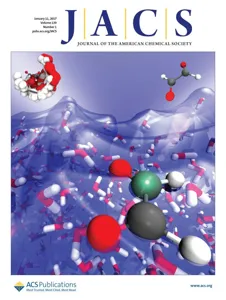
Experimental techniques, such as cryo-electron microscopy, require biological samples to be recovered at cryogenic temperatures (T ≈ 100 K) with water being in an amorphous ice state. However, (bulk) water can exist in two amorphous ices at P < 1 GPa, low-density amorphous (LDA) ice at low pressures and high-density amorphous ice (HDA) at high pressures; HDA is ≈20–25% denser than LDA. While fast/plunge cooling at 1 bar brings the sample into LDA, high-pressure cooling (HPC), at sufficiently high pressure, produces HDA. HDA can also be produced by isothermal compression of LDA at cryogenic temperatures. Here, we perform classical molecular dynamics simulations to study the effects of LDA, HDA, and the LDA–HDA transformation on the structure and hydration of a small peptide, polyalanine. We follow thermodynamic paths corresponding to (i) fast/plunge cooling at 1 bar, (ii) HPC at P = 400 MPa, and (iii) compression/decompression cycles at T = 80 K. While process (i) produced LDA in the system, path (iii) produces HDA. Interestingly, the amorphous ice produced in process (ii) is an intermediate amorphous ice (IA) with properties that fall in-between those of LDA and HDA. Remarkably, the structural changes in polyalanine are negligible at all conditions studied (0–2000 MPa, 80–300 K) even when water changes among the low and high-density liquid states as well as the amorphous solids LDA, IA, and HDA. The similarities and differences in the hydration of polyalanine vitrified in LDA, IA, and HDA are described. Since the studied thermodynamic paths are suitable for the cryopreservation of biomolecules, we also study the structure and hydration of polyalanine along isobaric and isochoric heating paths, which can be followed experimentally for the recovery of cryopreserved samples. Upon heating, the structure of polyalanine remains practically unchanged. We conclude with a brief discussion of the practical advantages of (a) using HDA and IA as a cryoprotectant environment (as opposed to LDA), and (b) the use of isochoric heating as a recovery process (as opposed to isobaric heating).
相关文献
Use multiscale simulation to explore the effects of the homodimerizations between different conformation states on the activation and allosteric pathway for the μ-opioid receptor
Xi Zhang, Yuan Yuan, Longrong Wang, Yanzhi Guo, Menglong Li, Chuan Li, Xuemei Pu
2018-04-19
Paper
DOI: 10.1039/C8CP02016G
Phenothiazine-based small-molecule organic solar cells with power conversion efficiency over 7% and open circuit voltage of about 1.0 V using solvent vapor annealing
Yogajivan Rout, Rajneesh Misra, Rahul Singhal, Subhayan Biswas, Ganesh D. Sharma
2018-01-30
Paper
DOI: 10.1039/C7CP08308D
Theoretical investigation of the infrared spectrum of small polyynes
Kirstin D. Doney, Dongfeng Zhao, John F. Stanton, Harold Linnartz
2017-11-03
Paper
DOI: 10.1039/C7CP06131E
Phenyl radical + propene: a prototypical reaction surface for aromatic-catalyzed 1,2-hydrogen-migration and subsequent resonance-stabilized radical formation
Zachary J. Buras, Te-Chun Chu, Adeel Jamal, Nathan W. Yee, Joshua E. Middaugh, William H. Green
2018-04-13
Paper
DOI: 10.1039/C8CP01159A
“On demand” triggered crystallization of CaCO3 from solute precursor species stabilized by the water-in-oil microemulsion
Teresa Roncal-Herrero, Alejandro Fernandez-Martinez, Adriana Matamoros-Veloza, Roland Kröger
2018-05-10
Paper
DOI: 10.1039/C8CP00540K
DNA triplex structure, thermodynamics, and destabilisation: insight from molecular simulations
Belinda J. Boehm, Charles Whidborne, Alexander L. Button, Tara L. Pukala, David M. Huang
2018-05-04
Paper
DOI: 10.1039/C8CP02385A
Calorimetric study of water's two glass transitions in the presence of LiCl
Thomas Loerting
2018-02-07
Paper
DOI: 10.1039/C7CP08677F
Phonon transport in Janus monolayer MoSSe: a first-principles study
2018-02-15
Paper
DOI: 10.1039/C8CP00350E
Reactions of SO2 and NH3 with epoxy groups on the surface of graphite oxide powder
Wenjing Xie, Chak-Keung Chan
2018-02-09
Paper
DOI: 10.1039/C8CP00524A
您可能还喜欢
化合物问答
2-(甲基磺酰基)嘧啶-5-胺(CAS号:56621-92-2)适用哪些法规指南?
该化合物适用的法规指南包括GHS(全球化学品统一分类和标签制度)分类为特定目标器官毒性-单次接触类别3;根据欧盟REACH法规,该化合物需要进行注册和评估;在美...
56621-92-22-(Methylsulfonyl)py...
化合物问答
在合成中是否有4-(4-氯苯基)-1H-咪唑(CAS号:35512-29-9)的替代品?
在合成中,可以考虑使用一些类似的化合物作为4-(4-氯苯基)-1H-咪唑的替代品,如4-(4-溴苯基)-1H-咪唑或4-(4-甲氧基苯基)-1H-咪唑。这些化合...
35512-29-94-(4-Chlorophenyl)-1...
化合物问答
什么是N~2~-甲基丙氨酸酰胺(CAS号:32012-16-1)?
N~2~-甲基丙氨酸酰胺是一种有机化合物,其化学名为2-(Methylamino)propanamide。它是一种酰胺类化合物,分子式为C4H10N2O,相对分...
32012-16-12-(Methylamino)propa...
化合物问答
如何处理含有N-苄基-3-氨基氧杂环丁烷草酸盐(CAS号:1956341-96-0)的废料?
处理含有N-苄基-3-氨基氧杂环丁烷草酸盐(CAS号:1956341-96-0)的废料时,应首先确保遵循相关法规要求,如GHS和REACH等。通常,废液应先进行...
1956341-96-0N-Benzyloxetan-3-ami...
化合物问答
4-bromo-2-chloro-6-methylbenzoic acid(CAS号:877149-07-0)的物理化学性质是什么?
4-溴-2-氯-6-甲基苯甲酸是一种固体化合物,具有较高的熔点和较低的沸点。它的分子量为261.03 g/mol。该化合物在水中几乎不溶,在有机溶剂中溶解度适中...
877149-07-04-Bromo-2-chloro-6-m...
化合物问答
2-[(2,5-二氯-4-嘧啶)氨基]-N-甲基苯甲酰胺(CAS号:761440-08-8)通常如何合成?
该化合物通常通过缩合反应合成,典型的方法是将2,5-二氯嘧啶与N-甲基苯甲酰胺在碱性条件下进行偶联反应。常用的碱包括NaH、LDA等强碱。该合成路线具有较高的选...
761440-08-82-[(2,5-dichloropyri...
4752-10-71,4-Dichlorophthalaz...
化合物问答
在合成中是否有3,5-二溴-4-甲基苯胺(CAS号:13194-73-5)的替代品?
3,5-二溴-4-甲基苯胺在某些合成路线中可能没有直接替代品。然而,在某些应用场景下,可以考虑使用其他类似结构的化合物如3,5-二溴-4-硝基苯胺或3,5-二碘...
13194-73-53,5-Dibromo-4-methyl...
化合物问答
2-氯喹啉-4-羧酸甲酯(CAS号:62482-26-2)的主要用途是什么?
2-氯喹啉-4-羧酸甲酯主要用于有机合成和药物合成领域,作为中间体或原料。它在合成某些药物和染料时具有重要作用。此外,该化合物还可能用于某些特定的化学研究中。
62482-26-2Methyl 2-chloro-4-qu...
化合物问答
i>]吡啶(CAS号:474708-88-8)安全吗?
6-溴-8-氯咪唑[1,2-a]吡啶在操作过程中需要谨慎以确保安全。该化合物具有一定的毒性,吸入其蒸气或粉尘可能导致呼吸道刺激。处理时应佩戴适当的防护装备,如手...
474708-88-86-Bromo-8-chloroimid...
来源期刊
Physical Chemistry Chemical Physics

CiteScore:
5.5
自引率:
10.3%
年发文量:
3036
Physical Chemistry Chemical Physics (PCCP) is an international journal co-owned by 19 physical chemistry and physics societies from around the world. This journal publishes original, cutting-edge research in physical chemistry, chemical physics and biophysical chemistry. To be suitable for publication in PCCP, articles must include significant innovation and/or insight into physical chemistry; this is the most important criterion that reviewers and Editors will judge against when evaluating submissions. The journal has a broad scope and welcomes contributions spanning experiment, theory, computation and data science. Topical coverage includes spectroscopy, dynamics, kinetics, statistical mechanics, thermodynamics, electrochemistry, catalysis, surface science, quantum mechanics, quantum computing and machine learning. Interdisciplinary research areas such as polymers and soft matter, materials, nanoscience, energy, surfaces/interfaces, and biophysical chemistry are welcomed if they demonstrate significant innovation and/or insight into physical chemistry. Joined experimental/theoretical studies are particularly appreciated when complementary and based on up-to-date approaches.
推荐化合物
![(1S,4aR,5R,7S,7aS)-1-(beta-D-Glucopyranosyloxy)-5-hydroxy-7-methyl-1,4a,5,6,7,7a-hexahydrocyclopenta[c]pyran-7-yl alpha-D-galactopyranoside structure](https://cnstatic.chemtradehub.com/structs/817/81720-07-2-4ffd.webp "(1S,4aR,5R,7S,7aS)-1-(beta-D-Glucopyranosyloxy)-5-hydroxy-7-methyl-1,4a,5,6,7,7a-hexahydrocyclopenta[c]pyran-7-yl alpha-D-galactopyranoside structure")
![2,4,5-Trichloro-7H-pyrrolo[2,3-d]pyrimidine structure](https://cnstatic.chemtradehub.com/structs/105/1053228-28-6-fba3.webp "2,4,5-Trichloro-7H-pyrrolo[2,3-d]pyrimidine structure")
推荐供应商





免责声明
本页面提供的学术期刊信息仅供参考和研究使用。我们与任何期刊出版商均无关联,也不处理投稿事宜。如有投稿相关咨询,请直接联系相关期刊出版商。
如发现页面信息有误,请发送邮件至 support@chemtradehub.com 联系我们。我们将及时核实并处理您的问题。