


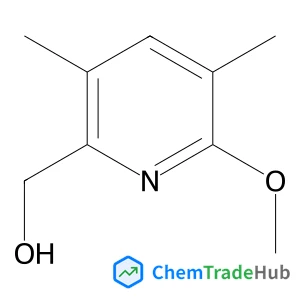
Catalyzed reaction of isocyanates (RNCO) with water
文献信息
发布日期
2021-08-19
DOI
10.1039/D1CP03302F
影响因子
3.676
作者
Mark E. Wolf, Henry F. Schaefer, III
查看原文
摘要
The reactions between substituted isocyanates (RNCO) and other small molecules (e.g. water, alcohols, and amines) are of significant industrial importance, particularly for the development of novel polyurethanes and other useful polymers. We present very high-level ab initio computations on the HNCO + H2O reaction, with results targeting the CCSDT(Q)/CBS//CCSD(T)/cc-pVQZ level of theory. Our results affirm that hydrolysis can occur across both the NC and CO bonds of HNCO via concerted mechanisms to form carbamate or imidic acid with ΔH0K barrier heights of 38.5 and 47.5 kcal mol−1. A total of 24 substituted RNCO + H2O reactions were studied. Geometries obtained with a composite method and refined with CCSD(T)/CBS single point energies determine that substituted RNCO species have a significant influence on these barrier heights, with an extreme case like fluorine lowering both barriers by close to 15 kcal mol−1 and most common alkyl substituents lowering both by approximately 3 kcal mol−1. Natural Bond Orbital (NBO) analysis provides evidence that the predicted barrier heights are strongly associated with the occupation of the in-plane C–O* orbital of the RNCO reactant. Key autocatalytic mechanisms are considered in the presence of excess water and RNCO species. Additional waters (one or two) are predicted to lower both barriers significantly at the CCSD(T)/aug-cc-pV(T+d)Z level of theory with strongly electron withdrawing RNCO substituents also increasing these effects, similar to the uncatalyzed case. The 298 K Gibbs energies are only marginally lowered by a second catalyst water molecule, indicating that the decreasing ΔH0K barriers are offset by loss of translational entropy with more than one catalyst water. Two-step 2RNCO + H2O mechanisms are characterized for the formation of carbamate and imidic acid. The second step of these two pathways exhibits the largest barrier and presents no clear pattern with respect to substituent choice. Our results indicate that an additional RNCO molecule might catalyze imidic acid formation but have less influence on the efficiency of carbamate formation. We expect that these results lay a firm foundation for the experimental study of substituted isocyanates and their relationship to the energetic pathways of related systems.
期刊推荐
Current Pharmaceutical Biotechnology
Molecular Diversity
Nature Reviews Drug Discovery
Foundations of Chemistry
CrystEngComm
Angewandte Chemie International Edition
Environmental Toxicology and Pharmacology
Faraday Discussions
Photochemical & Photobiological Sciences
Journal of Enzyme inhibition and Medicinal Chemistry
相关文献
Theoretical assessment of Raman spectra on MXene Ti2C: from monolayer to bilayer
Weiliang Wang
2021-08-18
Paper
DOI: 10.1039/D1CP03117A
Novel Janus diamane C4FCl: a stable and moderate bandgap semiconductor with a huge excitonic effect
2021-08-09
Paper
DOI: 10.1039/D1CP02632A
Exploration on the drug solubility enhancement in aqueous medium with the help of endo-functionalized molecular tubes: a computational approach
Rabindranath Paul, Sandip Paul
2021-08-09
Paper
DOI: 10.1039/D1CP01187A
The key role of the central cavity in sodium transport through ligand-gated two-pore channels
Stefan Milenkovic, Igor V. Bodrenko, Armando Carpaneto
2021-08-11
Paper
DOI: 10.1039/D1CP02947A
Deciphering the mechanism of action of 5FDQD and the design of new neutral analogues for the FMN riboswitch: a well-tempered metadynamics simulation study
2021-11-29
Paper
DOI: 10.1039/D1CP01348C
Analysis of reduced paramagnetic shifts as an effective tool in NMR spectroscopy
Igor A. Nikovskiy, Dmitry Y. Aleshin
2021-12-06
Paper
DOI: 10.1039/D1CP04648A
Initiation reactions in the high temperature decomposition of styrene
Travis Sikes, Colin Banyon, Rachel A. Schwind, Patrick T. Lynch, Andrea Comandini, Raghu Sivaramakrishnan, Robert S. Tranter
2021-08-23
Paper
DOI: 10.1039/D1CP02437J
Electronic structures and properties of dianionic pentacarbonyls [TM(CO)5]2− (TM = Cr, Mo, W)
Gerui Pei, Cong-Cong Shu, Mengyang Li, Zhong-Ming Sun, Tao Yang
2021-08-03
Paper
DOI: 10.1039/D1CP01592C
High time resolution measurements of droplet evaporation kinetics and particle crystallisation
D. A. Hardy, J. Archer, P. Lemaitre, R. Vehring, J. P. Reid, J. S. Walker
2021-08-11
Paper
DOI: 10.1039/D1CP02840E
Fluorescence band exchange narrowing in a series of squaraine oligomers: energetic vs. structural disorder
Arthur Turkin, Pavel Malý
2021-08-12
Paper
DOI: 10.1039/D1CP02136B
您可能还喜欢
化合物问答
如何储存1,2-环己二酮环乙缩醛(CAS号:4746-96-7)?
1,2-环己二酮环乙缩醛应储存在阴凉、干燥、通风良好的地方,避免阳光直射。建议使用密封容器保存,并保持环境温度在室温范围内,远离火源和热源。
4746-96-71,4-Dioxaspiro[4.5]d...
化合物问答
Ecopladib(CAS号:381683-92-7)的市场或研究趋势如何?
Ecopladib作为一种新型的药物,主要应用于治疗高胆固醇等疾病。目前,市场和研究趋势显示,Ecopladib因其独特的药理作用而受到关注。随着对心血管疾病治...
381683-92-7Ecopladib
化合物问答
2,3-Dimethyl-3H-imidazo[4,5-c]pyridine(CAS号:52538-09-7)通常如何合成?
2,3-二甲基-3H-咪唑[4,5-c]吡啶通常通过咪唑和2,3-二甲基吡啶的缩合反应合成。具体来说,将咪唑和2,3-二甲基吡啶在适当的溶剂中进行加热或加压反应...
52538-09-72,3-Dimethyl-3H-imid...
化合物问答
2,3,4,5-tetrahydro-1H-3-苯并氮杂环;盐酸盐(CAS号:17379-01-0)的市场或研究趋势如何?
该化合物在药物化学和有机合成中有一定的应用。近年来,随着对新型药物化合物的需求增加,该化合物的研究趋势主要集中在探索其生物活性,尤其是其在神经系统疾病治疗中的潜...
17379-01-02,3,4,5-Tetrahydro-1...
68-90-6(2-Ethyl-1-benzofura...
化合物问答
如何储存盐酸甘氨酸丁酯(CAS号:13048-99-2)?
盐酸甘氨酸丁酯应储存在阴凉、干燥、通风良好的地方,避免阳光直射和高温环境,温度应控制在25℃以下。储存容器应密封,避免与空气中的水分和酸性物质接触,以防发生水解...
13048-99-2Butyl glycinate hydr...
化合物问答
什么是2-Iodo-N,N-dimethylbenzamide(CAS号:54616-46-5)?
2-碘-N,N-二甲基苯胺是一种有机化合物,化学名为2-Iodo-N,N-dimethylbenzamide。其分子式为C<sub>9</sub>H<sub>1...
54616-46-52-Iodo-N,N-dimethylb...
16817-90-6N-Cyclohexylglycinam...
化合物问答
5-溴-2-(4H-1,2,4-三唑-4-基)吡啶(CAS号:959240-99-4)的市场或研究趋势如何?
随着医药、农药和新材料领域的发展,该化合物作为关键中间体的应用日益增多。特别是在药物合成中,由于其独特的化学性质,可以用于合成多种药物分子。未来的研究趋势可能集...
959240-99-45-Bromo-2-(4H-1,2,4-...
化合物问答
2,4-二溴-6-三氟甲基嘧啶(CAS号:785778-00-9)通常如何合成?
2,4-二溴-6-三氟甲基嘧啶通常通过溴化反应合成。首先,将6-三氟甲基嘧啶与溴化剂(如液溴)在适当的溶剂(如二氯甲烷、四氢呋喃)中反应,加入适当的催化剂(如四...
785778-00-92,4-Dibromo-6-(trifl...
来源期刊
Physical Chemistry Chemical Physics

CiteScore:
5.5
自引率:
10.3%
年发文量:
3036
Physical Chemistry Chemical Physics (PCCP) is an international journal co-owned by 19 physical chemistry and physics societies from around the world. This journal publishes original, cutting-edge research in physical chemistry, chemical physics and biophysical chemistry. To be suitable for publication in PCCP, articles must include significant innovation and/or insight into physical chemistry; this is the most important criterion that reviewers and Editors will judge against when evaluating submissions. The journal has a broad scope and welcomes contributions spanning experiment, theory, computation and data science. Topical coverage includes spectroscopy, dynamics, kinetics, statistical mechanics, thermodynamics, electrochemistry, catalysis, surface science, quantum mechanics, quantum computing and machine learning. Interdisciplinary research areas such as polymers and soft matter, materials, nanoscience, energy, surfaces/interfaces, and biophysical chemistry are welcomed if they demonstrate significant innovation and/or insight into physical chemistry. Joined experimental/theoretical studies are particularly appreciated when complementary and based on up-to-date approaches.
推荐化合物
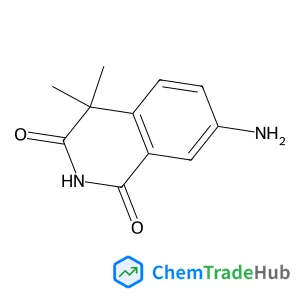
推荐供应商





免责声明
本页面提供的学术期刊信息仅供参考和研究使用。我们与任何期刊出版商均无关联,也不处理投稿事宜。如有投稿相关咨询,请直接联系相关期刊出版商。
如发现页面信息有误,请发送邮件至 support@chemtradehub.com 联系我们。我们将及时核实并处理您的问题。