






![2-(Methylsulfonyl)-2,4,5,6-tetrahydropyrrolo[3,4-c]pyrazole structure](https://cnstatic.chemtradehub.com/structs/122/1226781-80-1-09d5.webp "2-(Methylsulfonyl)-2,4,5,6-tetrahydropyrrolo[3,4-c]pyrazole structure")
High-voltage liquid electrolytes for Li batteries: progress and perspectives
文献信息
发布日期
2021-08-03
DOI
10.1039/D1CS00450F
影响因子
54.564
作者
Xiulin Fan, Chunsheng Wang
查看原文
摘要
Since the advent of the Li ion batteries (LIBs), the energy density has been tripled, mainly attributed to the increase of the electrode capacities. Now, the capacity of transition metal oxide cathodes is approaching the limit due to the stability limitation of the electrolytes. To further promote the energy density of LIBs, the most promising strategies are to enhance the cut-off voltage of the prevailing cathodes or explore novel high-capacity and high-voltage cathode materials, and also replacing the graphite anode with Si/Si–C or Li metal. However, the commercial ethylene carbonate (EC)-based electrolytes with relatively low anodic stability of ∼4.3 V vs. Li+/Li cannot sustain high-voltage cathodes. The bottleneck restricting the electrochemical performance in Li batteries has veered towards new electrolyte compositions catering for aggressive next-generation cathodes and Si/Si–C or Li metal anodes, since the oxidation-resistance of the electrolytes and the in situ formed cathode electrolyte interphase (CEI) layers at the high-voltage cathodes and solid electrolyte interphase (SEI) layers on anodes critically control the electrochemical performance of these high-voltage Li batteries. In this review, we present a comprehensive and in-depth overview on the recent advances, fundamental mechanisms, scientific challenges, and design strategies for the novel high-voltage electrolyte systems, especially focused on stability issues of the electrolytes, the compatibility and interactions between the electrolytes and the electrodes, and reaction mechanisms. Finally, novel insights, promising directions and potential solutions for high voltage electrolytes associated with effective SEI/CEI layers are proposed to motivate revolutionary next-generation high-voltage Li battery chemistries.
相关文献
Co-crystals of caffeine with substituted nitroanilines and nitrobenzoic acids: Structure–mechanical property and thermal studies
Soumyajit Ghosh, C. Malla Reddy
2012-02-13
Paper
DOI: 10.1039/C2CE06754D
Lipid-soluble arsenic species identified in the brain of the marine fish skipjack tuna (Katsuwonus pelamis) using a sequential extraction and HPLC/mass spectrometry
Michael Stiboller, Fabiana P. Freitas, Kevin A. Francesconi, Tanja Schwerdtle, António J. A. Nogueira, Georg Raber
2019-10-29
Paper
DOI: 10.1039/C9JA00249A
Thermal annealing reduces geminate recombination in TQ1:N2200 all-polymer solar cells
Safakath Karuthedath, Armantas Melianas, Zhipeng Kan, Vytenis Pranculis, Markus Wohlfahrt, Jafar I. Khan, Julien Gorenflot, Yuxin Xia, Olle Inganäs, Vidmantas Gulbinas, Martijn Kemerink, Frédéric Laquai
2018-03-27
Paper
DOI: 10.1039/C8TA01692E
Carbon-based hydrogels: synthesis and their recent energy applications
Jayakumar Anjali, Vishal K. Jose, Jong-Min Lee
2019-06-17
Review Article
DOI: 10.1039/C9TA02525A
A highly sensitive immunofluorescence sensor based on bicolor upconversion and magnetic separation for simultaneous detection of fumonisin B1 and zearalenone
Xudong Zhao, Yu Wang, Shuang Li, Yingkai Qin, Tie Han, Zhixian Gao, Hui Liu
2021-04-06
Paper
DOI: 10.1039/D1AN00004G
Photoresponsive smart template for reversible cell micropatterning
Yu-Hui Gong, Juan Yang, Feng-Yi Cao, Jing Zhang, Han Cheng, Ren-Xi Zhuo, Xian-Zheng Zhang
2013-02-26
Communication
DOI: 10.1039/C3TB20073F
Dynamic porous metal–organic frameworks: synthesis, structure and sorption property
Chao Hou, Qing Liu, Taka-aki Okamura, Peng Wang, Wei-Yin Sun
2012-10-11
Paper
DOI: 10.1039/C2CE26533H
Parametric optimization and spectral line selection for liquid sampling-atmospheric pressure glow discharge – optical emission spectroscopy
Katja A. Hall, R. Kenneth Marcus
2019-11-07
Paper
DOI: 10.1039/C9JA00325H
Ultrasensitive detection of vitamin E by signal conversion combined with core-satellite structure-based plasmon coupling effect
Keying Xu, Jing Li, Qingyi Han, Dingding Zhang, Libing Zhang, Zhen Zhang, Xiaoquan Lu
2022-01-04
Paper
DOI: 10.1039/D1AN02289J
您可能还喜欢
化合物问答
什么是2-Bromo-1-(pyrimidin-2-yl)ethanone hydrobromide(CAS号:1588441-02-4)?
2-Bromo-1-(pyrimidin-2-yl)ethanone hydrobromide是一种有机化合物,分子式为C6H5Br2N2O2。它是一种溴代化合...
1588441-02-42-Bromo-1-(2-pyrimid...
化合物问答
在合成中是否有1-正-丁基-3-甲基咪唑鎓三氟甲烷磺酸盐(CAS号:174899-66-2)的替代品?
在合成中,可以考虑使用1-正-丁基-3-甲基咪唑鎓溴酸盐或1-正-丁基-3-甲基咪唑鎓氯酸盐作为替代品。这些化合物在性能上与1-正-丁基-3-甲基咪唑鎓三氟甲烷...
174899-66-21-Butyl-3-methyl-1H-...
化合物问答
2-methyl-5-thiophen-2-ylfuran-3-carboxylic acid(CAS号:651005-90-2)的市场或研究趋势如何?
目前,2-methyl-5-thiophen-2-ylfuran-3-carboxylic acid的研究主要集中在药物化学和新型材料领域。随着生物医药和有机合...
651005-90-22-Methyl-5-(thien-2-...
化合物问答
格列吡嗪杂质H(CAS号:13554-93-3)的主要用途是什么?
格列吡嗪杂质H主要作为药物中间体或副产物存在,并无特定的工业应用。在药物生产中,它可能需要被处理掉以保证最终药物的质量。
13554-93-3Ethyl (2-(4-((cycloh...
化合物问答
如何储存(9ci)-4-甲氧基-1H-苯并咪唑-2-乙腈(CAS号:317817-41-7)?
(9ci)-4-甲氧基-1H-苯并咪唑-2-乙腈应储存在阴凉、干燥、通风良好的地方,避免阳光直射。使用密封的玻璃或塑料容器储存,并确保容器的密封性良好,以防止挥...
317817-41-7(4-Methoxy-1H-benzim...
化合物问答
4,5,9,10-四氢苯芘(CAS号:781-17-9)应用于哪些行业?
4,5,9,10-四氢苯芘在医药行业用于作为某些药物的中间体,在聚合物行业用作添加剂提升材料的热稳定性,在传感器领域作为传感器的敏感材料,在半导体行业中用作掺杂...
781-17-94,5,9,10-Tetrahydrop...
化合物问答
处理叶酸-D4(CAS号:171777-72-3)时应注意哪些实验室安全事项?
处理叶酸-D4时应佩戴个人防护装备(PPE),如手套和实验服。操作应在通风橱内进行,以避免吸入蒸汽或粉尘。如果不慎泄露,应立即用大量清水冲洗,并通知安全人员。参...
171777-72-3Folic Acid-d4
化合物问答
如何处理含有6-溴-2-(三氟乙酰基)-1,2,3,4-四氢异喹啉(CAS号:252331-63-8)的废料?
含有该化合物的废料应收集到专用的容器中,并进行密封以防止挥发和泄漏。在处理前,需进行危险性评估,以确定是否需要进行化学处理。最终处置需遵循当地的危险废物管理规定...
252331-63-81-(6-bromo-3,4-dihyd...
化合物问答
4,5-二氟-2-甲氧基苯甲醛(CAS号:145742-34-3)的主要用途是什么?
4,5-二氟-2-甲氧基苯甲醛主要用作有机合成中的中间体,特别是在制药和农药领域。它可以作为合成其他有机化合物的原料。
145742-34-34,5-difluoro-2-metho...
化合物问答
5-溴-6-三氟甲基吲哚(CAS号:1198475-24-9)安全吗?
5-溴-6-三氟甲基吲哚作为一种化学试剂,具有一定的毒性,需要在通风橱中操作,并采取适当的安全措施以避免吸入、皮肤接触和眼睛刺激。应避免与皮肤和眼睛直接接触,并...
1198475-24-95-bromo-6-(trifluoro...
来源期刊
Chemical Society Reviews

CiteScore:
80.8
自引率:
1.2%
年发文量:
250
Chem Soc Rev publishes review articles covering important topics at the forefront of the chemical sciences. Reviews should be of the very highest quality and international impact. We particularly encourage international and multidisciplinary collaborations among our authors. Our scope covers the breadth of the chemical sciences, including interdisciplinary topics where the article has a basis in chemistry. Topics include: Analytical chemistry Biomaterials chemistry Bioorganic/medicinal chemistry Catalysis Chemical Biology Coordination Chemistry Crystal Engineering Energy Sustainable chemistry Green chemistry Inorganic chemistry Inorganic materials Main group chemistry Nanoscience Organic chemistry Organic materials Organometallics Physical chemistry Supramolecular chemistry Synthetic methodology Theoretical and computational chemistry
推荐化合物
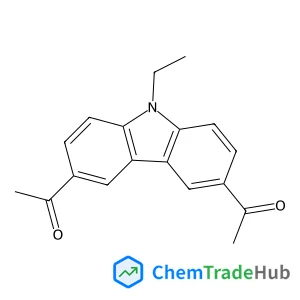
![Imidazo[1,5-a]pyrazine structure](https://cnstatic.chemtradehub.com/structs/274/274-49-7-d749.webp "Imidazo[1,5-a]pyrazine structure")
![4-{1-[4-(4,4,5,5-Tetramethyl-1,3,2-dioxaborolan-2-yl)phenyl]cyclopropyl}morpholine structure](https://cnstatic.chemtradehub.com/structs/120/1206594-08-2-7afb.webp "4-{1-[4-(4,4,5,5-Tetramethyl-1,3,2-dioxaborolan-2-yl)phenyl]cyclopropyl}morpholine structure")
推荐供应商



免责声明
本页面提供的学术期刊信息仅供参考和研究使用。我们与任何期刊出版商均无关联,也不处理投稿事宜。如有投稿相关咨询,请直接联系相关期刊出版商。
如发现页面信息有误,请发送邮件至 support@chemtradehub.com 联系我们。我们将及时核实并处理您的问题。