



Carbonized propagation synthesis of porous CQDs–SrTiO3/graphene and its photocatalytic performance for removal of methylene blue
文献信息
发布日期
2022-01-20
DOI
10.1039/D1EW00758K
影响因子
4.251
作者
Jianghui Liu, Xunfeng Xia, Huahua Guo, Jianfeng Gao, Shengwang Gao
查看原文
摘要
A porous carbon quantum dots (CQDs)–SrTiO3/graphene material (CSG) was synthesized using a novel sol–gel carbonized propagation method (SCPM). In this method, the prepared gel was first immersed in an organic solvent with low-temperature self-propagating properties, and after being ignited, the product is obtained through carbonized propagation processes. Various characterization studies showed that CQDs, SrTiO3 and graphene can be combined through the SCPM, and CQDs and SrTiO3 form a heterojunction on the surface of the material, which is conducive to the recovery of the photocatalyst and improvement of the photocatalytic performance. The existence of a reducing atmosphere resulted in the occurrence of the doping process of CQDs. Photocatalytic degradation experiments showed that, with the increase of ethanol consumption, the catalytic performance tends to be stable. CSG-5, which consumes 80 mL of ethanol, has the best effect on MB degradation. When the dosage is 1.5 g L−1 and the concentration of MB is 5 mg L−1, the degradation rate is 94%. h+ and ˙O2− played a major role in the degradation system of CSG-5. UPLC-MS/MS results showed that 8 kinds of intermediates were produced during the degradation process. The special structure and preparation method of CSG-5 might help to prepare better photocatalysts.
期刊推荐
Russian Journal of Applied Chemistry
Crystallography Reports

Drug Discovery Today
Nature Medicine

Russian Chemical Bulletin

Current Opinion in Solid State & Materials Science

Saudi Pharmaceutical Journal
Organic Process Research & Development
Current Opinion in Colloid & Interface Science

Russian Journal of General Chemistry
相关文献
Growing polymers from peptides and proteins: a biomedical perspective
Yizhi Qi
2013-10-11
Review Article
DOI: 10.1039/C3PY01089A
Anomalous high photovoltages observed in shish kebab-like organic p–n junction nanostructures
Daniel L. Jacobs, Benjamin R. Bunes, Helin Huang, Xiaomei Yang, Ling Zang
2013-08-30
Communication
DOI: 10.1039/C3PY01026K
Fabrication of aggregation induced emission dye-based fluorescent organic nanoparticles via emulsion polymerization and their cell imaging applications
Xiqi Zhang, Bin Yang, Meiying Liu, Wanyun Liu, Yiwang Chen, Yen Wei
2013-08-20
Paper
DOI: 10.1039/C3PY00984J
Direct synthesis of poly(p-phenyleneethynylene)s from calcium carbide
Nopparat Thavornsin, Mongkol Sukwattanasinitt, Sumrit Wacharasindhu
2013-08-12
Communication
DOI: 10.1039/C3PY01068F
Silver-decorated biodegradable polymer vesicles with excellent antibacterial efficacy
Kaidian Zou, Qiuming Liu, Jing Chen, Jianzhong Du
2013-08-19
Paper
DOI: 10.1039/C3PY00966A
Synergistic effects of hydrophobicity and gas barrier properties on the anticorrosion property of PMMA nanocomposite coatings embedded with graphene nanosheets
Kung-Chin Chang, Wei-Fu Ji, Mei-Chun Lai, You-Rong Hsiao, Chien-Hua Hsu, Tsao-Li Chuang, Yen Wei, Jui-Ming Yeh, Wei-Ren Liu
2013-10-04
Paper
DOI: 10.1039/C3PY01178J
Synthesis of functionalized cyclic carbonate monomers using a versatile pentafluorophenyl carbonate intermediate
Daniel P. Sanders, Daniel J. Coady, Manabu Yasumoto, Masaki Fujiwara, Haritz Sardon, James L. Hedrick
2013-09-23
Communication
DOI: 10.1039/C3PY01128C
RAFT/MADIX (co)polymerization of vinyl trifluoroacetate: a means to many ends
Jean-Daniel Marty, Mathias Destarac
2013-10-01
Paper
DOI: 10.1039/C3PY01109G
Scalable synthesis and derivation of functional polyesters bearing ene and epoxide side chains
Yunfeng Yan, Daniel J. Siegwart
2013-11-13
Paper
DOI: 10.1039/C3PY01474F
A versatile Fe3O4 based platform via iron-catalyzed AGET ATRP: towards various multifunctional nanomaterials
Weiwei He, Liang Cheng, Lifen Zhang, Zhuang Liu, Zhenping Cheng, Xiulin Zhu
2013-09-27
Paper
DOI: 10.1039/C3PY00920C
您可能还喜欢
化合物问答
如何储存1,2-环己二酮环乙缩醛(CAS号:4746-96-7)?
1,2-环己二酮环乙缩醛应储存在阴凉、干燥、通风良好的地方,避免阳光直射。建议使用密封容器保存,并保持环境温度在室温范围内,远离火源和热源。
4746-96-71,4-Dioxaspiro[4.5]d...
化合物问答
Ecopladib(CAS号:381683-92-7)的市场或研究趋势如何?
Ecopladib作为一种新型的药物,主要应用于治疗高胆固醇等疾病。目前,市场和研究趋势显示,Ecopladib因其独特的药理作用而受到关注。随着对心血管疾病治...
381683-92-7Ecopladib
化合物问答
2,3-Dimethyl-3H-imidazo[4,5-c]pyridine(CAS号:52538-09-7)通常如何合成?
2,3-二甲基-3H-咪唑[4,5-c]吡啶通常通过咪唑和2,3-二甲基吡啶的缩合反应合成。具体来说,将咪唑和2,3-二甲基吡啶在适当的溶剂中进行加热或加压反应...
52538-09-72,3-Dimethyl-3H-imid...
化合物问答
2,3,4,5-tetrahydro-1H-3-苯并氮杂环;盐酸盐(CAS号:17379-01-0)的市场或研究趋势如何?
该化合物在药物化学和有机合成中有一定的应用。近年来,随着对新型药物化合物的需求增加,该化合物的研究趋势主要集中在探索其生物活性,尤其是其在神经系统疾病治疗中的潜...
17379-01-02,3,4,5-Tetrahydro-1...
68-90-6(2-Ethyl-1-benzofura...
化合物问答
如何储存盐酸甘氨酸丁酯(CAS号:13048-99-2)?
盐酸甘氨酸丁酯应储存在阴凉、干燥、通风良好的地方,避免阳光直射和高温环境,温度应控制在25℃以下。储存容器应密封,避免与空气中的水分和酸性物质接触,以防发生水解...
13048-99-2Butyl glycinate hydr...
化合物问答
什么是2-Iodo-N,N-dimethylbenzamide(CAS号:54616-46-5)?
2-碘-N,N-二甲基苯胺是一种有机化合物,化学名为2-Iodo-N,N-dimethylbenzamide。其分子式为C<sub>9</sub>H<sub>1...
54616-46-52-Iodo-N,N-dimethylb...
16817-90-6N-Cyclohexylglycinam...
化合物问答
5-溴-2-(4H-1,2,4-三唑-4-基)吡啶(CAS号:959240-99-4)的市场或研究趋势如何?
随着医药、农药和新材料领域的发展,该化合物作为关键中间体的应用日益增多。特别是在药物合成中,由于其独特的化学性质,可以用于合成多种药物分子。未来的研究趋势可能集...
959240-99-45-Bromo-2-(4H-1,2,4-...
化合物问答
2,4-二溴-6-三氟甲基嘧啶(CAS号:785778-00-9)通常如何合成?
2,4-二溴-6-三氟甲基嘧啶通常通过溴化反应合成。首先,将6-三氟甲基嘧啶与溴化剂(如液溴)在适当的溶剂(如二氯甲烷、四氢呋喃)中反应,加入适当的催化剂(如四...
785778-00-92,4-Dibromo-6-(trifl...
来源期刊
推荐化合物
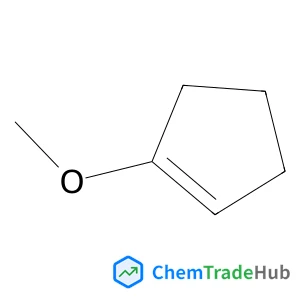
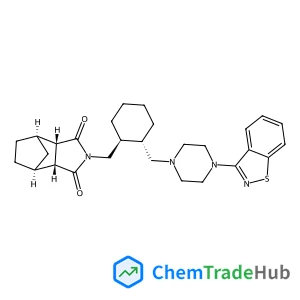
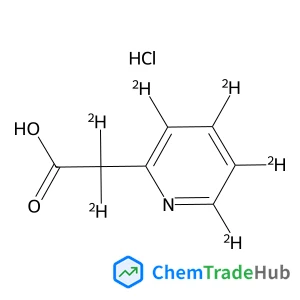
2,2-dideuterio-2-(3,4,5,6-tetradeuterio-2-pyridyl)acetic acid;hydrochloride
CAS号:
1329799-67-8
分子式:
C7H2ClD6NO2
推荐供应商







免责声明
本页面提供的学术期刊信息仅供参考和研究使用。我们与任何期刊出版商均无关联,也不处理投稿事宜。如有投稿相关咨询,请直接联系相关期刊出版商。
如发现页面信息有误,请发送邮件至 support@chemtradehub.com 联系我们。我们将及时核实并处理您的问题。