




![Ethyl (3aS,6aS)-1-benzylhexahydropyrrolo[3,4-b]pyrrole-5(1H)-carboxylate structure](https://cnstatic.chemtradehub.com/structs/894/894853-99-7-e175.webp "Ethyl (3aS,6aS)-1-benzylhexahydropyrrolo[3,4-b]pyrrole-5(1H)-carboxylate structure")
Ethyl (3aS,6aS)-1-benzylhexahydropyrrolo[3,4-b]pyrrole-5(1H)-carboxylate
CAS号:
894853-99-7
分子式:
C16H22N2O2
Alberto Gallifuoco, Alessandro Antonio Papa, Luca Taglieri
This paper demonstrates an innovation in the kinetic modeling of biomass hydrothermal carbonization based on stochastic techniques. The dynamics of HTC solid-phase transformations is described without assuming a reaction network. Through the maximum-entropy principle, an equation, which fits data flexibly, rises to the status of a lumped kinetic model. The time-course of biomass conversion is described as the macroscopic effect of microreactions, whose frequency is distributed as a continuous probability density function. The mathematics which defines the density function takes advantage of the identified analogies with other scientific fields. The corresponding cumulative frequency distribution is shown to coincide with the empirical fitting equation. The analysis of a wide range of literature data, concerning various waste biomasses, allows testing the new model. The good accordance between previsions and experimental evidence encourages the research to follow this way. Sound procedures for further validating the model are outlined.
Peiren Liu, Hongliang Wang, Hong Zeng, Xin Hong, Feihe Huang
DOI: 10.1039/D0QO00456A
Zhen Li, Jin-Dong Yang, Jin-Pei Cheng
DOI: 10.1039/D0QO01478H
Alireza Sardarian, Kenneth T. Douglas, Martin Read, Paul F. G. Sims, John E. Hyde, Penchit Chitnumsub, Rachada Sirawaraporn, Worachart Sirawaraporn
DOI: 10.1039/B211636G
Roger R. Hill, David Birch, Graham E. Jeffs, Michael North
DOI: 10.1039/B211914E
Ning Liu, Xiahe Chen, Liyuan Jin, Yun-Fang Yang, Yuan-Bin She
DOI: 10.1039/D0QO01442G
Varinder K. Aggarwal, Stephen Roseblade, Rikki Alexander
DOI: 10.1039/B212719A
David E. Hibbs, Jane R. Hanrahan, Michael B. Hursthouse, David W. Knight, Jacob Overgaard, Peter Turner, Ross O. Piltz, Mark P. Waller
DOI: 10.1039/B210698A
4-[4-三氟甲基苯基]恶唑通常通过将4-三氟甲基苯酚与异硫氰酸苯酯在有机溶剂中进行酯化反应合成。该反应可在无水条件下,使用适当的催化剂,如四丁基氢氧化铵,以提...
RockPhos Pd G3 通常通过钯催化偶联反应合成,使用配体 (2'-Amino-2-biphenylyl)(methanesulfonato-kappa...
1-哌啶甲酰胺作为有机合成中的重要中间体,其市场需求主要受医药、农药、染料等行业推动。近年来,随着新药开发和绿色化学的发展,该化合物的研究趋势集中在开发更高效、...
2-(二苯基膦基)乙胺适用于多种法规指南,包括但不限于《全球化学品统一分类和标签制度》(GHS),欧盟《化学品注册、评估、授权和限制》法规(REACH),以及美...
间苯二甲酸二烯丙酯应储存在阴凉、干燥、通风良好的地方,远离火源和热源。储存容器应密封,避免光照和高温。储存温度应控制在25℃以下,相对湿度应低于80%。避免与其...
间甲苯异硫代异氰酸酯是一种有机化合物,分子式为C7H7NO2S,具有刺激性气味。它是一种重要的有机合成中间体,在合成其他化合物时广泛应用。
在合成中,可以考虑使用N-Cbz-D-苯丙氨醇或N-Fmoc-D-苯丙氨醇作为替代品。这些化合物同样具有保护氨基的功能,且在合成过程中表现出良好的反应性能。
3-羟甲基-2-氧异丙基吡啶主要用于有机合成领域,可以作为合成其他药物、农药或精细化学品的中间体。此外,它还可能在实验室研究中作为特定反应的前体或溶剂。
6-氨基-9-甲基嘌呤目前主要应用于医药行业,作为某些药物的中间体。此外,它还可能用于聚合物、传感器和半导体的某些领域,作为功能性单体或掺杂剂。

Reaction Chemistry & Engineering is an interdisciplinary journal reporting cutting-edge research focused on enhancing the understanding and efficiency of reactions. Reaction engineering leverages the interface where fundamental molecular chemistry meets chemical engineering and technology. Challenges in chemistry can be overcome by the application of new technologies, while engineers may find improved solutions for process development from the latest developments in reaction chemistry. Reaction Chemistry & Engineering is a unique forum for researchers whose interests span the broad areas of chemical engineering and chemical sciences to come together in solving problems of importance to wider society. All papers should be written to be approachable by readers across the engineering and chemical sciences. Papers that consider multiple scales, from the laboratory up to and including plant scale, are particularly encouraged.
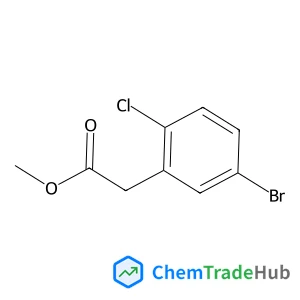
![4-Chloro-1-[(4-methylphenyl)sulfonyl]-1H-pyrrolo[2,3-b]pyridine structure](https://cnstatic.chemtradehub.com/structs/348/348640-05-1-7db8.webp "4-Chloro-1-[(4-methylphenyl)sulfonyl]-1H-pyrrolo[2,3-b]pyridine structure")