







![1-[4-(4-Methyl-1H-imidazol-1-yl)phenyl]ethanone structure](https://cnstatic.chemtradehub.com/structs/142/142161-53-3-7f55.webp "1-[4-(4-Methyl-1H-imidazol-1-yl)phenyl]ethanone structure")
Large-scale and clean preparation of low-defect few-layered graphene from commercial graphite via hydroxyl radical exfoliation in an acidic medium
文献信息
发布日期
2021-10-13
DOI
10.1039/D1RE00289A
影响因子
4.239
作者
Wenqiao Du, Zaiqian Yu, Xin Wang, Jingdong Wu, Long Zhang
查看原文
摘要
Graphene has been verified as one of the most promising nanomaterials for an extensive range of applications, and large-scale, clean and cost-effective preparation of low-defect graphene is still a major challenge both in academia and industry until now. In this work, a novel hydroxyl radical exfoliation method of commercial graphite into graphene at the kg scale for each run was achieved in an acidic medium in the presence of potassium formate and polyaspartic acid solution serving as an electrical conductor and exfoliation assistant. Then, a systematic investigation was conducted to explore the optimal crucial parameters with respect to the exfoliation efficiency of the proposed technology and the quality evaluation of the resulting graphene products. At the optimal process parameters, in which the applied current density was 0.056 A m−2, the air flow rate was 1.0 L min−1, the mass ratio of potassium formate, polyaspartic acid and water was 30 : 9 : 61, the mass ratio of the binary assistant solution to graphite was 10 : 3 and the exfoliation time was 3 h, the highest yield of the graphene product reached 98.2%. Furthermore, the prepared graphene product has quite low defects and the percentage of 2-layer graphene in the product was as high as 92%. The graphene preparation process is clean and operated at room temperature, with only air and electricity consumption, and the binary components solution recycling usage, and without any aggressive agents employed and the graphite and the assistants used were all industrially available. Therefore, this cost-effective strategy is practically promising for large-scale preparation of higher quality graphene from low-cost commercial graphite.
相关文献
The study of electron transfer reactions in a dendrimeric assembly: proper utilization of dendrimer fluorescence
Somnath Koley, Subhadip Ghosh
2016-08-18
Communication
DOI: 10.1039/C6CP05054A
Strong 1D localization and highly anisotropic electron–hole masses in heavy-halogen functionalized graphenes
Lukas Eugen Marsoner Steinkasserer, Alessandra Zarantonello, Beate Paulus
2016-09-05
Paper
DOI: 10.1039/C6CP05188J
Biphasic aggregation of a perylene bisimide dye identified by exciton-vibrational spectra
P.-A. Plötz, S. D. Ivanov, F. Fennel, S. Wolter, T. Niehaus, Z. Xie, S. Lochbrunner, F. Würthner, O. Kühn
2016-08-17
Paper
DOI: 10.1039/C6CP04898F
Computational insights into the destabilization of α-helical conformations formed by leucine zipper peptides in response to temperature
Xiejun Xu, Xingqing Xiao, Shouhong Xu, Honglai Liu
2016-08-16
Paper
DOI: 10.1039/C6CP05145F
Preparation and structure of Fe-containing aluminosilicate thin films
Héloïse Tissot, Linfei Li, Shamil Shaikhutdinov, Hans-Joachim Freund
2016-08-11
Paper
DOI: 10.1039/C6CP03460H
Calculation of Raman parameters of real-size zigzag (n, 0) single-walled carbon nanotubes using finite-size models
Teobald Kupka, Michal Stachów, Leszek Stobiński, Jakub Kaminský
2016-08-11
Paper
DOI: 10.1039/C6CP04100K
Experimental and computational studies of the roles of MgO and Zn in talc for the selective formation of 1,3-butadiene in the conversion of ethanol
Yoshihiro Hayashi, Sohta Akiyama, Akimitsu Miyaji, Yasumasa Sekiguchi, Yasuharu Sakamoto, Akinobu Shiga, To-ru Koyama, Ken Motokura, Toshihide Baba
2016-08-16
Paper
DOI: 10.1039/C6CP04171J
Conformation-specific spectroscopy of capped, gas-phase Aib oligomers: tests of the Aib residue as a 310-helix former
Joseph R. Gord, Daniel M. Hewett, Alicia O. Hernandez-Castillo, Karl N. Blodgett, Matthew C. Rotondaro, Adalgisa Varuolo, Matthew A. Kubasik, Timothy S. Zwier
2016-09-02
Paper
DOI: 10.1039/C6CP04909E
A phenomenological model of the solvent-assisted lipid bilayer formation method
2016-08-08
Communication
DOI: 10.1039/C6CP04816A
Water dissociation on MnO(1 × 1)/Ag(100)
Chris Arble, Xiao Tong, Livia Giordano, Anna Maria Ferrari, John T. Newberg
2016-08-19
Paper
DOI: 10.1039/C6CP04115A
您可能还喜欢
化合物问答
什么是2,6-二溴-4,8-双[(2-乙基己基)氧基]苯并[1,2-b:4,5-b']二噻吩(CAS号:1226782-13-3)?
2,6-二溴-4,8-双[(2-乙基己基)氧基]苯并[1,2-b:4,5-b']二噻吩是一种有机化合物,分子式为C23H32Br2O2S2。该化合物具有芳香性和...
1226782-13-32,6-Dibromo-4,8-bis[...
化合物问答
木聚硫钠(CAS号:37319-17-8)的物理化学性质是什么?
木聚硫钠通常为无色或白色结晶性粉末,具有吸湿性。其分子量约为121.11 g/mol。木聚硫钠易溶于水,不溶于醇类和其他非极性溶剂。在酸性或碱性溶液中,木聚硫钠...
37319-17-8Pentosan
化合物问答
2-甲氧基-4-(三氟甲基)苄溴, JRD(CAS号:886500-59-0)适用哪些法规指南?
该化合物在合成、储存和运输过程中需遵循《全球化学品统一分类和标签制度》(GHS)的健康、环境和物理危险分类。在欧洲还需符合《化学品注册、评估、授权和限制》(RE...
886500-59-02-Methoxy-4-(trifluo...
化合物问答
1,4-Diazoniabicyclo[2.2.2]octane-1,4-disulfinate(CAS号:119752-83-9)的主要用途是什么?
1,4-二氮杂双环[2.2.2]辛烷-1,4-二硫酸二酯主要用于有机合成中的保护基团,特别是在保护胺基和硫醇基方面具有广泛应用。此外,它还用于一些特殊化学反应的...
119752-83-91,4-Diazabicyclo[2.2...
化合物问答
如何处理含有4-(Bromomethyl)-2-fluorobenzenesulphonamide(CAS号:1645275-47-3)的废料?
含有4-(Bromomethyl)-2-fluorobenzenesulphonamide的废液应首先进行中和处理,以降低pH值,避免对环境造成腐蚀性影响。随后...
1645275-47-34-(Bromomethyl)-2-fl...
化合物问答
Loureiriol(CAS号:479195-44-3)的物理化学性质是什么?
Loureiriol是一种天然化合物,其分子式为C15H22O4。Loureiriol为无色结晶性粉末,具有较高的熔点和良好的热稳定性。其相对分子质量为262....
479195-44-3Loureiriol
化合物问答
在合成中是否有3-氨基苯甲酰苯胺(CAS号:14315-16-3)的替代品?
在合成过程中,可以考虑使用类似结构的化合物作为3-氨基苯甲酰苯胺的替代品,例如N-苯基-3-氰基苯胺或N-苯基-3-硝基苯胺等,这些化合物具有相似的化学性质,可...
14315-16-33-Amino-N-phenylbenz...
化合物问答
4-异氰酰苯基硼酸频哪醇酯(CAS号:380430-64-8)的市场或研究趋势如何?
4-异氰酰苯基硼酸频哪醇酯主要应用于有机合成、药物化学和材料科学领域。随着绿色化学的发展,该化合物因其高效的官能团转化能力和环境友好性而受到越来越多的关注。近年...
380430-64-82-(4-Isocyanatopheny...
化合物问答
如何储存3β-乙酰氧基-7,25-甘遂二烯-24(R)-醇(CAS号:1352001-09-2)?
3β-乙酰氧基-7,25-甘遂二烯-24(R)-醇应储存在阴凉、干燥、通风良好的地方,避免直接光照。储存容器应密封,防止空气中的水分和氧气影响化合物的稳定性。建...
1352001-09-23β-acetoxy-eupha- 7,...
化合物问答
如何储存4-氟-2-甲基-1H-吲哚(CAS号:1260383-51-4)?
应将4-氟-2-甲基-1H-吲哚存放在阴凉、干燥、通风良好的地方,避免直接暴露在光照下。容器应密封,避免与空气中的水蒸气接触。建议在避光、温度不超过25℃的环境...
1260383-51-44-Fluoro-2-methyl-1H...
来源期刊
Reaction Chemistry & Engineering
CiteScore:
0
自引率:
8.8%
年发文量:
284
Reaction Chemistry & Engineering is an interdisciplinary journal reporting cutting-edge research focused on enhancing the understanding and efficiency of reactions. Reaction engineering leverages the interface where fundamental molecular chemistry meets chemical engineering and technology. Challenges in chemistry can be overcome by the application of new technologies, while engineers may find improved solutions for process development from the latest developments in reaction chemistry. Reaction Chemistry & Engineering is a unique forum for researchers whose interests span the broad areas of chemical engineering and chemical sciences to come together in solving problems of importance to wider society. All papers should be written to be approachable by readers across the engineering and chemical sciences. Papers that consider multiple scales, from the laboratory up to and including plant scale, are particularly encouraged.
推荐化合物
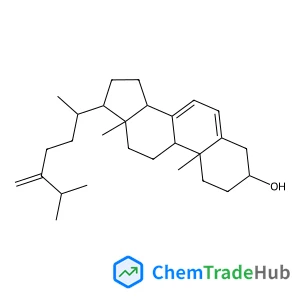
![(R)-N-[(S)-1-[2-(Diphenylphosphino)phenyl]ethyl]-2-methylpropane-2-sulfinamide structure](https://cnstatic.chemtradehub.com/structs/159/1595319-98-4-33e7.webp "(R)-N-[(S)-1-[2-(Diphenylphosphino)phenyl]ethyl]-2-methylpropane-2-sulfinamide structure")
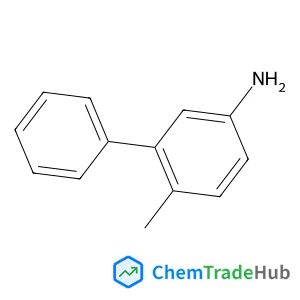
推荐供应商




免责声明
本页面提供的学术期刊信息仅供参考和研究使用。我们与任何期刊出版商均无关联,也不处理投稿事宜。如有投稿相关咨询,请直接联系相关期刊出版商。
如发现页面信息有误,请发送邮件至 support@chemtradehub.com 联系我们。我们将及时核实并处理您的问题。