



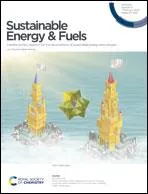
Techno-economic assessment and carbon footprint of processes for the large-scale production of oxymethylene dimethyl ethers from carbon dioxide and hydrogen
文献信息
发布日期
2021-11-15
DOI
10.1039/D1SE01270C
影响因子
6.367
作者
Franz Mantei, Ramy E. Ali, Cornelie Baensch, Simon Voelker, Philipp Haltenort, Jakob Burger, Ralph-Uwe Dietrich, Niklas von der Assen, Achim Schaadt, Jörg Sauer, Ouda Salem
查看原文
摘要
Poly(oxymethylene)dimethyl ethers (OME) show promising fuel properties, enabling their use in existing infrastructure, especially as alternatives or additives to diesel fuel, leading to a significant reduction in local emissions (e.g., soot and NOx). Additionally, OME can be produced from methanol, enabling their production based on a renewable feedstock, which can significantly reduce the carbon footprint in comparison to fossil fuels. However, an industrial process to sustainably produce OME on a large-scale has not been developed to date. Based on the results of detailed simulations in Aspen Plus®, this work compares the most promising process routes for the production of OME3–5 in a system boundary including H2via water electrolysis and captured CO2 from point sources or ultimately using direct air capture technologies. One of the main outcomes of this work is the standardized methodology introduced for the techno-economic and CO2 footprint evaluation and comparison of the diverse processes. The comparison criteria are based on systematic approaches covering process materials and energy efficiency, technology readiness level, costs, and the carbon footprint. The process routes based on anhydrous formaldehyde and methanol or methylal feedstock show higher energy efficiencies and lower carbon footprints than other routes considering the commercial aqueous formaldehyde. However, the synthesis of anhydrous formaldehyde is under research and development and not yet industrially established. Importantly, considering the net production costs of OME3–5 from the four simulated process routes, there is no significant difference, which is attributed to the rather high share of the operational cost, and specifically the cost of the H2 and CO2 feedstock. Using sensitivity analysis, the influence of feedstock costs and carbon footprint on the evaluation criteria is identified, elaborating the potential of feasible and sustainable OME production under favourable conditions.
相关文献
Sulfonate compounds embraced from acid copper electroplating baths as innovative additives for alkaline Zn batteries
Katerina Bogomolov, Ekaterina Grishina
2023-10-18
Paper
DOI: 10.1039/D3TA04612E
Natural products as anthelmintics: safeguarding animal health
Angela A. Salim, Mark S. Butler, Mark A. T. Blaskovich, Ian R. Henderson, Robert J. Capon
2023-08-09
Review Article
DOI: 10.1039/D3NP00019B
Modular three-component synthesis of 6H-benzochromenone based blue luminogens under catalyst- and solvent-free conditions
Thangavel Pavithra, Karthiyayini Gnanaoli, Deepan Babu Rajkumar, Arulmozhi Puhazhendhi, Soumya Sivalingam, Natarajan Sampath, Subbiah Nagarajan, Vellaisamy Sridharan, C. Uma Maheswari
2024-01-01
Paper
DOI: 10.1039/D3NJ04721K
A strongly coupled 3D SnS2@Ti3C2Tx heterojunction with vacancies for high-efficiency sodium storage
2023-12-14
Paper
DOI: 10.1039/D3NJ05137D
Structure influence on high-pressure water intrusion in pure silica zeolites
2023-12-18
Paper
DOI: 10.1039/D3NJ03991A
Unraveling ligand exchange reactions in linear neutral Au(i) and Cu(i) N-heterocyclic carbene complexes for biological applications
Gustavo C. Rodrigues, Manoel V. F. Barrionuevo, Miguel A. San-Miguel, Camilla Abbehausen
2023-12-27
Paper
DOI: 10.1039/D3NJ04945K
Topological insulator bismuth selenide with a unique cloud-like hollow structure as a bidirectional electrocatalyst for robust lithium–sulfur batteries
Mincai Zhao, Junjie Fu, Daoping Cai, Chaoqi Zhang, Yinggan Zhang, Baisheng Sa, Qidi Chen, Hongbing Zhan
2023-10-20
Paper
DOI: 10.1039/D3TA04930B
Highlights of biosynthetic enzymes and natural products from symbiotic cyanobacteria
2023-05-26
Highlight
DOI: 10.1039/D3NP00011G
Efficient and durable vanadium flow batteries enabled by high-performance fluorinated poly(aryl piperidinium) membranes
Tao Ban, Maolian Guo, Yajie Wang, Jiawang Ma, Xinxin Wang, Zihui Wang, Xiuling Zhu
2023-10-17
Paper
DOI: 10.1039/D3TA05382B
您可能还喜欢
化合物问答
4-[[6-(3-苯基苯基)-7H-嘌呤-2-基]氨基]苯磺酰胺(CAS号:2079895-42-2)适用哪些法规指南?
该化合物需遵循REACH法规以确保其安全使用和管理。同时,根据其潜在的生物降解性和毒性,也需要符合GHS分类中的相应要求。此外,若用于医药或食品相关领域,则还需...
2079895-42-24-{[6-(3-Biphenylyl)...
化合物问答
反式-度骨化醇(CAS号:74007-20-8)的物理化学性质是什么?
反式-度骨化醇是一种脂溶性维生素D3的衍生物,呈无色或白色结晶性粉末,不溶于水,溶于乙醇、丙酮、氯仿等有机溶剂。其分子式为C28H44O,分子量为404.65。...
74007-20-8trans-Doxercalcifero...
化合物问答
莲花掌苷(CAS号:59282-56-3)的市场或研究趋势如何?
莲花掌苷作为一种天然产物,近年来在抗炎、抗癌等生物活性研究方面显示出一定的潜力,因此市场需求逐渐增长。市场动态方面,随着天然产物开发的深入,预计该化合物的研究会...
59282-56-3Lindleyin
化合物问答
2-溴-6-(吡咯烷-1-基)吡啶-4-硼酸频那醇酯(CAS号:1150271-64-9)应用于哪些行业?
2-溴-6-(吡咯烷-1-基)吡啶-4-硼酸频那醇酯在医药领域有着广泛的应用,它可以用作药物合成中的中间体。此外,它还可以用于有机合成,特别是在构建复杂杂环化合...
1150271-64-92-Bromo-6-(1-pyrroli...
化合物问答
什么是methyl 2-(4-bromophenyl)-3-methylbutanoate(CAS号:1061284-70-5)?
methyl 2-(4-溴苯基)-3-甲基丁酸甲酯是一种化学物质,分子式为C12H13BrO2。它是一种有机化合物,具有一定的挥发性和易燃性。
1061284-70-52-(4-Bromo-phenyl)-3...
化合物问答
CJC1-295(CAS号:863288-34-0)的物理化学性质是什么?
CJC1-295是一种具有复杂肽链结构的化合物,其分子量约为1875 Da。该化合物在水中具有一定的溶解性,但在有机溶剂中的溶解性不佳。它是一种反应活性化合物,...
863288-34-0L-tyrosyl-D-alanyl-L...
化合物问答
三正丁基锍碘(CAS号:18146-62-8)的市场或研究趋势如何?
三正丁基锍碘作为一种重要的有机硫化合物,主要用于有机合成中作为亲电试剂。近年来,由于其在合成中的广泛应用,市场对其需求持续增长。此外,随着绿色化学的发展,对其替...
18146-62-8Tributylsulfonium io...
化合物问答
雌二醇-[13C3]同位素内标(CAS号:1261254-48-1)通常如何合成?
雌二醇-[13C3]同位素内标通常通过在雌二醇分子中引入[13C3]同位素来合成。常见的方法是通过化学标记反应,如与[13C3]标记的甲基溴化物进行亲核取代反应...
1261254-48-117beta-Estradiol-2,3...
化合物问答
N1-(2-吡啶甲基)-N2-(2-甲基-1-萘基)草酰胺(CAS号:2611225-93-3)的物理化学性质是什么?
N1-(2-吡啶甲基)-N2-(2-甲基-1-萘基)草酰胺为固体化合物,具有良好的结晶形态,分子量为340.34 g/mol。该化合物在水中的溶解度较低,但在有...
2611225-93-3N-(2-Methyl-1-naphth...
化合物问答
如何处理含有十五碳烯酸甲酯(顺-10)(C15:1)标准品(CAS号:90176-52-6)的废料?
含有十五碳烯酸甲酯(顺-10)(C15:1)标准品的废料应首先进行适当收集和储存,避免与其他化学品混合。然后,可采用焚烧或交由专业废物处理公司进行处理。处理过程...
90176-52-6(Z)-10-Pentadecenoic...
来源期刊
推荐化合物
![[5-fluoro-2-(morpholine-4-carbonyl)phenyl]boronic acid structure](https://cnstatic.chemtradehub.com/structs/121/1217501-26-2-505c.webp "[5-fluoro-2-(morpholine-4-carbonyl)phenyl]boronic acid structure")
推荐供应商


免责声明
本页面提供的学术期刊信息仅供参考和研究使用。我们与任何期刊出版商均无关联,也不处理投稿事宜。如有投稿相关咨询,请直接联系相关期刊出版商。
如发现页面信息有误,请发送邮件至 support@chemtradehub.com 联系我们。我们将及时核实并处理您的问题。