




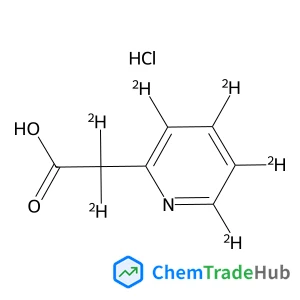
2,2-dideuterio-2-(3,4,5,6-tetradeuterio-2-pyridyl)acetic acid;hydrochloride
CAS号:
1329799-67-8
分子式:
C7H2ClD6NO2
Rui Lei, Xianzhi Fu, Naxin Chen, Yifeng Chen, Wenhui Feng, Ping Liu
The weak driving force and rapid carrier recombination severely restrict the development and utilization of piezocatalysis, but the important reason is the charge screening effect. Herein, a dual electric field driven piezoelectric catalytic system was constructed according to deposition of Au nanoparticles on the different crystal planes of BTO. Owing to the unmatched work function between Au and BTO, a Schottky junction at the interface could be formed, resulting in a depletion region at the BTO surface with a reduced charge density. Thus, a built-in electric field from the surface of BTO to the inside is established due to the unbalanced charge distribution. In the process of piezocatalysis, the built-in electric field could assist the piezoelectric field to separate carriers, which increases the carrier migration path, weakens the shielding effect and reduces the recombination of carrier. Meanwhile, Au could also supply the active site for the electron reduction reaction. Under the cooperation of the piezoelectric field of BTO and Au nanoparticles, Au–BTO achieved an elevated H2 production rate of 194.67 μmol h−1 g−1, accompanied by high-added H2O2 production. This work provides a new route for designing efficient piezocatalysts.
Khooi Y. Tan, Madeleine Ramstedt, Wilhelm T. S. Huck
DOI: 10.1039/C5PY01687H
Yusuke Ogura, Takaya Terashima, Mitsuo Sawamoto
DOI: 10.1039/C7PY00073A
Jarret P. MacDonald, Michael P. Shaver
DOI: 10.1039/C5PY01606A
Helen R. Thomas, Daniel J. Phillips, Neil R. Wilson, Matthew I. Gibson, Jonathan P. Rourke
DOI: 10.1039/C5PY01358E
Bin Yang, Yuan Zhao, Yen Wei, Changkui Fu, Lei Tao
DOI: 10.1039/C5PY01398D
Shouli Ming, Shijie Zhen, Ximei Liu, Kaiwen Lin, Hongtao Liu, Yao Zhao, Baoyang Lu, Jingkun Xu
DOI: 10.1039/C5PY01321F
Stefano Stefani, Indah N. Kurniasih, Sunil K. Sharma, Christoph Böttcher, Paul Servin, Rainer Haag
DOI: 10.1039/C5PY01314C
Paul H. M. Van Steenberge, Pieter Derboven, Marie-Françoise Reyniers, Guy B. Marin
DOI: 10.1039/C5PY01069A
1,2-环己二酮环乙缩醛应储存在阴凉、干燥、通风良好的地方,避免阳光直射。建议使用密封容器保存,并保持环境温度在室温范围内,远离火源和热源。
Ecopladib作为一种新型的药物,主要应用于治疗高胆固醇等疾病。目前,市场和研究趋势显示,Ecopladib因其独特的药理作用而受到关注。随着对心血管疾病治...
2,3-二甲基-3H-咪唑[4,5-c]吡啶通常通过咪唑和2,3-二甲基吡啶的缩合反应合成。具体来说,将咪唑和2,3-二甲基吡啶在适当的溶剂中进行加热或加压反应...
该化合物在药物化学和有机合成中有一定的应用。近年来,随着对新型药物化合物的需求增加,该化合物的研究趋势主要集中在探索其生物活性,尤其是其在神经系统疾病治疗中的潜...
盐酸甘氨酸丁酯应储存在阴凉、干燥、通风良好的地方,避免阳光直射和高温环境,温度应控制在25℃以下。储存容器应密封,避免与空气中的水分和酸性物质接触,以防发生水解...
2-碘-N,N-二甲基苯胺是一种有机化合物,化学名为2-Iodo-N,N-dimethylbenzamide。其分子式为C<sub>9</sub>H<sub>1...
随着医药、农药和新材料领域的发展,该化合物作为关键中间体的应用日益增多。特别是在药物合成中,由于其独特的化学性质,可以用于合成多种药物分子。未来的研究趋势可能集...
2,4-二溴-6-三氟甲基嘧啶通常通过溴化反应合成。首先,将6-三氟甲基嘧啶与溴化剂(如液溴)在适当的溶剂(如二氯甲烷、四氢呋喃)中反应,加入适当的催化剂(如四...

Catalysis Science & Technology is committed to publishing research reporting high-quality, cutting-edge developments across the catalysis community at large. The journal places equal focus on publications from the heterogeneous, homogeneous, thermo-, electro-, photo-, organo- and biocatalysis communities. Works published in the journal feature a balanced mix of fundamental, technology-oriented, experimental, computational, digital and data-driven original research, thus appealing to catalysis practitioners in both academic and industrial environments. Original research articles published in the journal must demonstrate new catalytic discoveries and/or methodological advances that represent a significant advance on previously published work, from the molecular to the process scales. We welcome rigorous research in a wide range of timely or emerging applications related to the environment, health, energy and materials. Catalysis Science & Technology publishes Communications, Articles, Reviews and Perspectives. More details regarding manuscript types may be found in the Information for Authors section.
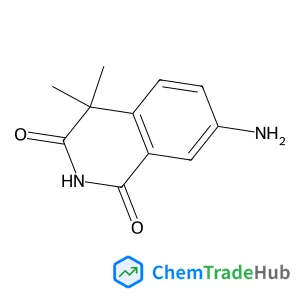
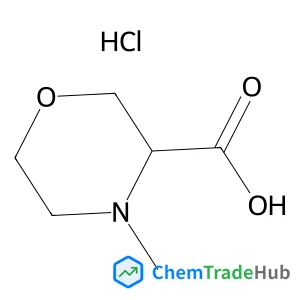
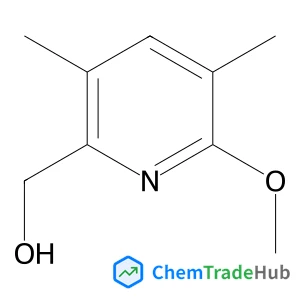
![N-[2-(4-Hydroxyphenoxy)-4-nitrophenyl]methanesulfonamide structure](https://cnstatic.chemtradehub.com/structs/109/109032-22-6-7c88.webp "N-[2-(4-Hydroxyphenoxy)-4-nitrophenyl]methanesulfonamide structure")





