



![(2S)-2-{[(9H-Fluoren-9-ylmethoxy)carbonyl]amino}-4-(methylselanyl)butanoic acid structure](https://cnstatic.chemtradehub.com/structs/121/1217852-49-7-f252.webp "(2S)-2-{[(9H-Fluoren-9-ylmethoxy)carbonyl]amino}-4-(methylselanyl)butanoic acid structure")
Network dynamics: a computational framework for the simulation of the glassy state
文献信息
发布日期
2023-02-27
DOI
10.1039/D2ME00256F
影响因子
4.935
作者
Lambèrt C. A. van Breemen, Markus Hütter, Doros N. Theodorou
查看原文
摘要
An out-of-equilibrium simulation method for tracking the time evolution of glassy systems (or any other systems that can be described by hopping dynamics over a network of discrete states) is presented. Graph theory and complexity concepts are utilised, alongside the method of the dynamical integration of a Markovian web (G. C. Boulougouris and D. N. Theodorou, J. Chem. Phys., 2007, 127, 084903) in order to provide a unified framework for dealing with the long time-scales of non-ergodic systems. Within the developed formalism, the network of states accessible to the system is considered a finite part of the overall universe, communicating with it through well-defined boundary states. The analytical solution of the probability balance equation proceeds without the need for assuming the existence of an equilibrium distribution among the states of the network and the corresponding survival and escape probabilities (as functions of time) are defined. More importantly, the study of the probability flux through the dividing surface separating the system and its environment reveals the relaxation mechanisms of the system. We apply our approach to the network of states obtained by exploring the energy landscape of an atomistically detailed glassy specimen of atactic polystyrene. The rate constants connecting different basins of the landscape are evaluated by multi-dimensional transition-state-theory. We are able to accurately probe the appearance of the δ- and γ-subglass relaxation mechanisms and their relevant time-scales, out of atomistic simulations. The proposed approach can fill a gap in the rational molecular design toolbox, by providing an alternative to molecular dynamics for structural relaxation in glasses and/or other slow molecular processes (e.g., adsorption or desorption) that involve very distant time-scales.
期刊推荐

Organic Process Research & Development

New Journal of Chemistry
Chemical Communications
Current Opinion in Colloid & Interface Science
Saudi Pharmaceutical Journal

Chemistry Education Research and Practice
Nature Medicine

Current Opinion in Solid State & Materials Science
Russian Journal of Bioorganic Chemistry

Journal of Saudi Chemical Society
相关文献
Machine-learning prediction of thermal expansion coefficient for perovskite oxides with experimental validation
Kevin P. McGuinness, Anton O. Oliynyk, Sangjoon Lee, Beatriz Molero-Sanchez, Paul Kwesi Addo
2023-11-21
Paper
DOI: 10.1039/D3CP04017H
Chiral selectivity vs. noise in spontaneous mirror symmetry breaking
David Hochberg, Thomas Buhse, Jean-Claude Micheau, Josep M. Ribó
2023-10-12
Paper
DOI: 10.1039/D3CP03311B
A white light emitting single halochromic hydrazine bridged bis(3-pyrrolyl BODIPY) fluorophore
Kanhu Charan Behera, Mangalampalli Ravikanth
2023-11-15
Paper
DOI: 10.1039/D3CP04234K
Interrogating the nature of aggregates formed in a model azine based ESIPT coupled AIE active probe: stark differences in photodynamics in the solid state and aggregates in water
Arghyadeep Bhattacharyya, Akash Das, Nikhil Guchhait
2023-11-03
Paper
DOI: 10.1039/D3CP03603K
Ag nanoparticle modified porous Si microspheres as high-performance anodes for Li-ion batteries
Wenhao Pan, Changjiang Yang, Lei Zhou, Xiaolan Cai, Yankun Wang, Junhao Tan, Jun Chang
2023-11-04
Paper
DOI: 10.1039/D3CP03677D
您可能还喜欢
化合物问答
4,5-二甲基-2-硝基苯甲酸(CAS号:4315-14-4)的市场或研究趋势如何?
4,5-二甲基-2-硝基苯甲酸主要应用于制药、染料和农药等行业。由于其潜在的毒性,其市场趋势可能受到法规限制和环保考量的影响,推动了替代产品的研发。在研究领域,...
4315-14-44,5-Dimethyl-2-nitro...
化合物问答
处理直接黑22(CAS号:6473-13-8)时应注意哪些实验室安全事项?
处理直接黑22时应穿戴适当的个人防护装备(PPE),包括实验服、手套、护目镜和口罩。操作应在通风橱内进行,以避免吸入有害气体。如果发生泄漏,应立即清理,并使用大...
6473-13-82-Naphthalenesulfoni...
化合物问答
处理2,1,3-苯并噻二唑-4-基异氰酸酯(CAS号:342411-14-7)时应注意哪些实验室安全事项?
处理2,1,3-苯并噻二唑-4-基异氰酸酯时应注意以下安全事项:穿戴个人防护装备,如实验室外套、防护眼镜和手套;在通风橱中操作,确保良好的通风;保持实验室环境干...
342411-14-74-Isocyanato-2,1,3-b...
化合物问答
如何处理含有Δ-8,9-脱氢雌酮(CAS号:204077-66-7)的废料?
含有Δ-8,9-脱氢雌酮的废料需要进行适当的处理以确保环境和人体安全。首先,收集废液并存放于密封容器中,避免泄漏。其次,可以考虑将其转化为无害物质或通过专业处理...
204077-66-7Thioquinapiperifil d...
化合物问答
如何储存5-溴戊酸(CAS号:2067-33-6)?
5-溴戊酸应储存在阴凉、干燥、通风良好的环境中,避免阳光直射。建议在室温(约15-25°C)下保存,保持相对湿度低于60%。应使用密封的玻璃或塑料容器,并远离热...
2067-33-65-Bromopentanoic aci...
化合物问答
4-(甲基亚磺酰基)苯胺(CAS号:22865-62-9)应用于哪些行业?
4-(甲基亚磺酰基)苯胺在医药、聚合物和传感器等领域有一定的应用。在医药方面,它可以用作合成药物的中间体;在聚合物领域,可以作为合成特殊性能高分子材料的单体;在...
22865-62-94-Methylsulfinylanil...
化合物问答
什么是1-(2-FLUOROPHENYL)-5-METHYL-1H-PYRAZOLE-4-CARBOHYDRAZIDE(CAS号:618092-58-3)?
1-(2-氟苯基)-5-甲基-1H-吡唑-4-亚甲基肼是一种有机化合物,其分子式为C9H9FN3O。该化合物具有特定的物理化学性质,如熔点、沸点等,但具体值需查...
618092-58-31-(2-Fluorophenyl)-5...
化合物问答
Dauricumine(CAS号:345641-00-1)通常如何合成?
Dauricumine通常通过复杂的合成路线制备,涉及多个步骤,包括环化、氧化、卤化等反应。合成过程中使用了多种催化剂和试剂,例如金属催化剂、氧化剂等。产率通常...
345641-00-1(1R,1'S,5R,6'S,8'S)-...
化合物问答
5-氰基苯酞(CAS号:82104-74-3)安全吗?
5-氰基苯酞在正常使用条件下相对安全,但其具有一定的毒性,需谨慎操作。在实验或工业应用中,应采取适当的防护措施,如佩戴防护手套、护目镜和实验服,确保通风良好。误...
82104-74-31-Oxo-1,3-dihydro-2-...
化合物问答
2-Methyl-1-(phenylsulfonyl)-1H-pyrrolo[2,3-b]pyridin-5-amine(CAS号:1186502-59-9)安全吗?
该化合物在使用时需要谨慎操作。虽然其毒性和健康风险尚未完全明确,但建议在通风良好的环境中操作,并穿戴适当的个人防护装备,如手套和防护眼镜。
1186502-59-92-Methyl-1-(phenylsu...
来源期刊
推荐化合物
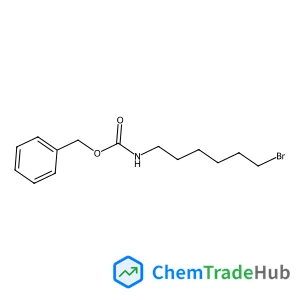
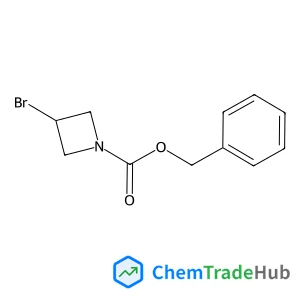
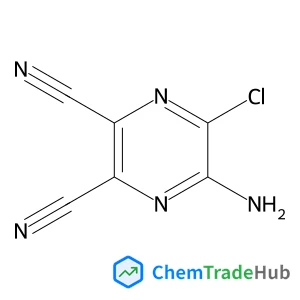
推荐供应商




免责声明
本页面提供的学术期刊信息仅供参考和研究使用。我们与任何期刊出版商均无关联,也不处理投稿事宜。如有投稿相关咨询,请直接联系相关期刊出版商。
如发现页面信息有误,请发送邮件至 support@chemtradehub.com 联系我们。我们将及时核实并处理您的问题。