


One-pot synthesis of biomass-derived porous carbon-based composites as an efficient acid–base bifunctional catalyst for self-condensation of n-butyraldehyde
文献信息
发布日期
2022-02-26
DOI
10.1039/D2RE00016D
影响因子
4.239
作者
Mengchao Hou, Fang Li, Aizhong Jia, Yingying Wang, Yanji Wang
查看原文
摘要
Although self-condensation of n-butyraldehyde (NBD) was widely investigated over various types of catalysts, the main challenge we face is inefficiency due to their small surface area and/or single property. The single property is mainly manifested in the fact that the previous catalysts are mainly based on the acidic site or the basic site. A series of carbon-based composites with acid–base functions and porous structures were successfully prepared by using carrageenan as a carbon source via a simple method in this work. Highly dispersed basic sites and acid sites were simultaneously fabricated by introducing MgO through the strong interaction between Mg2+ and functional groups and in situ transformation of highly dispersed acid groups in the carrageenan molecule during the preparation process, respectively. Characterization results indicated that the synthesized material possesses a large surface area which is ascribed to the formation of rich pores templated with the inorganic salt. The catalytic performance tests show that the obtained composite is an efficient catalyst for the self-condensation of NBD, which gives a 90.0% conversion of NBD and a 96.6% selectivity to 2-ethyl-2-hexenal with only 1.0 wt% catalyst in a relatively short reaction time of 4 h. A possible synergistic mechanism was proposed to reveal why the synthesized acid–base bifunctional material displayed an excellent performance in catalyzing aldol condensation.
期刊推荐

Critical Reviews in Solid State and Materials Sciences

Acta Metallurgica Sinica-English Letters

Topics in Catalysis
Atomization and Sprays

Cellulose

Journal of the Indian Institute of Science
Journal of Asian Natural Products Research
Electroanalysis

Herald of the Russian Academy of Sciences
Journal of Chemical Sciences
相关文献
New approach to increase the sensitivity of Tb–Eu-based luminescent thermometer
Alexander I. Dalinger, Leonid S. Lepnev, Sergey Z. Vatsadze
2020-10-07
Communication
DOI: 10.1039/D0CP04909C
Chemical reactions of a CL-20 crystal under heat and shock determined by ReaxFF reactive molecular dynamics simulations
Fuping Wang, Lang Chen, Deshen Geng, Jianying Lu, Junying Wu
2020-09-17
Paper
DOI: 10.1039/D0CP02796K
Optical properties of thickness-controlled PtSe2 thin films studied via spectroscopic ellipsometry
Junbo He, Wei Jiang, Xudan Zhu, Rongjun Zhang, Jianlu Wang, Meiping Zhu, Songyou Wang, Yuxiang Zheng, Liangyao Chen
2020-10-27
Paper
DOI: 10.1039/D0CP04021E
Quantifying how step-wise fluorination tunes local solute hydrophobicity, hydration shell thermodynamics and the quantum mechanical contributions of solute–water interactions
João R. Robalo, Denilson Mendes de Oliveira, Petra Imhof, Dor Ben-Amotz, Ana Vila Verde
2020-09-29
Paper
DOI: 10.1039/D0CP04205F
Free volume, gas permeation, and proton conductivity in MIL-101-SO3H/Nafion composite membranes
Chongshan Yin, Chunqing He, Qicheng Liu, Bangyun Xiong, Xiaowei Zhang, Libing Qian, Jingjing Li, Yawei Zhou
2019-10-19
Paper
DOI: 10.1039/C9CP04832D
Anharmonic coupling behind vibrational spectra of solvated ammonium: lighting up overtone states by Fermi resonance through tuning solvation environments
Chih-Kai Lin, Qian-Rui Huang, Jer-Lai Kuo
2020-09-30
Paper
DOI: 10.1039/D0CP03519J
Influence of soluble oligomeric aluminum on precipitation in the Al–KOH–H2O system
Mateusz Dembowski, Trent R. Graham, Jacob G. Reynolds, Kevin M. Rosso, Carolyn I. Pearce
2020-10-26
Paper
DOI: 10.1039/D0CP04820H
Structural surface and thermodynamics analysis of nanoparticles with defects
E. M. Gavilán-Arriazu, Rodrigo E. Giménez, O. A. Pinto
2020-09-17
Paper
DOI: 10.1039/D0CP03348K
Accurate elemental boiling points from first principles
Odile R. Smits
2020-10-12
Paper
DOI: 10.1039/D0CP02884C
Comparative analysis of ethanol dynamics in aqueous and non-aqueous solutions
Ivo Jukić, Martina Požar, Bernarda Lovrinčević
2020-09-24
Paper
DOI: 10.1039/D0CP03160G
您可能还喜欢
化合物问答
如何处理含有顺-二(2,2'-联吡啶)二氯化钌(II)二水合物(CAS号:67776-38-9)的废料?
处理含有该化合物的废料时,应先收集并分类,然后根据其危险特性选择合适的处理方法。推荐采用焚烧或由专业机构进行安全处理,以确保符合环保法规的要求。处理过程中应佩戴...
67776-38-93-{[(2R,3R,4S,5R,6R)...
化合物问答
4-amino-2-bromo-3-iodopyridine(CAS号:1300750-77-9)的市场或研究趋势如何?
4-氨基-2-溴-3-碘吡啶主要应用于药物合成和研究领域,尤其是在抗病毒和抗癌药物的研发中。随着新型药物的需求增加,该化合物的研究趋势较好。市场方面,由于其特殊...
1300750-77-92-bromo-3-iodopyridi...
化合物问答
4-乙酰基氨基-2-氨基-苯甲酸(CAS号:43134-76-5)的市场或研究趋势如何?
当前,4-乙酰基氨基-2-氨基-苯甲酸(CAS号:43134-76-5)在医药和化工领域有一定的应用。随着药物研发的进展,该化合物在新型药物设计中的应用可能增加...
43134-76-54-Acetamido-2-aminob...
化合物问答
庚a氟-1-(1-碘-1,2,2,2-四氟乙氧基)丙烷(CAS号:107432-46-2)的市场或研究趋势如何?
该化合物目前主要用于特定的工业应用,如氟聚合物的合成。市场趋势显示,由于其独特的结构和性能,未来可能在新型氟材料和特种化学品领域有更多的应用。研究趋势方面,主要...
107432-46-21,1,1,2,2,3,3-Heptaf...
化合物问答
在合成中是否有Propargyl-PEG13-bromide(CAS号:2055105-25-2)的替代品?
可以考虑使用1,3-丁二烯-1-炔-3-基-聚乙二醇-13-溴化物作为Propargyl-PEG13-bromide的替代品,因为两者在结构上相似,均可用于合成...
2055105-25-2Propargyl-peg13-brom...
化合物问答
2-氨基-6-甲氧基嘌呤(CAS号:20535-83-5)安全吗?
2-氨基-6-甲氧基嘌呤在正常使用条件下相对安全,但在操作时仍需注意防护措施,如佩戴手套和护目镜,避免吸入或接触皮肤和眼睛。
20535-83-56-Methoxy-7H-purin-2...
化合物问答
2-甲基-3-溴苯乙酸乙酯(CAS号:1261862-72-9)适用哪些法规指南?
该化合物根据其化学性质和潜在危害,可能适用于GHS(全球化学品统一分类和标签制度)的分类标准。具体分类需依据其毒性和燃烧危险性进行评估。此外,欧洲化学品管理局(...
1261862-72-9Ethyl (3-bromo-2-met...
化合物问答
4,4-二甲基吡咯烷-3-羧酸盐酸盐(CAS号:1351343-41-3)应用于哪些行业?
4,4-二甲基吡咯烷-3-羧酸盐酸盐在医药、聚合物和传感器领域有应用。在医药领域,它可以作为某些药物的中间体;在聚合物领域,它可用作某些聚合物的稳定剂;在传感器...
1351343-41-34,4-Dimethyl-3-pyrro...
化合物问答
处理5-Hydroxy-7-methoxy-2-(4-methoxyphenyl)-4-oxo-4H-chromen-6-yl 2-O-beta-D-xylopyranosyl-beta-D-glucopyranoside(CAS号:149998-39-0)时应注意哪些实验室安全事项?
处理该化合物时应注意使用个人防护装备(如手套、护目镜和实验服),在通风橱中操作。避免直接接触皮肤和吸入,泄漏时应立即清理并使用适当的吸收材料。参考安全数据表(S...
149998-39-05-Hydroxy-7-methoxy-...
化合物问答
7-甲基-1,2,3,4-四氢-吖啶-9-甲酸(CAS号:345621-27-4)的市场或研究趋势如何?
该化合物在医药研究中具有潜在应用价值,特别是在抗癌药物研发方面。随着研究的深入,对其合成方法的优化和生物活性的进一步探索将成为研究热点。
345621-27-47-Methyl-1,2,3,4-tet...
来源期刊
Reaction Chemistry & Engineering
CiteScore:
0
自引率:
8.8%
年发文量:
284
Reaction Chemistry & Engineering is an interdisciplinary journal reporting cutting-edge research focused on enhancing the understanding and efficiency of reactions. Reaction engineering leverages the interface where fundamental molecular chemistry meets chemical engineering and technology. Challenges in chemistry can be overcome by the application of new technologies, while engineers may find improved solutions for process development from the latest developments in reaction chemistry. Reaction Chemistry & Engineering is a unique forum for researchers whose interests span the broad areas of chemical engineering and chemical sciences to come together in solving problems of importance to wider society. All papers should be written to be approachable by readers across the engineering and chemical sciences. Papers that consider multiple scales, from the laboratory up to and including plant scale, are particularly encouraged.
推荐化合物
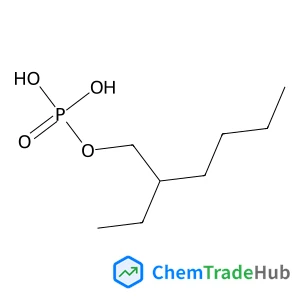

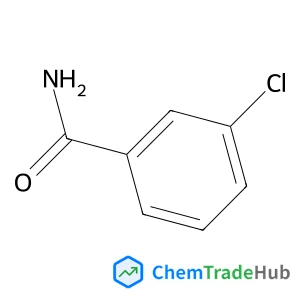

推荐供应商






免责声明
本页面提供的学术期刊信息仅供参考和研究使用。我们与任何期刊出版商均无关联,也不处理投稿事宜。如有投稿相关咨询,请直接联系相关期刊出版商。
如发现页面信息有误,请发送邮件至 support@chemtradehub.com 联系我们。我们将及时核实并处理您的问题。