





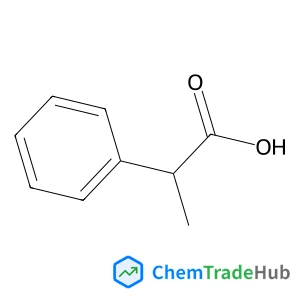
Aqueous ibuprofen sorption by using activated walnut shell biochar: process optimization and cost estimation
文献信息
发布日期
2022-07-19
DOI
10.1039/D2VA00015F
影响因子
0
作者
Manvendra Patel, Abhishek Kumar Chaubey, Charles U. Pittman, Jr., Dinesh Mohan
查看原文
摘要
Ibuprofen is a widely used non-steroidal anti-inflammatory, anti-pyritic, and analgesic drug with occurrence in the aquatic systems of 47 countries. The presence of ibuprofen in aquatic systems poses a threat to flora and fauna. Therefore, this study developed walnut shell activated biochar (WSAB) using H3PO4 immersion and 450 °C pyrolysis as a 3-dimensional adsorbent for aqueous ibuprofen remediation. WSAB was characterized using elemental analysis, ATR-FTIR, XRD, SEM, SEM-EDX, TEM, BET surface area and pore size measurements. The SBET surface area, pore volume, and pore density of the WSAB were 686 m2 g−1, 0.38 cm3 g−1 and 0.87 g cm−3, respectively. Batch sorption studies were performed from pH 2 to 10 at ibuprofen concentrations from 10 to 120 mg L−1 and temperatures from 25 to 45 °C. Maximum sorption (80%) occurred at pH 4 at an IBP concentration of 50 mg L−1 and a WSAB dose of 1.0 g L−1. Sorption followed second order kinetics well (R2 = 0.999). The sorption isotherms remained almost constant with an increase in temperature as shown by Langmuir adsorption capacities [Q°25°C = 69.7 mg g−1, Q°35°C = 68.0 mg g−1, and Q°45°C = 66.9 mg g−1]. WSAB provided an efficient ibuprofen sorption capacity (30.08 mg g−1) in fixed-bed sorption studies (column parameters: initial Ibuprofen concentration = 7.5 mg L−1; pH = 4.0; WSAB dose = 2.0 g; bed length = ∼4 cm; hydraulic flow rate = 2.5 mL min−1). Sorption of ibuprofen to WSAB involves H-bonding, pore filling with complexation and hydrophobic π–π donor–acceptor attractions likely participating. An estimated cost of US$ 6.93 kg−1 together with excellent sorption capacity makes WSAB an efficient low-cost adsorbent for ibuprofen removal. Thus, this study describes a sustainable waste walnut shell management strategy as well as treatment of ibuprofen contaminated water.
相关文献
Oxygen-evolving complex of photosystem II: correlating structure with spectroscopy
Ravi Pokhrel, Gary W. Brudvig
2014-03-28
Perspective
DOI: 10.1039/C4CP00493K
Aqueous solutions of tetraalkylammonium halides: ion hydration, dynamics and ion–ion interactions in light of steric effects
Debsindhu Bhowmik, Natalie Malikova, Guillaume Mériguet, Olivier Bernard, José Teixeira, Pierre Turq
2014-05-15
Paper
DOI: 10.1039/C4CP01164C
Photocatalytic performance of TiO2–zeolite templated carbon composites in organic contaminant degradation
Metta Chareonpanich, Khanin Nueangnoraj, Hirotomo Nishihara, Takashi Kyotani
2014-10-02
Paper
DOI: 10.1039/C4CP03897E
Sodium uptake in cell construction and subsequent in operando electrode behaviour of Prussian blue analogues, Fe[Fe(CN)6]1−x·yH2O and FeCo(CN)6
James C. Pramudita, Siegbert Schmid, Thomas Godfrey, Thomas Whittle, Moshiul Alam, Tracey Hanley, Helen E. A. Brand, Neeraj Sharma
2014-07-23
Paper
DOI: 10.1039/C4CP02676D
Entropy and enthalpy contributions to the kinetics of proton coupled electron transfer to the Mn4O4(O2PPh2)6 cubane
Thomas G. Carrell, Paul F. Smith, Joseph Dennes, G. Charles Dismukes
2014-03-05
Communication
DOI: 10.1039/C3CP55200D
Red-shifting the optical response of firefly oxyluciferin with group 15/16 substitutions
2014-10-15
Paper
DOI: 10.1039/C4CP04347B
Interaction of crystal water with the building block in Y2Mo3O12 and the effect of Ce3+ doping
Xiansheng Liu, Yongguang Cheng, Erjun Liang, Mingju Chao
2014-04-08
Paper
DOI: 10.1039/C4CP00144C
Electron driven reactions in sulphur containing analogues of uracil: the case of 2-thiouracil
J. Kopyra, H. Abdoul-Carime, F. Kossoski, M. T. do N. Varella
2014-10-14
Paper
DOI: 10.1039/C4CP03544E
您可能还喜欢
化合物问答
4-[4-三氟甲基苯基]恶唑(CAS号:1126636-40-5)通常如何合成?
4-[4-三氟甲基苯基]恶唑通常通过将4-三氟甲基苯酚与异硫氰酸苯酯在有机溶剂中进行酯化反应合成。该反应可在无水条件下,使用适当的催化剂,如四丁基氢氧化铵,以提...
1126636-40-54-(4-(Trifluoromethy...
59729-32-71-[3-(Dimethylamino)...
化合物问答
RockPhos Pd G3(CAS号:2009020-38-4)通常如何合成?
RockPhos Pd G3 通常通过钯催化偶联反应合成,使用配体 (2'-Amino-2-biphenylyl)(methanesulfonato-kappa...
2009020-38-4(2'-Amino-2-biphenyl...
化合物问答
1-哌啶甲酰胺(CAS号:2158-03-4)的市场或研究趋势如何?
1-哌啶甲酰胺作为有机合成中的重要中间体,其市场需求主要受医药、农药、染料等行业推动。近年来,随着新药开发和绿色化学的发展,该化合物的研究趋势集中在开发更高效、...
2158-03-41-Piperidinecarboxam...
化合物问答
2-(二苯基膦基)乙胺(CAS号:4848-43-5)适用哪些法规指南?
2-(二苯基膦基)乙胺适用于多种法规指南,包括但不限于《全球化学品统一分类和标签制度》(GHS),欧盟《化学品注册、评估、授权和限制》法规(REACH),以及美...
4848-43-52-(Diphenylphosphino...
化合物问答
如何储存间苯二甲酸二烯丙酯(CAS号:1087-21-4)?
间苯二甲酸二烯丙酯应储存在阴凉、干燥、通风良好的地方,远离火源和热源。储存容器应密封,避免光照和高温。储存温度应控制在25℃以下,相对湿度应低于80%。避免与其...
1087-21-4Diallyl isophthalate
化合物问答
什么是间甲苯异硫代异氰酸酯(CAS号:621-30-7)?
间甲苯异硫代异氰酸酯是一种有机化合物,分子式为C7H7NO2S,具有刺激性气味。它是一种重要的有机合成中间体,在合成其他化合物时广泛应用。
621-30-71-Isothiocyanato-3-m...
化合物问答
在合成中是否有N-Boc-D-苯丙氨醇(CAS号:106454-69-7)的替代品?
在合成中,可以考虑使用N-Cbz-D-苯丙氨醇或N-Fmoc-D-苯丙氨醇作为替代品。这些化合物同样具有保护氨基的功能,且在合成过程中表现出良好的反应性能。
106454-69-72-Methyl-2-propanyl ...
化合物问答
3-羟甲基-2-氧异丙基吡啶(CAS号:954240-50-7)的主要用途是什么?
3-羟甲基-2-氧异丙基吡啶主要用于有机合成领域,可以作为合成其他药物、农药或精细化学品的中间体。此外,它还可能在实验室研究中作为特定反应的前体或溶剂。
954240-50-7(2-Isopropoxy-3-pyri...
化合物问答
6-氨基-9-甲基嘌呤(CAS号:700-00-5)应用于哪些行业?
6-氨基-9-甲基嘌呤目前主要应用于医药行业,作为某些药物的中间体。此外,它还可能用于聚合物、传感器和半导体的某些领域,作为功能性单体或掺杂剂。
700-00-59-Methyl-9H-purin-6-...
来源期刊
推荐化合物
推荐供应商




免责声明
本页面提供的学术期刊信息仅供参考和研究使用。我们与任何期刊出版商均无关联,也不处理投稿事宜。如有投稿相关咨询,请直接联系相关期刊出版商。
如发现页面信息有误,请发送邮件至 support@chemtradehub.com 联系我们。我们将及时核实并处理您的问题。