





![(3R,5R)-1-[(Benzyloxy)carbonyl]-5-methyl-3-piperidinecarboxylic acid structure](https://cnstatic.chemtradehub.com/structs/126/1269757-29-0-c552.webp "(3R,5R)-1-[(Benzyloxy)carbonyl]-5-methyl-3-piperidinecarboxylic acid structure")
(3R,5R)-1-[(Benzyloxy)carbonyl]-5-methyl-3-piperidinecarboxylic acid
CAS号:
1269757-29-0
分子式:
C15H19NO4
During blood storage, red blood cells (RBCs) undergo physical, chemical, and metabolic changes that may contribute to post-transfusion complications. Due to the hyperglycemic environment of typical solutions used for RBC storage, the formation of advanced glycation endproducts (AGEs) on the stored RBCs has been implicated as a detrimental chemical change during storage. Unfortunately, there are limited studies involving quantitative determination and differentiation of carboxymethyl-lysine (CML) and carboxyethyl-lysine (CEL), two commonly formed AGEs, and no reported studies comparing these AGEs in experimental storage solutions. In this study, CML and CEL were identified and quantified on freshly drawn blood samples in two types of storage solutions, standard additive solution 1 (AS-1) and a normoglycemic version of AS-1 (AS-1N). To facilitate detection of the AGEs, a novel method was developed to reliably extract AGEs from RBCs, provide Food and Drug Administration (FDA) bioanalytical guidance criteria, and enable acceptable selectivity for these analytes. Ultra-performance liquid chromatography with tandem mass spectrometry (UPLC-MS/MS) was utilized to identify and quantify the AGEs. Results show this method is accurate, precise, has minimal interferences or matrix effects, and overcomes the issue of detecting AGE byproducts. Importantly, AGEs can be detected and quantified in both types of blood storage solutions (AS-1 and AS-1N), thereby enabling long-term (6 weeks) blood storage related studies.
Hikaru Sotome, Daichi Kitagawa, Tatsumoto Nakahama, Syoji Ito, Seiya Kobatake, Masahiro Irie, Hiroshi Miyasaka
DOI: 10.1039/C8CP07393G
Thomas J. Wood, Ronald I. Smith, Claire A. Murray
DOI: 10.1039/C8CP02824A
Jessica Exner, Steffen Eusterwiemann, Oliver Janka, Oliver Niehaus, Constantin G. Daniliuc, Rainer Pöttgen, Armido Studer
DOI: 10.1039/C8CP05837G
Kristen D. Fulfer, Daniel G. Kuroda
DOI: 10.1039/C8CP03315C
DOI: 10.1039/C8CP04028A
Claus Müller
DOI: 10.1039/C8CP02074D
Pallavi Banerjee, Marko Wehle, Reinhard Lipowsky, Mark Santer
DOI: 10.1039/C8CP04059A
Zhiliang Wang, Miaoqiang Lyu, Peng Chen, Songcan Wang, Lianzhou Wang
DOI: 10.1039/C8CP04021D
Hong Zhang, Haohao Fu, Antonio Monari
DOI: 10.1039/C8CP03836H
Si Wu, Yuan Yuan, Hongqi Ai, Baotao Kang
DOI: 10.1039/C8CP03359E
1,2-环己二酮环乙缩醛应储存在阴凉、干燥、通风良好的地方,避免阳光直射。建议使用密封容器保存,并保持环境温度在室温范围内,远离火源和热源。
Ecopladib作为一种新型的药物,主要应用于治疗高胆固醇等疾病。目前,市场和研究趋势显示,Ecopladib因其独特的药理作用而受到关注。随着对心血管疾病治...
2,3-二甲基-3H-咪唑[4,5-c]吡啶通常通过咪唑和2,3-二甲基吡啶的缩合反应合成。具体来说,将咪唑和2,3-二甲基吡啶在适当的溶剂中进行加热或加压反应...
该化合物在药物化学和有机合成中有一定的应用。近年来,随着对新型药物化合物的需求增加,该化合物的研究趋势主要集中在探索其生物活性,尤其是其在神经系统疾病治疗中的潜...
盐酸甘氨酸丁酯应储存在阴凉、干燥、通风良好的地方,避免阳光直射和高温环境,温度应控制在25℃以下。储存容器应密封,避免与空气中的水分和酸性物质接触,以防发生水解...
2-碘-N,N-二甲基苯胺是一种有机化合物,化学名为2-Iodo-N,N-dimethylbenzamide。其分子式为C<sub>9</sub>H<sub>1...
随着医药、农药和新材料领域的发展,该化合物作为关键中间体的应用日益增多。特别是在药物合成中,由于其独特的化学性质,可以用于合成多种药物分子。未来的研究趋势可能集...
2,4-二溴-6-三氟甲基嘧啶通常通过溴化反应合成。首先,将6-三氟甲基嘧啶与溴化剂(如液溴)在适当的溶剂(如二氯甲烷、四氢呋喃)中反应,加入适当的催化剂(如四...
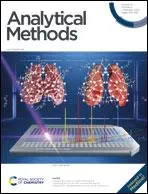
Analytical Methods welcomes early applications of new analytical and bioanalytical methods and technology demonstrating the potential for societal impact. We require that methods and technology reported in the journal are sufficiently innovative, robust, accurate, and compared to other available methods for the intended application. Developments with interdisciplinary approaches are particularly welcome. Systems should be proven with suitably complex and analytically challenging samples. We encourage developments within, but not limited to, the following technologies and applications: global health, point-of-care and molecular diagnostics biosensors and bioengineering drug development and pharmaceutical analysis applied microfluidics and nanotechnology omics studies, such as proteomics, metabolomics or glycomics environmental, agricultural and food science neuroscience biochemical and clinical analysis forensic analysis industrial process and method development
![S-[2,3-Bis(palmitoyloxy)propyl]-N-[(9H-fluoren-9-ylmethoxy)(hydroxy)methylene]cysteine structure](https://cnstatic.chemtradehub.com/structs/210/210532-98-2-f6a7.webp "S-[2,3-Bis(palmitoyloxy)propyl]-N-[(9H-fluoren-9-ylmethoxy)(hydroxy)methylene]cysteine structure")
![1-[(4-Methylphenyl)sulfonyl]-3-(4,4,5,5-tetramethyl-1,3,2-dioxaborolan-2-yl)-1H-pyrrolo[2,3-b]pyridine-5-carbonitrile structure](https://cnstatic.chemtradehub.com/structs/143/1434747-57-5-fc0d.webp "1-[(4-Methylphenyl)sulfonyl]-3-(4,4,5,5-tetramethyl-1,3,2-dioxaborolan-2-yl)-1H-pyrrolo[2,3-b]pyridine-5-carbonitrile structure")