



Drug delivery nanoparticles for preventing implant bacterial infections based on the bacteria and immunity mechanisms
文献信息
发布日期
2023-11-21
DOI
10.1039/D3BM01584J
影响因子
6.843
作者
Chen Chen, Qi Xiao, Leyi Xiao, Mengge Feng, Fangzhe Liu, Ke Yao, Yu Cui, Tiange Zhang
查看原文
摘要
Implant dysfunction and failure during medical treatment can be attributed to bacterial infection with Staphylococcus aureus and Enterococcus faecalis, which are the prevalent strains responsible for implant infections. Currently, antibiotics are primarily used either locally or systemically to prevent and treat bacterial infections in implants. However, the effectiveness of this approach is unsatisfactory. Therefore, the development of new antimicrobial medications is crucial to address the clinical challenges associated with implant infections. In this study, a nanoparticle (ICG+RSG) composed of indocyanine green (ICG) and rosiglitazone (RSG), and delivered using 1,2-dipalmitoyl-snglycero-3-phosphocholine (DPPC) was prepared. ICG+RSG has photothermal and photodynamic properties to eliminate bacteria at the infection site by releasing reactive oxygen species and increasing the temperature. Additionally, it regulates phagocytosis and macrophage polarization to modulate the immune response in the body. ICG+RSG kills bacteria and reduces tissue inflammation, showing potential for preventing implant infections.
相关文献
Theoretical prediction of LiScO2 nanosheets as a cathode material for Li–O2 batteries
Zhixiao Liu, Shiguo Zhang, Wangyu Hu
2018-08-11
Paper
DOI: 10.1039/C8CP01756E
Structural analysis of the initial lithiation of NiO thin film electrodes
Guennadi Evmenenko, Timothy T. Fister, Fernando C. Castro, Byeongdu Lee, D. Bruce Buchholz, Vinayak P. Dravid, Paul Fenter
2019-04-05
Paper
DOI: 10.1039/C9CP01527B
Hydrogen bond induced enhancement of Fermi resonances in N–H⋯N hydrogen bonded complexes of anilines
Saurabh Mishra, Jer-Lai Kuo, G. Naresh Patwari
2018-07-20
Paper
DOI: 10.1039/C8CP02448K
How does the electric current propagate through fully-hydrogenated borophene?
Jutao Jiao, Yusheng Hou, Hui Wang, Dapeng Wu, Tianxing Wang, Zhaoming Fu, Guoliang Xu, Ruqian Wu
2018-07-30
Paper
DOI: 10.1039/C8CP04272A
DNA-binding mechanism of spiropyran photoswitches: the role of electrostatics
Davide Avagliano, Pedro A. Sánchez-Murcia, Leticia González
2019-02-15
Communication
DOI: 10.1039/C8CP07508E
The metal–ionic liquid interface as characterized by impedance spectroscopy and in situ scanning tunneling microscopy
Claus Müller
2018-08-06
Perspective
DOI: 10.1039/C8CP02074D
Influence of argon and D2 tagging on the hydrogen bond network in Cs+(H2O)3; kinetic trapping below 40 K
Tim K. Esser, Harald Knorke, Flavio Siro-Brigiano, Daria Ruth Galimberti, Knut R. Asmis, Marie-Pierre Gaigeot, James M. Lisy
2018-10-30
Paper
DOI: 10.1039/C8CP06020G
Extreme electron transport suppression in siloxane ring-based molecular devices
Jie Li, Yunrui Duan, Tao Li, Hui Li
2018-08-21
Paper
DOI: 10.1039/C8CP03616K
Impact of pore size, interconnections, and dynamic conductivity on the electrochemistry of vanadium pentoxide in well defined porous structures
Nam Kim, Emily Sahadeo, Chanyuan Liu, Olivia Rose
2018-11-21
Paper
DOI: 10.1039/C8CP04706E
Reactive convective-dissolution in a porous medium: stability and nonlinear dynamics
Silvana S. S. Cardoso
2018-07-26
Paper
DOI: 10.1039/C8CP03064B
您可能还喜欢
化合物问答
如何储存1,2-环己二酮环乙缩醛(CAS号:4746-96-7)?
1,2-环己二酮环乙缩醛应储存在阴凉、干燥、通风良好的地方,避免阳光直射。建议使用密封容器保存,并保持环境温度在室温范围内,远离火源和热源。
4746-96-71,4-Dioxaspiro[4.5]d...
化合物问答
Ecopladib(CAS号:381683-92-7)的市场或研究趋势如何?
Ecopladib作为一种新型的药物,主要应用于治疗高胆固醇等疾病。目前,市场和研究趋势显示,Ecopladib因其独特的药理作用而受到关注。随着对心血管疾病治...
381683-92-7Ecopladib
化合物问答
2,3-Dimethyl-3H-imidazo[4,5-c]pyridine(CAS号:52538-09-7)通常如何合成?
2,3-二甲基-3H-咪唑[4,5-c]吡啶通常通过咪唑和2,3-二甲基吡啶的缩合反应合成。具体来说,将咪唑和2,3-二甲基吡啶在适当的溶剂中进行加热或加压反应...
52538-09-72,3-Dimethyl-3H-imid...
化合物问答
2,3,4,5-tetrahydro-1H-3-苯并氮杂环;盐酸盐(CAS号:17379-01-0)的市场或研究趋势如何?
该化合物在药物化学和有机合成中有一定的应用。近年来,随着对新型药物化合物的需求增加,该化合物的研究趋势主要集中在探索其生物活性,尤其是其在神经系统疾病治疗中的潜...
17379-01-02,3,4,5-Tetrahydro-1...
68-90-6(2-Ethyl-1-benzofura...
化合物问答
如何储存盐酸甘氨酸丁酯(CAS号:13048-99-2)?
盐酸甘氨酸丁酯应储存在阴凉、干燥、通风良好的地方,避免阳光直射和高温环境,温度应控制在25℃以下。储存容器应密封,避免与空气中的水分和酸性物质接触,以防发生水解...
13048-99-2Butyl glycinate hydr...
化合物问答
什么是2-Iodo-N,N-dimethylbenzamide(CAS号:54616-46-5)?
2-碘-N,N-二甲基苯胺是一种有机化合物,化学名为2-Iodo-N,N-dimethylbenzamide。其分子式为C<sub>9</sub>H<sub>1...
54616-46-52-Iodo-N,N-dimethylb...
16817-90-6N-Cyclohexylglycinam...
化合物问答
5-溴-2-(4H-1,2,4-三唑-4-基)吡啶(CAS号:959240-99-4)的市场或研究趋势如何?
随着医药、农药和新材料领域的发展,该化合物作为关键中间体的应用日益增多。特别是在药物合成中,由于其独特的化学性质,可以用于合成多种药物分子。未来的研究趋势可能集...
959240-99-45-Bromo-2-(4H-1,2,4-...
化合物问答
2,4-二溴-6-三氟甲基嘧啶(CAS号:785778-00-9)通常如何合成?
2,4-二溴-6-三氟甲基嘧啶通常通过溴化反应合成。首先,将6-三氟甲基嘧啶与溴化剂(如液溴)在适当的溶剂(如二氯甲烷、四氢呋喃)中反应,加入适当的催化剂(如四...
785778-00-92,4-Dibromo-6-(trifl...
来源期刊
Biomaterials Science
CiteScore:
11.5
自引率:
3.4%
年发文量:
492
Biomaterials Science is an international high impact journal exploring the science of biomaterials and their translation towards clinical use. Its scope encompasses new concepts in biomaterials design, studies into the interaction of biomaterials with the body, and the use of materials to answer fundamental biological questions. Papers do not necessarily need to report a new biomaterial but should provide novel insight into the biological applications of the biomaterial. Articles that primarily focus on demonstrating novel materials chemistry and bring a molecular picture to bear on a given material’s suitability as a biomaterial are more suited to our companion journal, Journal of Materials Chemistry B. Biomaterials Science publishes primary research and review-type articles in the following areas: molecular design of biomaterials, including translation of emerging chemistries to biomaterials science of cells and materials at the nanoscale and microscale materials as model systems for stem cell and human biology materials for tissue engineering and regenerative medicine (Nano)materials and (nano)systems for therapeutic delivery interactions at the biointerface biologically inspired and biomimetic materials, including bio-inspired self-assembly systems and cell-inspired synthetic tools next-generation biomaterials tools and methods
推荐化合物
![(2E)-3-(3-Chlorophenyl)-N-{2-[4-(methylsulfonyl)-1-piperazinyl]-2-oxoethyl}acrylamide structure](https://cnstatic.chemtradehub.com/structs/250/2505001-54-5-c1e9.webp "(2E)-3-(3-Chlorophenyl)-N-{2-[4-(methylsulfonyl)-1-piperazinyl]-2-oxoethyl}acrylamide structure")
![S-[2,3-Bis(palmitoyloxy)propyl]-N-[(9H-fluoren-9-ylmethoxy)(hydroxy)methylene]cysteine structure](https://cnstatic.chemtradehub.com/structs/210/210532-98-2-f6a7.webp "S-[2,3-Bis(palmitoyloxy)propyl]-N-[(9H-fluoren-9-ylmethoxy)(hydroxy)methylene]cysteine structure")
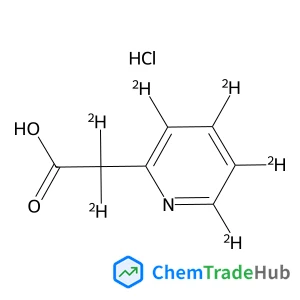
2,2-dideuterio-2-(3,4,5,6-tetradeuterio-2-pyridyl)acetic acid;hydrochloride
CAS号:
1329799-67-8
分子式:
C7H2ClD6NO2
推荐供应商




免责声明
本页面提供的学术期刊信息仅供参考和研究使用。我们与任何期刊出版商均无关联,也不处理投稿事宜。如有投稿相关咨询,请直接联系相关期刊出版商。
如发现页面信息有误,请发送邮件至 support@chemtradehub.com 联系我们。我们将及时核实并处理您的问题。