












The 2′-hydroxy group of flavin mononucleotide influences the catalytic function and promiscuity of the flavoprotein iodotyrosine dehalogenase
文献信息
发布日期
2023-08-04
DOI
10.1039/D3CB00094J
影响因子
0
作者
Anton Kozyryev, Petrina A. Boucher, Carla M. Quiñones-Jurgensen, Steven E. Rokita
查看原文
摘要
The isoalloxazine ring system of the flavin cofactor is responsible for much of the catalytic power and diversity associated with flavoproteins. While the specificity of these enzymes is greatly influenced by the surrounding protein environment, the ribityl group of the cofactor may also participate in stabilizing transient intermediates formed by substrates and flavin. A conserved interaction between the phenolate oxygen of L-iodotyrosine and the 2′-hydroxy group of flavin mononucleotide (FMN) bound to iodotyrosine deiodianase (IYD) implied such a contribution to catalysis. Reconstitution of this deiodinase with 2′-deoxyflavin mononucleotide (2′-deoxyFMN) decreased the overall catalytic efficiency of L-iodotyrosine dehalogenation (kcat/Km) by more than 5-fold but increased kcat by over 2-fold. These affects are common to human IYD and its homolog from Thermotoga neapolitana and are best explained by an ability of the 2′-hydroxy group of FMN to stabilize association of the substrate in its phenolate form. Loss of this 2′-hydroxy group did not substantially affect the formation of the one electron reduced semiquinone form of FMN but its absence released constraints that otherwise suppresses the ability of IYD to promote hydride transfer as measured by a competing nitroreductase activity. Generation of IYD containing 2′-deoxyFMN also removed steric constraints that had previously limited the use of certain mechanistic probes. For example, L-O-methyl iodotyrosine could be accommodated in the active site lacking the 2′-hydroxy of FMN and shown to be inert to dehalogenation as predicted from a mechanism requiring ketonization of the phenolic oxygen. In the future, ancillary sites within a cofactor should now be considered when engineering new functions within existing protein architectures as demonstrated by the ability of IYD to promote nitroreduction after loss of the 2′-hydroxy group of FMN.
相关文献
Biocompatible and pH-sensitive PEG hydrogels with degradable phosphoester and phosphoamide linkers end-capped with amine for controlled drug delivery
Lidong Zhang, Young-Il Jeong, Sudan Zheng, Sung Il Jang, Hongsuk Suh, Dae Hwan Kang, Il Kim
2012-11-07
Paper
DOI: 10.1039/C2PY20755A
Functionalized linear low-density polyethylene by ring-opening metathesis polymerization
Shingo Kobayashi, Hyunwoo Kim, Christopher W. Macosko, Marc A. Hillmyer
2012-11-28
Paper
DOI: 10.1039/C2PY20883K
From self-assembled toroids to dynamic nanotubules
Yongju Kim, Taehoon Kim, Myongsoo Lee
2012-11-12
Minireview
DOI: 10.1039/C2PY20868G
Electrochemical production of syngas from CO2 at pressures up to 30 bar in electrolytes containing ionic liquid
Sofia Messias, Miguel M. Sousa, Manuel Nunes da Ponte, Carmen M. Rangel, Tiago Pardal, Ana S. Reis Machado
2019-07-31
Paper
DOI: 10.1039/C9RE00271E
Diblock copolymers consisting of a polymerized ionic liquid and poly(N-isopropylacrylamide). Effects of PNIPAM block length and counter ion on self-assembling and thermal properties
Erno Karjalainen, Naveen Chenna, Pasi Laurinmäki, Sarah J. Butcher, Heikki Tenhu
2012-10-25
Paper
DOI: 10.1039/C2PY20815F
Modeling of RAFT polymerization of MMA in supercritical carbon dioxide using the PC-SAFT equation of state
Porfirio López-Domínguez, Jesús Eduardo Rivera-Peláez, Gabriel Jaramillo-Soto, José Fernando Barragán-Aroche
2020-01-24
Paper
DOI: 10.1039/C9RE00461K
Multivariate analysis of inline benchtop NMR data enables rapid optimization of a complex nitration in flow
Johannes Poms
2020-02-21
Paper
DOI: 10.1039/D0RE00048E
Zero-valent metal catalyzed radical-induced adjustable removal/modification of thiocarbonylthio end groups of RAFT polymer at ambient temperature
Xiaofei Zhang, Wenxiang Wang, Kai Guo, Zhengbiao Zhang, Xiulin Zhu
2012-09-25
Paper
DOI: 10.1039/C2PY20667F
Synthesis of 3-trifluoromethylated 1,3-butadienes via a Pd(0)-catalyzed fluorinated Heck reaction
Yang Li, Meng Hao, Ming Xia, Ning Sun, Cai-Lin Zhang, Wen-Qing Zhu
2020-03-25
Paper
DOI: 10.1039/D0RE00093K
您可能还喜欢
化合物问答
4-[4-三氟甲基苯基]恶唑(CAS号:1126636-40-5)通常如何合成?
4-[4-三氟甲基苯基]恶唑通常通过将4-三氟甲基苯酚与异硫氰酸苯酯在有机溶剂中进行酯化反应合成。该反应可在无水条件下,使用适当的催化剂,如四丁基氢氧化铵,以提...
1126636-40-54-(4-(Trifluoromethy...
59729-32-71-[3-(Dimethylamino)...
化合物问答
RockPhos Pd G3(CAS号:2009020-38-4)通常如何合成?
RockPhos Pd G3 通常通过钯催化偶联反应合成,使用配体 (2'-Amino-2-biphenylyl)(methanesulfonato-kappa...
2009020-38-4(2'-Amino-2-biphenyl...
化合物问答
1-哌啶甲酰胺(CAS号:2158-03-4)的市场或研究趋势如何?
1-哌啶甲酰胺作为有机合成中的重要中间体,其市场需求主要受医药、农药、染料等行业推动。近年来,随着新药开发和绿色化学的发展,该化合物的研究趋势集中在开发更高效、...
2158-03-41-Piperidinecarboxam...
化合物问答
2-(二苯基膦基)乙胺(CAS号:4848-43-5)适用哪些法规指南?
2-(二苯基膦基)乙胺适用于多种法规指南,包括但不限于《全球化学品统一分类和标签制度》(GHS),欧盟《化学品注册、评估、授权和限制》法规(REACH),以及美...
4848-43-52-(Diphenylphosphino...
化合物问答
如何储存间苯二甲酸二烯丙酯(CAS号:1087-21-4)?
间苯二甲酸二烯丙酯应储存在阴凉、干燥、通风良好的地方,远离火源和热源。储存容器应密封,避免光照和高温。储存温度应控制在25℃以下,相对湿度应低于80%。避免与其...
1087-21-4Diallyl isophthalate
化合物问答
什么是间甲苯异硫代异氰酸酯(CAS号:621-30-7)?
间甲苯异硫代异氰酸酯是一种有机化合物,分子式为C7H7NO2S,具有刺激性气味。它是一种重要的有机合成中间体,在合成其他化合物时广泛应用。
621-30-71-Isothiocyanato-3-m...
化合物问答
在合成中是否有N-Boc-D-苯丙氨醇(CAS号:106454-69-7)的替代品?
在合成中,可以考虑使用N-Cbz-D-苯丙氨醇或N-Fmoc-D-苯丙氨醇作为替代品。这些化合物同样具有保护氨基的功能,且在合成过程中表现出良好的反应性能。
106454-69-72-Methyl-2-propanyl ...
化合物问答
3-羟甲基-2-氧异丙基吡啶(CAS号:954240-50-7)的主要用途是什么?
3-羟甲基-2-氧异丙基吡啶主要用于有机合成领域,可以作为合成其他药物、农药或精细化学品的中间体。此外,它还可能在实验室研究中作为特定反应的前体或溶剂。
954240-50-7(2-Isopropoxy-3-pyri...
化合物问答
6-氨基-9-甲基嘌呤(CAS号:700-00-5)应用于哪些行业?
6-氨基-9-甲基嘌呤目前主要应用于医药行业,作为某些药物的中间体。此外,它还可能用于聚合物、传感器和半导体的某些领域,作为功能性单体或掺杂剂。
700-00-59-Methyl-9H-purin-6-...
来源期刊
推荐化合物
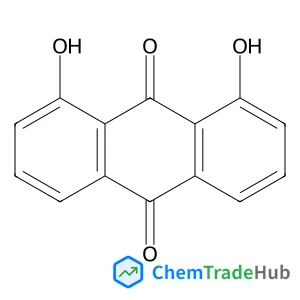
![[2',6'-bis(propan-2-yloxy)-[1,1'-biphenyl]-3-yl]dicyclohexylphosphane structure](https://cnstatic.chemtradehub.com/structs/787/787618-22-8-dda2.webp "[2',6'-bis(propan-2-yloxy)-[1,1'-biphenyl]-3-yl]dicyclohexylphosphane structure")
[2',6'-bis(propan-2-yloxy)-[1,1'-biphenyl]-3-yl]dicyclohexylphosphane
CAS号:
787618-22-8
分子式:
C30H43O2P
推荐供应商





免责声明
本页面提供的学术期刊信息仅供参考和研究使用。我们与任何期刊出版商均无关联,也不处理投稿事宜。如有投稿相关咨询,请直接联系相关期刊出版商。
如发现页面信息有误,请发送邮件至 support@chemtradehub.com 联系我们。我们将及时核实并处理您的问题。