


Copper binding and protein aggregation: a journey from the brain to the human lens
文献信息
发布日期
2023-10-17
DOI
10.1039/D3CB00145H
影响因子
0
作者
Yanahi Posadas, Carolina Sánchez-López
查看原文
摘要
Metal ions have been implicated in several proteinopathies associated to degenerative and neurodegenerative diseases. While the molecular mechanisms for protein aggregation are still under investigation, recent findings from Cryo-EM point out to polymorphisms in aggregates obtained from patients, as compared to those formed in vitro, suggesting that several factors may impact aggregation in vivo. One of these factors could be the direct binding of metal ions to the proteins engaged in aggregate formation. In this opinion article, three case studies are discussed to address the question of how metal ion binding to a peptide or protein may impact its conformation, folding, and aggregation, and how this may be relevant in understanding the polymorphic nature of the aggregates related to disease. Specifically, the impact of Cu2+ ions in the amyloid aggregation of amyloid-β and amylin (or IAPP- islet amyloid polypeptide) are discussed and then contrasted to the case of Cu2+-induced non-amyloid aggregation of human lens γ-crystallin proteins. For the intrinsically disordered peptides amyloid-β and IAPP, the impact of Cu2+ ion binding is highly dependent on the relative location of the metal binding site and the hydrophobic regions involved in β-sheet folding and amyloid formation. Further structural studies of how Cu2+ binding impacts amyloid aggregation pathways and the molecular structure of the final amyloid fibril, both, in vitro and in vivo, will certainly shed light into the molecular origins of the polymorphisms observed in diseased tissue. Finally, contrasting these cases to that of Cu2+-induced non-amyloid aggregation of γ-crystallins, it is evident that, although the impact in aggregation – and the nature of the aggregate – may differ in each system, at the molecular level there is a competition between metal ion coordination and the stability of β-sheet structures. Considering the importance of the β-sheet fold in biology, it is fundamental to understand the energetics and molecular details behind such competition. This opinion article aims to highlight future research directions in the field that can help tackle the important question of how metal ion binding may impact protein folding and aggregation and how this relates to disease.
期刊推荐

Science Progress
Helvetica Chimica Acta
Pure and Applied Chemistry

European Journal of Wood and Wood Products

Journal of Organometallic Chemistry

Journal of Heterocyclic Chemistry

Journal of Catalysis
Israel Journal of Chemistry
Molecular Pharmacology

Proceedings of the National Academy of Sciences of the United States of America
相关文献
Inhibition of GNNQQNY prion peptide aggregation by trehalose: a mechanistic view
Nidhi Katyal, Shashank Deep
2017-06-27
Paper
DOI: 10.1039/C7CP02912H
4d and 5d bimetal doped tubular silicon clusters Si12M2 with M = Nb, Ta, Mo and W: a bimetallic configuration model
Devashis Majumdar, Jerzy Leszczynski
2016-12-12
Paper
DOI: 10.1039/C6CP05964C
Quantifying reaction kinetics of the non-enzymatic decarboxylation of pyruvate and production of peroxymonocarbonate with hyperpolarized 13C-NMR
Nicholas Drachman, Stephen Kadlecek, Ian Duncan, Rahim Rizi
2017-07-13
Paper
DOI: 10.1039/C7CP02041D
Knockout driven fragmentation of porphyrins
Linda Giacomozzi, Michael Gatchell, Nathalie de Ruette, Michael Wolf, Henning T. Schmidt, Henrik Cederquist, Henning Zettergren
2017-06-19
Paper
DOI: 10.1039/C7CP01583F
Polaronic transport in iron phosphate glasses containing HfO2 and CeO2
Ana Šantić, Radha D. Banhatti, Luka Pavić, Hüseyin Ertap, Mustafa Yüksek, Mevlüt Karabulut, Andrea Moguš-Milanković
2016-12-09
Paper
DOI: 10.1039/C6CP04226K
Energetics and the molecular structure of an ion-paired supramolecular system in water
Octavio Cruz-Vásquez, Lan Jade Bernal-Sánchez, Ruy Cervantes, Jorge Tiburcio, Aarón Rojas
2017-06-29
Paper
DOI: 10.1039/C7CP02955A
Synthesis of a Cu-infiltrated Zr-doped SBA-15 catalyst for CO2 hydrogenation into methanol and dimethyl ether
A. Atakan, P. Mäkie, F. Söderlind, J. Keraudy, E. M. Björk, M. Odén
2017-07-03
Paper
DOI: 10.1039/C7CP03037A
Local decomposition of imaginary polarizabilities and dispersion coefficients
Ignat Harczuk, Balazs Nagy, Frank Jensen, Olav Vahtras
2017-07-14
Paper
DOI: 10.1039/C7CP02399E
Modelling charge transfer processes in C2+–tetrahydrofuran collision for ion-induced radiation damage in DNA building blocks
Ewa Erdmann, Marie-Christine Bacchus-Montabonel, Marta Łabuda
2017-05-25
Paper
DOI: 10.1039/C7CP02100C
Hydrogen diffusion into the subsurfaces of model metal catalysts from first principles
Yuanjie Li, Xianglin Liu, Dandan Zhang, Jian Gao
2017-01-03
Paper
DOI: 10.1039/C6CP07830C
您可能还喜欢
化合物问答
2-Bromo-4-chloro-1-(difluoromethyl)benzene(CAS号:1261476-50-9)的市场或研究趋势如何?
随着环保要求的提高和安全意识的增强,该化合物的研究和应用趋势正逐渐转向更安全、更环境友好的替代品。市场关注点主要集中在开发新型合成方法和绿色化学路径,以减少有害...
1261476-50-92-Bromo-4-chloro-1-(...
化合物问答
如何处理含有2,9 - 二苯基-1,10 - 菲罗啉(CAS号:25677-69-4)的废料?
处理含有2,9 - 二苯基 - 1,10 - 菲罗啉的废料时,应先将其收集在适当的容器中,避免与其他化学品混合。随后,可以通过水解或氧化等方法进行处理,直至达到...
25677-69-42,9-Diphenyl-1,10-ph...
化合物问答
处理(6-氯-吡嗪-3-基)-(4-乙基-哌嗪-1-基)-甲酮(CAS号:1178836-15-1)时应注意哪些实验室安全事项?
处理(6-氯-吡嗪-3-基)-(4-乙基-哌嗪-1-基)-甲酮时,应穿戴适当的个人防护装备(PPE),包括手套、护目镜和实验室外套。在通风橱中操作以确保良好的通...
1178836-15-1(6-Chloro-3-pyridazi...
化合物问答
处理(R)-2-氯-1-(2,4-二氯苯基)乙醇(CAS号:114446-57-0)时应注意哪些实验室安全事项?
在处理(R)-2-氯-1-(2,4-二氯苯基)乙醇时,应佩戴防护眼镜、实验室外套和手套,确保通风橱开启以减少接触和吸入的风险。避免直接接触皮肤和眼睛。处理过程中...
114446-57-0(1R)-2-Chloro-1-(2,4...
化合物问答
在合成中是否有3-氯-6-(3-氯哌啶-1-基)吡嗪(CAS号:1185310-37-5)的替代品?
可考虑使用类似结构的化合物作为替代品,如3-氯-6-(哌啶-1-基)吡嗪或3-氯-6-(2-氯哌啶-1-基)吡嗪,这些化合物在结构上与目标化合物相似,可能具有相...
1185310-37-53-Chloro-6-(3-chloro...
化合物问答
苯并三氮唑-5-甲酸乙酯(CAS号:73605-91-1)通常如何合成?
该化合物可以通过乙酸乙酯与5-溴-1H-苯并三氮唑的反应合成,通常在无水条件下进行。合成过程中,需要使用适当的溶剂如乙酸乙酯,并在适当的温度下反应。该反应具有较...
73605-91-1Ethyl 1H-benzotriazo...
化合物问答
什么是一水硫酸镁(CAS号:14168-73-1)?
一水硫酸镁是一种无机化合物,化学式为MgSO₄·H₂O,CAS号为14168-73-1。它由镁离子、硫酸根离子和一个结晶水分子组成,通常呈现为白色粉末或颗粒状固...
14168-73-1Magnesium sulfate hy...
化合物问答
氘代-1,3-二氯-2-丙醇(CAS号:1173020-20-6)应用于哪些行业?
氘代-1,3-二氯-2-丙醇主要应用于医药和有机合成领域,作为研究化合物的氘代替代品,用于标记和追踪反应过程。此外,在聚合物和半导体生产中也有一定的应用潜力。
1173020-20-61,3-Dichloro-2-(~2~H...
化合物问答
如何储存氰乙酸环己酯(CAS号:52688-11-6)?
氰乙酸环己酯应储存在阴凉、干燥、通风良好的环境中,远离火源和热源,防止阳光直射。储存容器应密封良好,避免与空气接触,防止发生不必要的反应。
52688-11-6Cyclohexyl cyanoacet...
化合物问答
2-碘-4-硝基苯胺(CAS号:6293-83-0)的市场或研究趋势如何?
目前,2-碘-4-硝基苯胺在医药和农药领域有一定的研究和应用,尤其是在开发新型药物和农药产品方面。然而,由于其潜在的环境和健康风险,行业正趋向于寻找更为安全和环...
6293-83-02-iodo-4-nitroanilin...
来源期刊
推荐化合物
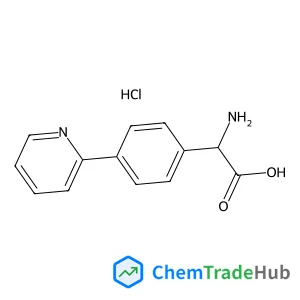
![Ethanone, 1-[4-chloro-2-(methylthio)-5-pyrimidinyl]- structure](https://cnstatic.chemtradehub.com/structs/661/66116-82-3-863e.webp "Ethanone, 1-[4-chloro-2-(methylthio)-5-pyrimidinyl]- structure")
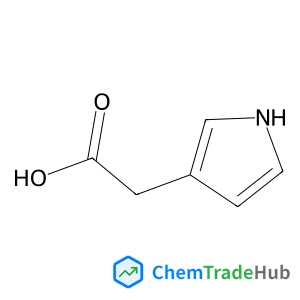
![Bis(N,N''-dimethylpiperazine)tetra[copper(I) iodide] structure](https://cnstatic.chemtradehub.com/structs/140/1401708-91-5-2b86.webp "Bis(N,N''-dimethylpiperazine)tetra[copper(I) iodide] structure")
推荐供应商



免责声明
本页面提供的学术期刊信息仅供参考和研究使用。我们与任何期刊出版商均无关联,也不处理投稿事宜。如有投稿相关咨询,请直接联系相关期刊出版商。
如发现页面信息有误,请发送邮件至 support@chemtradehub.com 联系我们。我们将及时核实并处理您的问题。