




2-Imidazolidone metal complexes: increased hydrogen bonds and fused ring ligand ratio to be insensitive
文献信息
发布日期
2023-10-27
DOI
10.1039/D3CE00891F
影响因子
3.545
作者
Baolong Kuang, Tingwei Wang, Chao Zhang, Han Zhang, Zujia Lu, Zhiming Xie, Meiqi Xu, Zhenxin Yi, Jianguo Zhang
查看原文
摘要
The structural effects of energetic coordination compounds (ECCs) influence their composition and performance. By modifying the coordination sites of the ligand and the type of metal, the structure of ECCs can be adjusted, effectively reconciling the contradiction between the performance and sensitivity. In this study, two types of 0D-structured ECCs Cu(2-IMTO)4(ClO4)2(ECCs-1) and Co(2-IMTO)6(ClO4)2(ECCs-2) were innovatively designed using 2-IMTO as the ligand. Structural analysis revealed that ECCs-1 contains a higher amount of [2-IMTO] with a ligand to [ClO4−] ratio of 2 : 1. The results of physical and chemical property tests indicate that both possess acceptable mechanical sensitivity and good thermal stability. Explosion performance calculations revealed that ECCs-1 exhibits higher detonation velocity and pressure (D = 6552 m s−1 and P = 18.7 GPa). Additionally, the laser ignition test results demonstrate that ECCs-1 can be ignited at a lower laser energy threshold (laser power P = 60 W, delay time τ = 10 ms, and ignition energy = 600 mJ).
相关文献
An alternative approach to develop a highly sensitive and selective chemosensor for the colorimetric sensing of cyanide in water
Xiaoding Lou, Liyao Zhang, Jingui Qin, Zhen Li
2008-10-01
Communication
DOI: 10.1039/B812746H
Titanocene-catalyzed alkylative dimerization of vinylGrignard reagent using alkyl halides
Yuuki Fujii, Jun Terao, Yuichiro Kato, Nobuaki Kambe
2008-10-06
Communication
DOI: 10.1039/B813596G
A template-free nano-wrapping technique for the fabrication of copper hollow nanospheres smaller than 20 nm
Frank Leung-Yuk Lam, Tommy Chi-Yan Martin, Xijun Hu
2008-11-04
Communication
DOI: 10.1039/B812651H
Direct coupling of alcohols with alkenylsilanes catalyzed by indium trichloride or bismuth tribromide
Yoshihiro Nishimoto, Masayuki Kajioka, Takahiro Saito, Makoto Yasuda, Akio Baba
2008-11-04
Communication
DOI: 10.1039/B816072D
A palladium-mediated cascade cyclisation approach to the CDE cores of rubriflordilactone A and lancifodilactone G‡
Marie-Caroline A. Cordonnier, S. B. Jennifer Kan
2008-10-02
Communication
DOI: 10.1039/B814360A
Synthesis of Fe3O4/PdO heterodimer nanocrystals in silica nanospheres and their controllable transformation into Fe3O4/Pd heterodimers and FePd nanocrystals
Jongmin Shin, Hakwon Kim, In Su Lee
2008-09-24
Communication
DOI: 10.1039/B812690A
Tandem conjugate addition–elimination reaction promoted by chiral pyrrolidinyl sulfonamide (CPS)‡
2008-09-24
Communication
DOI: 10.1039/B810905M
Photochemistry and photophysics of the tetrahedral silver(i) complex with diphosphine ligands: [Ag(dppb)2]PF6 (dppb = 1, 2-bis[diphenylphosphino]benzene)
Masahisa Osawa, Mikio Hoshino
2008-10-30
Communication
DOI: 10.1039/B813844C
Azaarene cis-dihydrodiol-derived 2,2′-bipyridine ligands for asymmetric allylic oxidation and cyclopropanation
Derek R. Boyd, Narain D. Sharma, Lenuta Sbircea, Deirdre Murphy, Tayeb Belhocine, John F. Malone, Stuart L. James, Christopher C. R. Allen
2008-10-09
Communication
DOI: 10.1039/B814678K
您可能还喜欢
化合物问答
4-[4-三氟甲基苯基]恶唑(CAS号:1126636-40-5)通常如何合成?
4-[4-三氟甲基苯基]恶唑通常通过将4-三氟甲基苯酚与异硫氰酸苯酯在有机溶剂中进行酯化反应合成。该反应可在无水条件下,使用适当的催化剂,如四丁基氢氧化铵,以提...
1126636-40-54-(4-(Trifluoromethy...
59729-32-71-[3-(Dimethylamino)...
化合物问答
RockPhos Pd G3(CAS号:2009020-38-4)通常如何合成?
RockPhos Pd G3 通常通过钯催化偶联反应合成,使用配体 (2'-Amino-2-biphenylyl)(methanesulfonato-kappa...
2009020-38-4(2'-Amino-2-biphenyl...
化合物问答
1-哌啶甲酰胺(CAS号:2158-03-4)的市场或研究趋势如何?
1-哌啶甲酰胺作为有机合成中的重要中间体,其市场需求主要受医药、农药、染料等行业推动。近年来,随着新药开发和绿色化学的发展,该化合物的研究趋势集中在开发更高效、...
2158-03-41-Piperidinecarboxam...
化合物问答
2-(二苯基膦基)乙胺(CAS号:4848-43-5)适用哪些法规指南?
2-(二苯基膦基)乙胺适用于多种法规指南,包括但不限于《全球化学品统一分类和标签制度》(GHS),欧盟《化学品注册、评估、授权和限制》法规(REACH),以及美...
4848-43-52-(Diphenylphosphino...
化合物问答
如何储存间苯二甲酸二烯丙酯(CAS号:1087-21-4)?
间苯二甲酸二烯丙酯应储存在阴凉、干燥、通风良好的地方,远离火源和热源。储存容器应密封,避免光照和高温。储存温度应控制在25℃以下,相对湿度应低于80%。避免与其...
1087-21-4Diallyl isophthalate
化合物问答
什么是间甲苯异硫代异氰酸酯(CAS号:621-30-7)?
间甲苯异硫代异氰酸酯是一种有机化合物,分子式为C7H7NO2S,具有刺激性气味。它是一种重要的有机合成中间体,在合成其他化合物时广泛应用。
621-30-71-Isothiocyanato-3-m...
化合物问答
在合成中是否有N-Boc-D-苯丙氨醇(CAS号:106454-69-7)的替代品?
在合成中,可以考虑使用N-Cbz-D-苯丙氨醇或N-Fmoc-D-苯丙氨醇作为替代品。这些化合物同样具有保护氨基的功能,且在合成过程中表现出良好的反应性能。
106454-69-72-Methyl-2-propanyl ...
化合物问答
3-羟甲基-2-氧异丙基吡啶(CAS号:954240-50-7)的主要用途是什么?
3-羟甲基-2-氧异丙基吡啶主要用于有机合成领域,可以作为合成其他药物、农药或精细化学品的中间体。此外,它还可能在实验室研究中作为特定反应的前体或溶剂。
954240-50-7(2-Isopropoxy-3-pyri...
化合物问答
6-氨基-9-甲基嘌呤(CAS号:700-00-5)应用于哪些行业?
6-氨基-9-甲基嘌呤目前主要应用于医药行业,作为某些药物的中间体。此外,它还可能用于聚合物、传感器和半导体的某些领域,作为功能性单体或掺杂剂。
700-00-59-Methyl-9H-purin-6-...
来源期刊
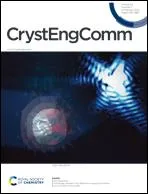
CrystEngComm
CiteScore:
5.5
自引率:
7.7%
年发文量:
643
CrystEngComm is the forum for the design and understanding of crystalline materials. We welcome studies on the investigation of molecular behaviour within crystals, control of nucleation and crystal growth, engineering of crystal structures, and construction of crystalline materials with tuneable properties and functions. We publish hypothesis-driven research into… how crystal design affects thermodynamics, phase transitional behaviours, polymorphism, morphology control, solid state reactivity (crystal-crystal solution-crystal, and gas-crystal reactions), optoelectronics, ferroelectric materials, non-linear optics, molecular and bulk magnetism, conductivity and quantum computing, catalysis, absorption and desorption, and mechanical properties. Using Techniques and methods including… Single crystal and powder X-ray, electron, and neutron diffraction, solid-state spectroscopy, spectrometry, and microscopy, modelling and data mining, and empirical, semi-empirical and ab-initio theoretical evaluations. On crystalline and solid-state materials. We particularly welcome work on MOFs, coordination polymers, nanocrystals, host-guest and multi-component molecular materials. We also accept work on peptides and liquid crystals. All papers should involve the use or development of a design or optimisation strategy. Routine structural reports or crystal morphology descriptions, even when combined with an analysis of properties or potential applications, are generally considered to be outside the scope of the journal and are unlikely to be accepted.
推荐化合物
推荐供应商





免责声明
本页面提供的学术期刊信息仅供参考和研究使用。我们与任何期刊出版商均无关联,也不处理投稿事宜。如有投稿相关咨询,请直接联系相关期刊出版商。
如发现页面信息有误,请发送邮件至 support@chemtradehub.com 联系我们。我们将及时核实并处理您的问题。