


Improved ion adsorption capacities and diffusion dynamics in surface anchored MoS2⊥Mo4/3B2 and MoS2⊥Mo4/3B2O2 heterostructures as anodes for alkaline metal-ion batteries
文献信息
发布日期
2023-11-27
DOI
10.1039/D3CP05035A
影响因子
3.676
作者
Zifeng Song, Haoliang Liu, Baiyi Chen, Qin Jiang, Fengxiang Sui, Kai Wu, Yonghong Cheng, Bing Xiao
查看原文
摘要
First-principles calculations were performed to analyze the atomic structures and electrochemical energy storage properties of novel MoS2⊥boridene heterostructures by anchoring MoS2 nanoflakes on Mo4/3B2 and Mo4/3B2O2 monolayers. Both thermodynamic and thermal stabilities of each heterostructure were thoroughly evaluated from the obtained binding energies and through first-principles molecular dynamics simulations at room temperature, confirming the high formability of the heterostructures. The electrochemical properties of MoS2⊥Mo4/3B2 and MoS2⊥Mo4/3B2O2 heterostructures were investigated for their potential use as anodes for alkaline metal ion batteries (Li+, Na+ and K+). It was revealed that Li+ and Na+ can form multiple stable full adsorption layers on both heterostructures, while K+ forms only a single full adsorption layer. The presence of a negative electron cloud (NEC) contributes to the stabilization of a multi-layer adsorption mechanism. For all investigated alkaline metal ions, the predicted ion diffusion dynamics are relatively sluggish for the adsorbates in the first full adsorption layer on MoS2⊥boridene heterostructures due the relatively large migration energies (>0.50 eV), compared to those of second or third full adsorption layers (<0.30 eV). MoS2⊥Mo4/3B2O2 exhibited higher onset and mean open circuit voltages as anodes for alkaline metal-ion batteries than MoS2⊥Mo4/3B2 hybrids because of enhanced interactions between the adsorbate and the Mo4/3B2O2 monolayer with the presence of O-terminations. Tailoring the size and horizontal spacing between two neighboring MoS2 nano-flakes in heterostructures led to high theoretical capacities for LIBs (531 mA h g−1), SIBs (300 mA h g−1) and PIBs (131 mA h g−1) in the current study.
期刊推荐

Acta Materialia
Russian Journal of General Chemistry

Chemistry Education Research and Practice
Russian Journal of Coordination Chemistry
Russian Journal of Bioorganic Chemistry
Russian Journal of Applied Chemistry

Current Opinion in Solid State & Materials Science

Journal of Peptide Science
Saudi Pharmaceutical Journal

Drug Discovery Today
相关文献
Influence of EDA-π interactions in drug encapsulation using nanospheres
Sumit Kumar, Ravi Mosurkal, Virinder S. Parmar, Lynne A. Samuelson, Arthur C. Watterson, Jayant Kumar
2004-10-20
Communication
DOI: 10.1039/B408993F
Facile protocol for the highly regioselective and stereodivergent synthesis of substituted bishomoallylic alcohols from esters
Martin Oestreich, Fernando Sempere-Culler
2004-02-17
Communication
DOI: 10.1039/B315758J
Cyclodehydrogenation of di- and tetra(benzimidazol-2-yl)benzenes to give model heteroaromatic discotic systems
Weicheng Wu, Andrew. C. Grimsdale, Klaus Müllen
2003-04-07
Communication
DOI: 10.1039/B301512M
Selective formation of siloxane-based hybrid cages with methylene groups in the frameworks
Atsushi Shimojima
2004-10-14
Communication
DOI: 10.1039/B411794H
Coordination polymers with macrocyclic cages and pockets within their backbones
Moonhyun Oh, Charlotte L. Stern, Chad A. Mirkin
2004-10-08
Communication
DOI: 10.1039/B408084J
Development of porous materials for heterogeneous catalysis: kinetic resolution of epoxides
Leilani L. Welbes, Robert C. Scarrow, A. S. Borovik
2004-10-05
Communication
DOI: 10.1039/B408553A
Construction of a protein array on amyloid-like fibrils using co-assembly of designed peptides
Hiroyuki Kodama, Sachiko Matsumura, Taro Yamashita, Hisakazu Mihara
2004-10-25
Communication
DOI: 10.1039/B409641J
Reduction of nitroaromatics to arylnitrenium ions by vinyl halide cations
Hao Chen, Xubin Zheng, Pengxiang Yang, R. Graham Cooks
2004-02-12
Communication
DOI: 10.1039/B314713D
Synthesis of C-arylglycosides via Ru(ii)-catalyzed [2 + 2 + 2] cycloaddition
Yoshihiko Yamamoto, Tomoaki Saigoku, Takashige Ohgai, Hisao Nishiyama, Kenji Itoh
2004-10-07
Communication
DOI: 10.1039/B411442F
NMR and ion selective electrode studies of hydraphile channels correlate with biological activity in E. coli and B. subtilis
W. Matthew Leevy, Michelle E. Weber, Paul H. Schlesinger
2004-11-25
Communication
DOI: 10.1039/B413588A
您可能还喜欢
化合物问答
如何处理含有8-氯咪唑并[1,2-A]吡嗪(CAS号:69214-33-1)的废料?
处理含有8-氯咪唑并[1,2-A]吡嗪的废料时,应首先将其收集并进行化学回收或降解。如果无法回收,需采用安全的化学处理方法,如中和、氧化还原或沉淀。处理过程中需...
69214-33-18-chloroimidazo[1,2-...
化合物问答
Calhex 231 hydrochloride(CAS号:2387505-78-2)适用哪些法规指南?
Calhex 231 hydrochloride 需要遵循《全球化学品统一分类和标签制度》(GHS)的分类和标签要求,以及欧盟的《化学品注册、评估、授权和限制条...
2387505-78-24-Chloro-N-[(1S,2S)-...
化合物问答
11-Beta,17-alpha,21-三羟基-5-beta-孕烯-3,20-二酮(CAS号:1482-50-4)的物理化学性质是什么?
11-Beta,17-alpha,21-三羟基-5-beta-孕烯-3,20-二酮是一种无色结晶性粉末,分子量为372.45 g/mol。该化合物在水中的溶解度...
1482-50-45β-Dihydrocortisol
化合物问答
处理5-异丙基-1,3,4-恶二唑-2-羧酸(CAS号:944907-13-5)时应注意哪些实验室安全事项?
处理5-异丙基-1,3,4-恶二唑-2-羧酸时应注意以下安全事项:穿戴适当的个人防护装备,包括实验室外套、手套和护目镜;操作应在通风橱中进行,以减少吸入或接触有...
944907-13-55-Isopropyl-1,3,4-ox...
化合物问答
benzyl 3-bromopropanoate(CAS号:90841-55-7)安全吗?
Benzyl 3-bromopropanoate属于有毒物质,吸入、摄入或皮肤接触均可能对人体造成伤害。操作时应佩戴防护眼镜、口罩和手套,避免吸入蒸汽和直接接触...
90841-55-7Benzyl 3-bromopropan...
化合物问答
什么是(R)-N-苄氧羰基-3,4-二氢-1H-异喹啉羧酸(CAS号:151004-88-5)?
(R)-N-苄氧羰基-3,4-二氢-1H-异喹啉羧酸是一种含有苄氧羰基和异喹啉环结构的化合物,分子式为C17H15NO3。它是一种有机化合物,具有一定的生物活性...
151004-88-5(1R)-2-[(Benzyloxy)c...
化合物问答
在合成中是否有1-苄基吡啶嗡-3-羧酸盐(CAS号:15990-43-9)的替代品?
可以考虑使用1-苄基吡啶-3-羧酸盐作为1-苄基吡啶嗡-3-羧酸盐的替代品。此外,还可以探索其他类似物,如1-苄基吡啶-3-氨基甲酸酯等。具体的替代品选择需根据...
15990-43-91-Benzyl-3-pyridiniu...
化合物问答
(2,6-二甲基吡啶-3-基)甲醇(CAS号:582303-10-4)安全吗?
(2,6-二甲基吡啶-3-基)甲醇在使用时需注意安全,应避免吸入其蒸汽,接触皮肤和眼睛。操作应在通风良好的环境中进行,佩戴适当的个人防护装备。
582303-10-4(2,6-Dimethyl-3-pyri...
化合物问答
5-溴-2-乙烯基吡啶(CAS号:226883-52-9)的物理化学性质是什么?
5-溴-2-乙烯基吡啶是一种有机化合物,外观为白色固体,具有良好的结晶性。分子量约为190.03 g/mol。它的溶解性在水中较差,但在有机溶剂如二氯甲烷、甲醇...
226883-52-95-Bromo-2-vinylpyrid...
化合物问答
2-羟基-3-硝基-5-甲基吡啶(CAS号:7464-14-4)应用于哪些行业?
2-羟基-3-硝基-5-甲基吡啶主要应用于医药、聚合物和半导体行业。在医药领域,它可以用作合成其他药物的中间体。在聚合物领域,它可以作为功能性单体参与聚合反应,...
7464-14-45-Methyl-3-nitro-2(1...
来源期刊
Physical Chemistry Chemical Physics

CiteScore:
5.5
自引率:
10.3%
年发文量:
3036
Physical Chemistry Chemical Physics (PCCP) is an international journal co-owned by 19 physical chemistry and physics societies from around the world. This journal publishes original, cutting-edge research in physical chemistry, chemical physics and biophysical chemistry. To be suitable for publication in PCCP, articles must include significant innovation and/or insight into physical chemistry; this is the most important criterion that reviewers and Editors will judge against when evaluating submissions. The journal has a broad scope and welcomes contributions spanning experiment, theory, computation and data science. Topical coverage includes spectroscopy, dynamics, kinetics, statistical mechanics, thermodynamics, electrochemistry, catalysis, surface science, quantum mechanics, quantum computing and machine learning. Interdisciplinary research areas such as polymers and soft matter, materials, nanoscience, energy, surfaces/interfaces, and biophysical chemistry are welcomed if they demonstrate significant innovation and/or insight into physical chemistry. Joined experimental/theoretical studies are particularly appreciated when complementary and based on up-to-date approaches.
推荐化合物
![N-[(5,6-Dichloro-1H-benzimidazol-2-yl)methyl]-9-(1-methyl-1H-pyrazol-4-yl)-2-(4-morpholinyl)-9H-purin-6-amine structure](https://cnstatic.chemtradehub.com/structs/238/2387704-62-1-25f4.webp "N-[(5,6-Dichloro-1H-benzimidazol-2-yl)methyl]-9-(1-methyl-1H-pyrazol-4-yl)-2-(4-morpholinyl)-9H-purin-6-amine structure")
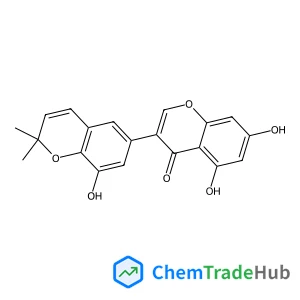

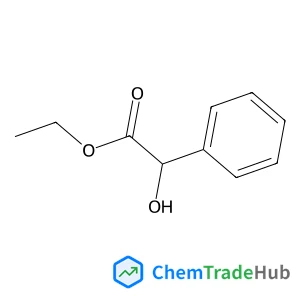
推荐供应商







免责声明
本页面提供的学术期刊信息仅供参考和研究使用。我们与任何期刊出版商均无关联,也不处理投稿事宜。如有投稿相关咨询,请直接联系相关期刊出版商。
如发现页面信息有误,请发送邮件至 support@chemtradehub.com 联系我们。我们将及时核实并处理您的问题。