




Porous crystalline materials for memories and neuromorphic computing systems
文献信息
发布日期
2023-09-27
DOI
10.1039/D3CS00259D
影响因子
54.564
作者
Guanglong Ding, Kui Zhou, Qi Zheng, Su-Ting Han, Ye Zhou
查看原文
摘要
Porous crystalline materials usually include metal–organic frameworks (MOFs), covalent organic frameworks (COFs), hydrogen-bonded organic frameworks (HOFs) and zeolites, which exhibit exceptional porosity and structural/composition designability, promoting the increasing attention in memory and neuromorphic computing systems in the last decade. From both the perspective of materials and devices, it is crucial to provide a comprehensive and timely summary of the applications of porous crystalline materials in memory and neuromorphic computing systems to guide future research endeavors. Moreover, the utilization of porous crystalline materials in electronics necessitates a shift from powder synthesis to high-quality film preparation to ensure high device performance. This review highlights the strategies for preparing porous crystalline materials films and discusses their advancements in memory and neuromorphic electronics. It also provides a detailed comparative analysis and presents the existing challenges and future research directions, which can attract the experts from various fields (e.g., materials scientists, chemists, and engineers) with the aim of promoting the applications of porous crystalline materials in memory and neuromorphic computing systems.
期刊推荐
相关文献
On the position of the potential wall in DFT temporary anion calculations
Nick Sablon, Frank De Proft, Paul Geerlings, David J. Tozer
2007-09-24
Paper
DOI: 10.1039/B711428A
Physico-chemical and structural properties of hydrogels formed by chitosan, in the presence and absence of poly(vinylpyrrolidone) and sodium decylsulfate
Henrich Frielinghaus
2007-10-19
Paper
DOI: 10.1039/B710143K
Small angle X-ray scattering measurements probe water nanodroplet evolution under highly non-equilibrium conditions
Barbara E. Wyslouzil, Gerald Wilemski, Reinhard Strey, Soenke Seifert, Randall E. Winans
2007-08-14
Paper
DOI: 10.1039/B709363B
Influence of the d orbital occupation on the nature and strength of copper cation–π interactions: threshold collision-induced dissociation and theoretical studies
Chunhai Ruan, Zhibo Yang, M. T. Rodgers
2007-09-25
Paper
DOI: 10.1039/B709820K
On the origin of the forward peak and backward oscillations in the F + H2(v = 0) → HF(v′ = 2) + H reaction
D. Sokolovski, S. Cavalli, V. Aquilanti
2007-09-13
Paper
DOI: 10.1039/B709427B
Investigations on the gas-phase photolysis and OH radical kinetics of methyl-2-nitrophenols
Ian Barnes, Romeo Olariu, Shouming Zhou, Peter Wiesen, Thorsten Benter
2007-09-07
Paper
DOI: 10.1039/B709464G
Dependence of the nascent vibrational distribution of NO(v) on the photolysis wavelength of NO2 in the range λ = 266–327 nm measured by time-resolved Fourier transform infrared emission
C. Brooks, G. Hancock, M. Saunders
2007-08-03
Paper
DOI: 10.1039/B710594K
您可能还喜欢
化合物问答
4-[4-三氟甲基苯基]恶唑(CAS号:1126636-40-5)通常如何合成?
4-[4-三氟甲基苯基]恶唑通常通过将4-三氟甲基苯酚与异硫氰酸苯酯在有机溶剂中进行酯化反应合成。该反应可在无水条件下,使用适当的催化剂,如四丁基氢氧化铵,以提...
1126636-40-54-(4-(Trifluoromethy...
59729-32-71-[3-(Dimethylamino)...
化合物问答
RockPhos Pd G3(CAS号:2009020-38-4)通常如何合成?
RockPhos Pd G3 通常通过钯催化偶联反应合成,使用配体 (2'-Amino-2-biphenylyl)(methanesulfonato-kappa...
2009020-38-4(2'-Amino-2-biphenyl...
化合物问答
1-哌啶甲酰胺(CAS号:2158-03-4)的市场或研究趋势如何?
1-哌啶甲酰胺作为有机合成中的重要中间体,其市场需求主要受医药、农药、染料等行业推动。近年来,随着新药开发和绿色化学的发展,该化合物的研究趋势集中在开发更高效、...
2158-03-41-Piperidinecarboxam...
化合物问答
2-(二苯基膦基)乙胺(CAS号:4848-43-5)适用哪些法规指南?
2-(二苯基膦基)乙胺适用于多种法规指南,包括但不限于《全球化学品统一分类和标签制度》(GHS),欧盟《化学品注册、评估、授权和限制》法规(REACH),以及美...
4848-43-52-(Diphenylphosphino...
化合物问答
如何储存间苯二甲酸二烯丙酯(CAS号:1087-21-4)?
间苯二甲酸二烯丙酯应储存在阴凉、干燥、通风良好的地方,远离火源和热源。储存容器应密封,避免光照和高温。储存温度应控制在25℃以下,相对湿度应低于80%。避免与其...
1087-21-4Diallyl isophthalate
化合物问答
什么是间甲苯异硫代异氰酸酯(CAS号:621-30-7)?
间甲苯异硫代异氰酸酯是一种有机化合物,分子式为C7H7NO2S,具有刺激性气味。它是一种重要的有机合成中间体,在合成其他化合物时广泛应用。
621-30-71-Isothiocyanato-3-m...
化合物问答
在合成中是否有N-Boc-D-苯丙氨醇(CAS号:106454-69-7)的替代品?
在合成中,可以考虑使用N-Cbz-D-苯丙氨醇或N-Fmoc-D-苯丙氨醇作为替代品。这些化合物同样具有保护氨基的功能,且在合成过程中表现出良好的反应性能。
106454-69-72-Methyl-2-propanyl ...
化合物问答
3-羟甲基-2-氧异丙基吡啶(CAS号:954240-50-7)的主要用途是什么?
3-羟甲基-2-氧异丙基吡啶主要用于有机合成领域,可以作为合成其他药物、农药或精细化学品的中间体。此外,它还可能在实验室研究中作为特定反应的前体或溶剂。
954240-50-7(2-Isopropoxy-3-pyri...
化合物问答
6-氨基-9-甲基嘌呤(CAS号:700-00-5)应用于哪些行业?
6-氨基-9-甲基嘌呤目前主要应用于医药行业,作为某些药物的中间体。此外,它还可能用于聚合物、传感器和半导体的某些领域,作为功能性单体或掺杂剂。
700-00-59-Methyl-9H-purin-6-...
来源期刊
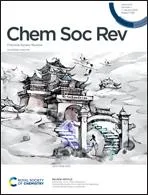
Chemical Society Reviews
CiteScore:
80.8
自引率:
1.2%
年发文量:
250
Chem Soc Rev publishes review articles covering important topics at the forefront of the chemical sciences. Reviews should be of the very highest quality and international impact. We particularly encourage international and multidisciplinary collaborations among our authors. Our scope covers the breadth of the chemical sciences, including interdisciplinary topics where the article has a basis in chemistry. Topics include: Analytical chemistry Biomaterials chemistry Bioorganic/medicinal chemistry Catalysis Chemical Biology Coordination Chemistry Crystal Engineering Energy Sustainable chemistry Green chemistry Inorganic chemistry Inorganic materials Main group chemistry Nanoscience Organic chemistry Organic materials Organometallics Physical chemistry Supramolecular chemistry Synthetic methodology Theoretical and computational chemistry
推荐化合物

![Bis[(1,2,3,4,5-eta)-1-(diphenylphosphino)cyclopentadienyl]iron structure](https://cnstatic.chemtradehub.com/structs/121/12150-46-8-ecd2.webp "Bis[(1,2,3,4,5-eta)-1-(diphenylphosphino)cyclopentadienyl]iron structure")
推荐供应商






免责声明
本页面提供的学术期刊信息仅供参考和研究使用。我们与任何期刊出版商均无关联,也不处理投稿事宜。如有投稿相关咨询,请直接联系相关期刊出版商。
如发现页面信息有误,请发送邮件至 support@chemtradehub.com 联系我们。我们将及时核实并处理您的问题。