


A supported pyridylimine–cobalt catalyst for N-formylation of amines using CO2
文献信息
发布日期
2023-03-29
DOI
10.1039/D3DT00058C
影响因子
4.39
作者
Naved Akhtar, Manav Chauhan, Poorvi Gupta, Neha Antil, Kuntal Manna
查看原文
摘要
N-Formylation of amines with CO2 as a cheap and non-toxic C1-feedstock and hydrosilane reducing agent is a practical and environment friendly method to synthesize formamides. This study describes an efficient and chemoselective mono-N-formylation of amines using CO2 and phenylsilane under mild conditions using a porous metal–organic framework (MOF)-supported single-site cobalt catalyst (pyrim-UiO-Co). The pyrim-UiO-Co MOF has a UiO-topology, and its organic linkers bear a pyridylimine ligated Co catalytic moiety. A wide range of aliphatic and aromatic amines are transformed into desired N-formamides in moderate to excellent yields under 1–5 bar CO2. Pyrim-UiO-Co is tolerant to various functional groups and could be recycled and reused at least 10 times. Mechanistic investigation using kinetic, spectroscopic and density functional theory studies suggests that the formylation of benzylamine proceeds sequentially via oxidative addition of PhSiH3 and CO2 insertion, followed by a turn-over limiting reaction with an amine. Our work highlights the importance of MOF-based Earth-abundant metal catalysts for the practical and eco-friendly synthesis of fine chemicals using cheap feedstocks.
期刊推荐
European Journal of Organic Chemistry
Photochemical & Photobiological Sciences
Environmental Toxicology and Pharmacology

Physical Chemistry Chemical Physics
Advanced Engineering Materials
CrystEngComm
Journal of Enzyme inhibition and Medicinal Chemistry
Angewandte Chemie International Edition
Nature Reviews Drug Discovery
Lab on a Chip
相关文献
Structural characterization of electrodeposited copper hexacyanoferrate films by using a spectroscopic multi-technique approach
Marco Giorgetti, Lorella Guadagnini, Domenica Tonelli, Marco Minicucci, Giuliana Aquilanti
2012-02-24
Paper
DOI: 10.1039/C2CP24109A
Conformational relaxation dynamics of a poly(N-isopropylacrylamide) aqueous solution measured using the laser temperature jump transient grating method
Hayato Inoue, Kenji Katayama, Kaoru Iwai, Atsushi Miura, Hiroshi Masuhara
2012-02-28
Paper
DOI: 10.1039/C2CP40243B
A theoretical analysis of the effect of the hydrogenation of graphene to graphane on its mechanical properties
Qing Peng, Chao Liang, Wei Ji, Suvranu De
2012-12-05
Paper
DOI: 10.1039/C2CP43360E
Aerosol-derived Ni1−xZnx electrocatalysts for direct hydrazinefuel cells
Ulises Martinez, Koichiro Asazawa, Barr Halevi, Akinbayowa Falase, Boris Kiefer, Alexey Serov, Monica Padilla, Tim Olson, Abhaya Datye, Hirohisa Tanaka, Plamen Atanassov
2012-03-02
Paper
DOI: 10.1039/C2CP40546F
A small change in molecular structure, a big difference in the AIEE mechanism
Minmin Cai, Zhiqiang Gao, Xinhui Zhou, Xupeng Wang, Shufen Chen, Yuezhi Zhao, Yan Qian, Naien Shi, Baoxiu Mi, Linghai Xie, Wei Huang
2012-03-09
Paper
DOI: 10.1039/C2CP23040B
Proton transfer and polarity changes in ionic liquid–water mixtures: a perspective on hydrogen bonds from ab initio molecular dynamics at the example of 1-ethyl-3-methylimidazolium acetate–water mixtures—Part 1
Martin Brehm, Henry Weber, Alfonso S. Pensado, Annegret Stark, Barbara Kirchner
2012-03-02
Perspective
DOI: 10.1039/C2CP23983C
A systematic molecular simulation study of ionic liquid surfaces using intrinsic analysis methods
Iuliia Voroshylova, M. Natália D. S. Cordeiro, Miguel Jorge
2012-03-02
Paper
DOI: 10.1039/C2CP23967A
Hydrothermal synthesis of thiol-capped CdTe nanoparticles and their optical properties
Hang-Beom Bu, Hayato Kikunaga, Kunio Shimura, Kohji Takahasi, Taichi Taniguchi, DaeGwi Kim
2012-12-20
Paper
DOI: 10.1039/C2CP43299D
The importance of p–n junction interfaces for efficient small molecule-based organic solar cells
Wei-Yang Chou, Jay Chang, Chia-Te Yen, Yi-Sheng Lin, Fu-Ching Tang, Shyh-Jiun Liu, Horng-Long Cheng, Steve Lien-Chung Hsu, Jen-Sue Chen
2012-02-20
Paper
DOI: 10.1039/C2CP24047E
The electroreduction of benzoic acid: voltammetric observation of adsorbed hydrogen at a platinum microelectrode in room temperature ionic liquids
Yao Meng, Sarah Norman, Christopher Hardacre, Richard G. Compton
2012-12-10
Paper
DOI: 10.1039/C2CP43580B
您可能还喜欢
化合物问答
2-氨基-2-(5-甲基噻吩-2-基)乙酸(CAS号:89776-66-9)应用于哪些行业?
2-氨基-2-(5-甲基噻吩-2-基)乙酸主要应用于医药、聚合物、传感器和半导体等行业。在医药领域,它作为中间体用于合成各种药物。在聚合物行业,它可以用作稳定剂...
89776-66-9Amino(5-methyl-2-thi...
化合物问答
什么是N-(叔丁氧羰基)-3-碘吲唑(CAS号:290368-00-2)?
N-(叔丁氧羰基)-3-碘吲唑是一种化学化合物,其英文名称为2-Methyl-2-propanyl 3-iodo-1H-indazole-1-carboxyla...
290368-00-22-Methyl-2-propanyl ...
化合物问答
N-芴甲氧羰基-D-谷氨酸(CAS号:104091-09-0)的市场或研究趋势如何?
该化合物作为重要的保护基,广泛应用于生物有机化学合成中,尤其在肽类、蛋白质和寡核苷酸的研究领域。随着合成生物学和药物开发的进展,该化合物的需求持续增长。未来的研...
104091-09-0N-[(9H-Fluoren-9-ylm...
化合物问答
2-乙氧基-1-萘酰氯(CAS号:55150-29-3)的市场或研究趋势如何?
2-乙氧基-1-萘酰氯在研究领域中主要用于合成研究和有机化学反应,随着有机合成技术的发展,其市场应用和研究兴趣可能会有所增长。尤其是在新型药物合成和新材料开发领...
55150-29-32-Ethoxy-1-naphthoyl...
化合物问答
1-甲氧基菜豆素(CAS号:65428-13-9)的主要用途是什么?
1-甲氧基菜豆素主要应用于有机合成、药物化学领域,作为合成其他有机化合物的中间体或前体。此外,由于其特殊的化学性质,也可能用于某些特定的化学研究和实验中。
65428-13-9(6aR,11aR)-1-Methoxy...
化合物问答
small>-2-氨基丁酸(CAS号:106873-99-8)的主要用途是什么?
small>-2-氨基丁酸主要应用于有机合成和化学研究中,作为中间体或试剂使用。此外,它还可能用于某些药物合成过程中。
106873-99-82-Formamidobutanoic ...
化合物问答
什么是5-氨基-2-氯-n-(2-呋喃甲基)苯甲酰胺(CAS号:926216-59-3)?
5-氨基-2-氯-n-(2-呋喃甲基)苯甲酰胺是一种有机化合物,其分子式为C11H9ClN3O。它具有一定的生物活性,在合成化学和药物化学中有一定的应用价值。
926216-59-35-Amino-2-chloro-N-(...
化合物问答
4-(3-溴苯甲酰基)-哌嗪-1-羧酸叔丁酯(CAS号:890153-34-1)适用哪些法规指南?
该化合物根据其化学性质和用途,可能需要符合GHS(全球化学品统一分类和标签制度)的分类标准,包括急性毒性、皮肤腐蚀/刺激、严重眼损伤/眼刺激等类别。此外,根据其...
890153-34-12-Methyl-2-propanyl ...
化合物问答
如何储存(9ci)-2,4-二甲基-1H-吡咯-3-甲腈(CAS号:26187-28-0)?
应将(9ci)-2,4-二甲基-1H-吡咯-3-甲腈存放在阴凉、干燥的地方,避免阳光直射。储存容器应密封良好,防止挥发和污染。建议温度保持在20-25℃之间,湿...
26187-28-02,4-Dimethyl-1H-pyrr...
化合物问答
巨大戟醇-5,20-缩丙酮-3-当归酸酯(CAS号:87980-68-5)通常如何合成?
该化合物通常通过合成当归酸酯的方法制备,具体步骤为将当归酸酯与巨大戟醇-5,20-缩丙酮进行缩合反应,反应条件为温和的酸性环境,通常使用三氟乙酸作为催化剂。该合...
87980-68-5(4S,5S,6R,18R)-5-Hyd...
来源期刊
Dalton Transactions

CiteScore:
6.6
自引率:
11.4%
年发文量:
1868
Dalton Transactions is a journal for all areas of inorganic chemistry, which encompasses the organometallic, bioinorganic and materials chemistry of the elements, with applications including synthesis, catalysis, energy conversion/storage, electrical devices and medicine. Dalton Transactions welcomes high-quality, original submissions in all of these areas and more, where the advancement of knowledge in inorganic chemistry is significant. Specific guidance for some areas of our scope is given below.
推荐化合物
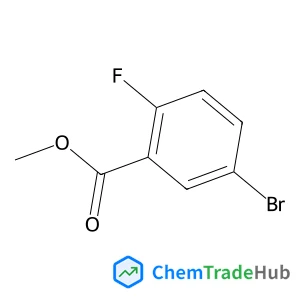
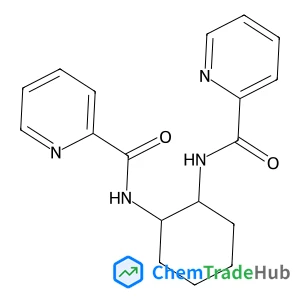
推荐供应商




免责声明
本页面提供的学术期刊信息仅供参考和研究使用。我们与任何期刊出版商均无关联,也不处理投稿事宜。如有投稿相关咨询,请直接联系相关期刊出版商。
如发现页面信息有误,请发送邮件至 support@chemtradehub.com 联系我们。我们将及时核实并处理您的问题。