


Spectroscopy of cluster aerosol models: IR and UV spectra of hydrated glyoxylate with and without sea salt
文献信息
发布日期
2023-08-30
DOI
10.1039/D3EA00039G
影响因子
0
作者
Nina K. Bersenkowitsch, Sarah J. Madlener, Jakob Heller, Christian van der Linde, Milan Ončák, Martin K. Beyer
查看原文
摘要
Glyoxylic acid is formed in the troposphere by oxidation of organic molecules. In sea salt aerosols, it is expected to be present as glyoxylate, integrated into the salt environment and strongly interacting with water molecules. In water, glyoxylate is in equilibrium with its gem-diol form. To understand the influence of water and salt on the photophysics and photochemistry of glyoxylate, we generate small model clusters containing glyoxylate by electrospray ionization and study them by Fourier-Transform Ion Cyclotron Resonance (FT-ICR) mass spectrometry. We used infrared multiple photon dissociation spectroscopy and UV/vis photodissociation spectroscopy for structural characterization as well as quantum chemical calculations to model the spectra and dissociation patterns. Resonant absorption of infrared radiation leads to water evaporation, which indicates that water and glyoxylate are separate molecular entities in a significant fraction of the clusters, in line with the observed absorption of UV light in the actinic region. Hydration of glyoxylate leads to a change of the dihedral angle in the CHOCOO−·H2O complex, causing a slight redshift of the S1 ← S0 transition. However, the barriers for internal rotation are below 5 kJ mol−1, which explains the broad S1 ← S0 absorption extending from about 320 to 380 nm. Most importantly, hydration hinders dissociation in the S1 state, thus enhancing the quantum yield of fluorescence combined with water evaporation. No C–C bond photolysis is observed, but due to the limited signal-to-noise ratio, it cannot be ruled out. The quantum yield, however, will be relatively low. Fluorescence dominates the photophysics of glyoxylate embedded in the dry salt cluster, but the quantum yield shifts towards internal conversion upon addition of one or two water molecules.
期刊推荐

Chemical Communications
Organic Process Research & Development
Current Opinion in Colloid & Interface Science

Current Opinion in Solid State & Materials Science
Nature Medicine
Acta Materialia
New Journal of Chemistry
Russian Journal of Applied Chemistry
Crystallography Reports
Russian Journal of Bioorganic Chemistry
相关文献
Vibrationally induced metallisation of the energetic azide α-NaN3
Svemir Rudić, Carole A. Morrison
2018-11-05
Paper
DOI: 10.1039/C8CP06161K
Understanding three-body contributions to coarse-grained force fields
Christoph Scherer, Denis Andrienko
2018-08-10
Paper
DOI: 10.1039/C8CP00746B
A molecular dynamics model for glycosylphosphatidyl-inositol anchors: “flop down” or “lollipop”?
Pallavi Banerjee, Marko Wehle, Reinhard Lipowsky, Mark Santer
2018-11-09
Paper
DOI: 10.1039/C8CP04059A
A synergetic stabilization and strengthening strategy for two-dimensional ordered hybrid transition metal carbides
Dominik Legut, Timothy C. Germann, Shiyu Du, Joseph S. Francisco
2018-11-16
Paper
DOI: 10.1039/C8CP06458J
Computer simulations of the adsorption of an N-terminal peptide of statherin, SN15, and its mutants on hydroxyapatite surfaces
Muzhong Luo, Shengjiang Yang, Xuebo Quan, Delin Sun, Jian Zhou
2019-04-09
Paper
DOI: 10.1039/C9CP01638D
Effects of double-atom vacancies on the electronic properties of graphyne: a DFT investigation
Si Wu, Yuan Yuan, Hongqi Ai, Baotao Kang
2018-08-10
Paper
DOI: 10.1039/C8CP03359E
Hydrogen bond induced enhancement of Fermi resonances in N–H⋯N hydrogen bonded complexes of anilines
Saurabh Mishra, Jer-Lai Kuo, G. Naresh Patwari
2018-07-20
Paper
DOI: 10.1039/C8CP02448K
The metal–ionic liquid interface as characterized by impedance spectroscopy and in situ scanning tunneling microscopy
Claus Müller
2018-08-06
Perspective
DOI: 10.1039/C8CP02074D
X-ray emission spectroscopy: an effective route to extract site occupation of cations
Anuj Bhargava, Cindy Y. Chen, Kenneth D. Finkelstein, Richard D. Robinson
2018-09-17
Paper
DOI: 10.1039/C8CP04628J
Excited interatomic potential energy surfaces of Rb + He that correlate with Rb terms 52S through 72S
Amit R. Sharma, David E. Weeks
2018-11-09
Paper
DOI: 10.1039/C8CP05550E
您可能还喜欢
化合物问答
如何储存1,2-环己二酮环乙缩醛(CAS号:4746-96-7)?
1,2-环己二酮环乙缩醛应储存在阴凉、干燥、通风良好的地方,避免阳光直射。建议使用密封容器保存,并保持环境温度在室温范围内,远离火源和热源。
4746-96-71,4-Dioxaspiro[4.5]d...
化合物问答
Ecopladib(CAS号:381683-92-7)的市场或研究趋势如何?
Ecopladib作为一种新型的药物,主要应用于治疗高胆固醇等疾病。目前,市场和研究趋势显示,Ecopladib因其独特的药理作用而受到关注。随着对心血管疾病治...
381683-92-7Ecopladib
化合物问答
2,3-Dimethyl-3H-imidazo[4,5-c]pyridine(CAS号:52538-09-7)通常如何合成?
2,3-二甲基-3H-咪唑[4,5-c]吡啶通常通过咪唑和2,3-二甲基吡啶的缩合反应合成。具体来说,将咪唑和2,3-二甲基吡啶在适当的溶剂中进行加热或加压反应...
52538-09-72,3-Dimethyl-3H-imid...
化合物问答
2,3,4,5-tetrahydro-1H-3-苯并氮杂环;盐酸盐(CAS号:17379-01-0)的市场或研究趋势如何?
该化合物在药物化学和有机合成中有一定的应用。近年来,随着对新型药物化合物的需求增加,该化合物的研究趋势主要集中在探索其生物活性,尤其是其在神经系统疾病治疗中的潜...
17379-01-02,3,4,5-Tetrahydro-1...
68-90-6(2-Ethyl-1-benzofura...
化合物问答
如何储存盐酸甘氨酸丁酯(CAS号:13048-99-2)?
盐酸甘氨酸丁酯应储存在阴凉、干燥、通风良好的地方,避免阳光直射和高温环境,温度应控制在25℃以下。储存容器应密封,避免与空气中的水分和酸性物质接触,以防发生水解...
13048-99-2Butyl glycinate hydr...
化合物问答
什么是2-Iodo-N,N-dimethylbenzamide(CAS号:54616-46-5)?
2-碘-N,N-二甲基苯胺是一种有机化合物,化学名为2-Iodo-N,N-dimethylbenzamide。其分子式为C<sub>9</sub>H<sub>1...
54616-46-52-Iodo-N,N-dimethylb...
16817-90-6N-Cyclohexylglycinam...
化合物问答
5-溴-2-(4H-1,2,4-三唑-4-基)吡啶(CAS号:959240-99-4)的市场或研究趋势如何?
随着医药、农药和新材料领域的发展,该化合物作为关键中间体的应用日益增多。特别是在药物合成中,由于其独特的化学性质,可以用于合成多种药物分子。未来的研究趋势可能集...
959240-99-45-Bromo-2-(4H-1,2,4-...
化合物问答
2,4-二溴-6-三氟甲基嘧啶(CAS号:785778-00-9)通常如何合成?
2,4-二溴-6-三氟甲基嘧啶通常通过溴化反应合成。首先,将6-三氟甲基嘧啶与溴化剂(如液溴)在适当的溶剂(如二氯甲烷、四氢呋喃)中反应,加入适当的催化剂(如四...
785778-00-92,4-Dibromo-6-(trifl...
来源期刊
推荐化合物
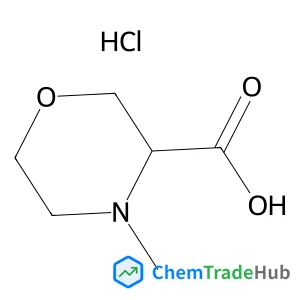
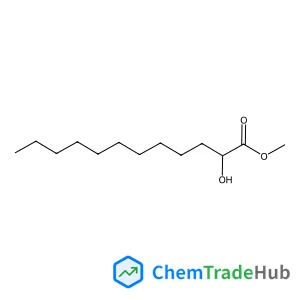
![1-[(4-Methylphenyl)sulfonyl]-3-(4,4,5,5-tetramethyl-1,3,2-dioxaborolan-2-yl)-1H-pyrrolo[2,3-b]pyridine-5-carbonitrile structure](https://cnstatic.chemtradehub.com/structs/143/1434747-57-5-fc0d.webp "1-[(4-Methylphenyl)sulfonyl]-3-(4,4,5,5-tetramethyl-1,3,2-dioxaborolan-2-yl)-1H-pyrrolo[2,3-b]pyridine-5-carbonitrile structure")
推荐供应商



免责声明
本页面提供的学术期刊信息仅供参考和研究使用。我们与任何期刊出版商均无关联,也不处理投稿事宜。如有投稿相关咨询,请直接联系相关期刊出版商。
如发现页面信息有误,请发送邮件至 support@chemtradehub.com 联系我们。我们将及时核实并处理您的问题。