


![S-[2,3-Bis(palmitoyloxy)propyl]-N-[(9H-fluoren-9-ylmethoxy)(hydroxy)methylene]cysteine structure](https://cnstatic.chemtradehub.com/structs/210/210532-98-2-f6a7.webp "S-[2,3-Bis(palmitoyloxy)propyl]-N-[(9H-fluoren-9-ylmethoxy)(hydroxy)methylene]cysteine structure")
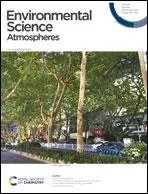
A possible atmospheric source of HNO3: the ammonolysis reaction of t-N2O4 in the presence of water monomer, water dimer, and sulfuric acid
文献信息
发布日期
2023-08-16
DOI
10.1039/D3EA00095H
影响因子
0
作者
Ruxue Mu, Weixin Zhou, Zhaozhao Hong, Rui Wang, Quan Liu, Qiang Zhang, Min Jiang, Balaganesh Muthiah, Tianlei Zhang
查看原文
摘要
Although the ammonolysis of t-N2O4 is one of the potential sources of HNO3 formation, the available studies have only focused on its naked reaction. Herein, the effect of important neutral and acidic trace gases, water monomer, water dimer, and sulfuric acid, on the formation of HNO3 from the ammonolysis of t-N2O4 was studied by the quantum chemical method of CCSD(T)/aug-cc-pVTZ//B3LYP-D3/6-311++G(3df,2pd) and the Master equation/Rice–Ramsperger–Kassel–Marcus (ME/RRKM) rate calculations. The quantum chemical results revealed that the ammonolysis of t-N2O4 with (H2O)2 and H2SO4 are barrierless or nearly barrierless reactions, potentially lowering the energy barrier to 3.4–4.1 kcal mol−1. The calculated effective rate constant illustrates that (H2O)2 (100% RH) dominates over H2O and H2SO4 within the range of 280–320 K (0 km), with an effective rate constant that is 1–3 orders of larger magnitude, whereas H2SO4 (108 mol cm−3) is the most favorable catalyst within the troposphere between 5 and 30 km. However, the contributions of H2O, (H2O)2, and H2SO4 are not apparent in the gas-phase ammonolysis of t-N2O4 within the range of 213–320 K and 0–30 km because their effective rate constants were at least 4 orders of magnitude lower than the corresponding rate constant of the ammonolysis of t-N2O4. In general, the current findings shed fresh light on neutral (H2O and (H2O)2) and acidic (H2SO4) catalysts that not only affect energy barriers but also have an impact on the ammonolysis of t-N2O4 in neutral and acidic conditions.
期刊推荐

Chemistry Education Research and Practice
Russian Journal of Applied Chemistry
Organic Process Research & Development
Russian Journal of General Chemistry
Drug Discovery Today
Journal of Natural Medicines

Chemical Communications
Nature Medicine
Russian Journal of Bioorganic Chemistry
Journal of Saudi Chemical Society
相关文献
Counteraction of denaturant-induced protein unfolding is a general property of stabilizing agents
Serena Cozzolino, Rosario Oliva, Giuseppe Graziano, Pompea Del Vecchio
2018-11-07
Paper
DOI: 10.1039/C8CP04421J
Cyclization reaction dynamics of an inverse type diarylethene derivative as revealed by time-resolved absorption and fluorescence spectroscopies
Hikaru Sotome, Daichi Kitagawa, Tatsumoto Nakahama, Syoji Ito, Seiya Kobatake, Masahiro Irie, Hiroshi Miyasaka
2019-02-22
Paper
DOI: 10.1039/C8CP07393G
Excited interatomic potential energy surfaces of Rb + He that correlate with Rb terms 52S through 72S
Amit R. Sharma, David E. Weeks
2018-11-09
Paper
DOI: 10.1039/C8CP05550E
A proton transfer network that generates deprotonated tyrosine is a key to producing reactive oxygen species in phototoxic KillerRed protein
Wook Lee, Inkoo Kim, Young Min Rhee
2018-08-03
Paper
DOI: 10.1039/C8CP02939C
Electrochemical tuning of capacitive response of graphene oxide
Sanjin J. Gutić, Dževad K. Kozlica, Fehim Korać, Danica Bajuk-Bogdanović, Miodrag Mitrić, Vladimir M. Mirsky, Igor A. Pašti
2018-08-07
Paper
DOI: 10.1039/C8CP03631D
Quantum anomalous Hall effect in metal-bis(dithiolene), magnetic properties, doping and interfacing graphene
F. Crasto de Lima, Gerson J. Ferreira, R. H. Miwa
2018-08-10
Paper
DOI: 10.1039/C8CP03792B
Why does 4-biphenyl carbonyl azide have ultra-short lived excited states? An ultrafast UV-vis spectroscopic and computational study
2018-11-06
Paper
DOI: 10.1039/C8CP05963B
The role of hydrophobic, aromatic and electrostatic interactions between amino acid residues and a titanium dioxide surface
Avia Leader, Daniel Mandler, Meital Reches
2018-11-06
Paper
DOI: 10.1039/C8CP05775C
A molecular dynamics model for glycosylphosphatidyl-inositol anchors: “flop down” or “lollipop”?
Pallavi Banerjee, Marko Wehle, Reinhard Lipowsky, Mark Santer
2018-11-09
Paper
DOI: 10.1039/C8CP04059A
您可能还喜欢
化合物问答
如何储存1,2-环己二酮环乙缩醛(CAS号:4746-96-7)?
1,2-环己二酮环乙缩醛应储存在阴凉、干燥、通风良好的地方,避免阳光直射。建议使用密封容器保存,并保持环境温度在室温范围内,远离火源和热源。
4746-96-71,4-Dioxaspiro[4.5]d...
化合物问答
Ecopladib(CAS号:381683-92-7)的市场或研究趋势如何?
Ecopladib作为一种新型的药物,主要应用于治疗高胆固醇等疾病。目前,市场和研究趋势显示,Ecopladib因其独特的药理作用而受到关注。随着对心血管疾病治...
381683-92-7Ecopladib
化合物问答
2,3-Dimethyl-3H-imidazo[4,5-c]pyridine(CAS号:52538-09-7)通常如何合成?
2,3-二甲基-3H-咪唑[4,5-c]吡啶通常通过咪唑和2,3-二甲基吡啶的缩合反应合成。具体来说,将咪唑和2,3-二甲基吡啶在适当的溶剂中进行加热或加压反应...
52538-09-72,3-Dimethyl-3H-imid...
化合物问答
2,3,4,5-tetrahydro-1H-3-苯并氮杂环;盐酸盐(CAS号:17379-01-0)的市场或研究趋势如何?
该化合物在药物化学和有机合成中有一定的应用。近年来,随着对新型药物化合物的需求增加,该化合物的研究趋势主要集中在探索其生物活性,尤其是其在神经系统疾病治疗中的潜...
17379-01-02,3,4,5-Tetrahydro-1...
68-90-6(2-Ethyl-1-benzofura...
化合物问答
如何储存盐酸甘氨酸丁酯(CAS号:13048-99-2)?
盐酸甘氨酸丁酯应储存在阴凉、干燥、通风良好的地方,避免阳光直射和高温环境,温度应控制在25℃以下。储存容器应密封,避免与空气中的水分和酸性物质接触,以防发生水解...
13048-99-2Butyl glycinate hydr...
化合物问答
什么是2-Iodo-N,N-dimethylbenzamide(CAS号:54616-46-5)?
2-碘-N,N-二甲基苯胺是一种有机化合物,化学名为2-Iodo-N,N-dimethylbenzamide。其分子式为C<sub>9</sub>H<sub>1...
54616-46-52-Iodo-N,N-dimethylb...
16817-90-6N-Cyclohexylglycinam...
化合物问答
5-溴-2-(4H-1,2,4-三唑-4-基)吡啶(CAS号:959240-99-4)的市场或研究趋势如何?
随着医药、农药和新材料领域的发展,该化合物作为关键中间体的应用日益增多。特别是在药物合成中,由于其独特的化学性质,可以用于合成多种药物分子。未来的研究趋势可能集...
959240-99-45-Bromo-2-(4H-1,2,4-...
化合物问答
2,4-二溴-6-三氟甲基嘧啶(CAS号:785778-00-9)通常如何合成?
2,4-二溴-6-三氟甲基嘧啶通常通过溴化反应合成。首先,将6-三氟甲基嘧啶与溴化剂(如液溴)在适当的溶剂(如二氯甲烷、四氢呋喃)中反应,加入适当的催化剂(如四...
785778-00-92,4-Dibromo-6-(trifl...
来源期刊
推荐化合物
![[(1S,2S,3R,4S,7R,9S,10S,12R,15S)-4,12-Diacetyloxy-15-[(2R,3S)-3-benzamido-3-phenyl-2-(2,2,2-trichloroethoxycarbonyloxy)propanoyl]oxy-1,9-dihydroxy-10,14,17,17-tetramethyl-11-oxo-6-oxatetracyclo[11.3.1.03,10.04,7]heptadec-13-en-2-yl] benzoate structure](https://cnstatic.chemtradehub.com/structs/100/100431-55-8-7104.webp "[(1S,2S,3R,4S,7R,9S,10S,12R,15S)-4,12-Diacetyloxy-15-[(2R,3S)-3-benzamido-3-phenyl-2-(2,2,2-trichloroethoxycarbonyloxy)propanoyl]oxy-1,9-dihydroxy-10,14,17,17-tetramethyl-11-oxo-6-oxatetracyclo[11.3.1.03,10.04,7]heptadec-13-en-2-yl] benzoate structure")
推荐供应商




免责声明
本页面提供的学术期刊信息仅供参考和研究使用。我们与任何期刊出版商均无关联,也不处理投稿事宜。如有投稿相关咨询,请直接联系相关期刊出版商。
如发现页面信息有误,请发送邮件至 support@chemtradehub.com 联系我们。我们将及时核实并处理您的问题。