


Unravelling the influence of side-chain symmetry on device performance: insights from isoindigo-based polymers in thin-film transistors
文献信息
发布日期
2023-08-22
DOI
10.1039/D3LP00104K
影响因子
0
作者
Anita Hu, Audithya Nyayachavadi, Max Weires, Garima Garg, Sihong Wang, Simon Rondeau-Gagné
查看原文
摘要
Thin-film transistors are at the basis of next-generation electronics and bioelectronics, with functionality beyond that of traditional silicon-based devices. To move forward with emerging soft and human-integrated technologies, innovations not only in molecular design, but also in device engineering, are required to access improved performance, stability, and biocompatibility. In this study, π-conjugated isoindigo–bithiophene donor–acceptor polymers were designed and synthesized to possess different side-chain symmetries. Polymers possessing symmetric branched alkyl side chains, symmetric oligoethylene glycol side chains, or asymmetric side chains were synthesized, and their properties were evaluated in two types of thin-film transistors to examine the influence of side-chain design on key materials properties. The results from a multimodal characterization showed that the design of semiconducting polymers with asymmetric side chains can lead to materials with balanced optoelectronic and solid-state properties. The polymer designs exhibited differing levels of performance when implemented in each of the two types of fabricated transistors The properties of the polymer, including crystallinity, thin-film morphology, and swelling, impacted the material's performance in the organic field-effect and electrochemical transistors. While the asymmetric design was beneficial for charge transport in field-effect transistors, a highly polar and symmetric polymer, beyond the amphiphilicity of the asymmetric species, led to improved device characteristics in electrochemical transistors. Overall, this study uncovered insightful trends in the structures and device performance of conjugated polymers with different side-chain symmetries, thus informing new design strategies for a future of efficient, long-lasting biocompatible devices.
期刊推荐
Pharmacology & Therapeutics
Drug and Chemical Toxicology

Progress in Materials Science
Bulletin of Materials Science
European Journal of Medicinal Chemistry
Studies in Conservation

Crystal Research and Technology

Annual Review of Public Health
Journal of Dispersion Science and Technology
Synthetic Communications
相关文献
Solvent-induced changes in the reactivity of tricyanate esters undergoing thermal polymerization
Andrey Galukhin, Ilya Nikolaev, Roman Nosov, Daut Islamov
2021-10-11
Paper
DOI: 10.1039/D1PY01088C
Cyclic olefin copolymers containing both linear polyethylene and poly(ethylene-co-norbornene) segments prepared from chain shuttling copolymerization of ethylene and norbornene
Huan Gao, Shangtao Chen, Bin Du, Zhenyu Dai, Xu Lu, Kunyu Zhang, Li Pan, Yang Li
2021-12-03
Paper
DOI: 10.1039/D1PY01251G
Organocatalytic sequential ring-opening polymerization of cyclic ester/epoxide and N-sulfonyl aziridine: metal-free and easy access to block copolymers
Huishan Huang, Wenyi Luo, Linlin Zhu, Ying Wang
2021-08-26
Paper
DOI: 10.1039/D1PY00890K
A transparent cyclo-linear polyphenylsiloxane elastomer integrating high refractive index, thermal stability and flexibility
Xinyu Cao, Xinxin Shang, Xianglan Zhang, Cheng Huang, Jingnan Zhang, Kun Zheng
2021-07-27
Paper
DOI: 10.1039/D1PY00688F
Effect of hydrophilic groups on the bioactivity of antimicrobial polymers
Phuong Pham, Susan Oliver, Edgar H. H. Wong, Cyrille Boyer
2021-09-16
Paper
DOI: 10.1039/D1PY01075A
Facile fabrication of robust gel poly(ionic liquid) electrolytes via base treatment at room temperature
Chongrui Zhang, Yong Zhang, Qiang Zhao, Zhigang Xue
2021-09-13
Paper
DOI: 10.1039/D1PY00736J
Insight into the influence of the polymerization time of polydopamine nanoparticles on their size, surface properties and nanomedical applications
Rania Djermane, Celia Nieto, Julio C. Vargas, Milena Vega, Eva M. Martín del Valle
2021-12-07
Paper
DOI: 10.1039/D1PY01473K
Gradient copolymer prepared from alternating ring-opening metathesis of three monomers
Francis O. Boadi, Nicole S. Sampson
2021-09-13
Paper
DOI: 10.1039/D1PY00690H
Fabrication of an antibacterial hydrogel nanocomposite with self-healing properties using ZnO/β-cyclodextrin dimer/modified alginate
Masoumeh Mohamadhoseini, Zahra Mohamadnia
2021-09-23
Paper
DOI: 10.1039/D1PY00973G
Multisegmented polymers via step-growth and RAFT miniemulsion polymerization
Thiago R. Guimarães, Dewen Zhou, Per B. Zetterlund
2021-09-23
Paper
DOI: 10.1039/D1PY01163D
您可能还喜欢
化合物问答
什么是5-Fluoro-4-iodo-2-methylaniline(CAS号:307306-08-7)?
5-氟-4-碘-2-甲氨基苯属于芳香族化合物,其分子式为C8H7FN2I。该化合物具有一定的反应活性,在有机合成和药物化学领域有一定的应用。
307306-08-75-Fluoro-4-iodo-2-me...
化合物问答
4-氟-3-硝基三氟甲苯(CAS号:367-86-2)通常如何合成?
4-氟-3-硝基三氟甲苯通常通过将三氟甲基苯在酸性条件下催化氧化为三氟甲基硝基苯,然后进行氟化反应得到目标化合物。该过程需要使用催化剂,如三氟乙酸,反应产率较高...
367-86-21-Fluoro-2-nitro-4-(...
化合物问答
6-氯-9-(2,3,5-三苯甲酰氧基-2-C-甲基-beta-D-呋喃核糖基)-9H-嘌呤(CAS号:205171-05-7)的物理化学性质是什么?
该化合物为白色至类白色晶体,分子量约为1046.95。它在水中几乎不溶,在有机溶剂如乙腈和甲醇中具有一定的溶解性。该化合物具有良好的化学稳定性和生物活性。
205171-05-76-Chloro-9-(2-C-meth...
化合物问答
如何储存6-氟喹啉-4-羧酸(CAS号:220844-73-5)?
6-氟喹啉-4-羧酸应储存在阴凉、干燥、通风良好的地方,避免阳光直射。储存在密闭容器中,避免与空气中的水分接触。储存温度应控制在室温以下,避免高温。
220844-73-56-Fluoroquinoline-4-...
化合物问答
(2S,2'S,3S,3'S)-3,3'-di-tert-butyl-4,4'-bis(2,6-dimethoxyphenyl)-2,2',3,3'-tetrahydro-2,2'-bibenzo[d][1,3]oxaphosphole(CAS号:1435940-21-8)通常如何合成?
该化合物通常通过芳香族化合物的亲核取代反应合成,首先将2,6-二甲氧基苯基引入到双环结构中,然后通过特定条件下的还原或氧化反应引入二叔丁基。反应过程中使用了钯作...
1435940-21-8(2S,2'S,3S,3'S)-4,4'...
化合物问答
如何储存KY02111(CAS号:1118807-13-8)?
KY02111应储存于阴凉、干燥、通风良好的地方,避免阳光直射和高温环境。应使用合适的密闭容器储存,并确保容器密封良好,防止水分和潮气进入。在储存期间,应注意检...
1118807-13-8N-(6-chlorobenzo[d]t...
化合物问答
如何储存4-(4-氯苯氧基)丁酸乙酯(CAS号:59227-79-1)?
4-(4-氯苯氧基)丁酸乙酯应储存在阴凉、干燥、通风良好的地方,远离火源和热源。避免阳光直射,防止容器破裂导致泄漏。储存时应保持容器密封,避免与空气中的水蒸气接...
59227-79-1Ethyl 4-(4-chlorophe...
化合物问答
4-庚基苯乙酮(CAS号:37593-03-6)安全吗?
4-庚基苯乙酮相对安全,但在使用和储存时仍需注意。应避免吸入其蒸气,避免皮肤接触,使用时需佩戴防护眼镜和手套。储存时应远离火源和热源,保持容器密封,放置于阴凉、...
37593-03-61-(4-Heptylphenyl)et...
化合物问答
什么是乙基2-氨基-4-(3-溴苯基)噻吩-3-羧酸乙酯(CAS号:438218-48-5)?
乙基2-氨基-4-(3-溴苯基)噻吩-3-羧酸乙酯是一种有机化合物,分子式为C16H12BrN2O2S。它是一种含有噻吩环、氨基、溴苯基和羧酸酯结构的化合物。这...
438218-48-5ethyl 2-amino-4-(3-b...
化合物问答
什么是(9ci)-2-氨基-6-甲基-苯甲酰胺(CAS号:1885-31-0)?
(9ci)-2-氨基-6-甲基-苯甲酰胺是一种化学化合物,其英文名称为2-Amino-6-methylbenzamide,CAS号为1885-31-0。该化合物...
1885-31-02-Amino-6-methylbenz...
来源期刊
推荐化合物
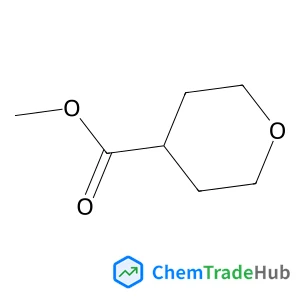
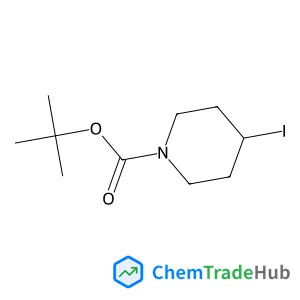
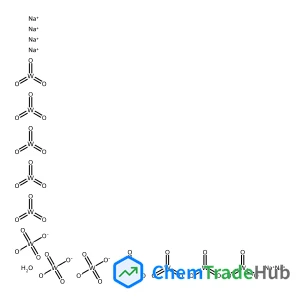
推荐供应商






免责声明
本页面提供的学术期刊信息仅供参考和研究使用。我们与任何期刊出版商均无关联,也不处理投稿事宜。如有投稿相关咨询,请直接联系相关期刊出版商。
如发现页面信息有误,请发送邮件至 support@chemtradehub.com 联系我们。我们将及时核实并处理您的问题。