








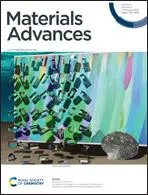
Plasmonic nanodendrites stabilized with autologous serum proteins for sustainable host specific photothermal tumor ablation
文献信息
发布日期
2023-11-02
DOI
10.1039/D3MA00576C
影响因子
0
作者
Mimansa, Smriti Bansal, Pranjali Yadav, Asifkhan Shanavas
查看原文
摘要
Green synthesis of gold nanodendrites involving autologous serum proteins as both a template and stabilizer is reported. The nanodendrites, also termed as ‘Plasmonic NanoSera’ (PNS), with size ∼150 nm, possess anisotropic dense branches with a broad extinction cross section across the visible-near infrared (I & II) regions. The PNS, with a photothermal conversion efficiency of ∼58%, demonstrated significant phototoxicity in cancer cells associated with elevated intracellular reactive oxygen species. The PNS did not cause acute toxicity with intravenous administration at 20 mg kg−1 dosage. Intra-tumoral injection of autologous mouse serum protein-derived PNS followed by 808 nm Laser irradiation generated an ∼78% higher localized temperature rise compared to a saline control in the 4T1 breast tumor model, thereby suppressing both the tumor growth and tumor burden-associated splenomegaly. This proof-of-concept study validates the preclinical safety and host-specific photothermal efficacy of PNS.
相关文献
Synthesis of poly(p-phenylene vinylene) materials via the precursor routes
Tanja Junkers, Joke Vandenbergh, Peter Adriaensens, Laurence Lutsen
2011-09-23
Review Article
DOI: 10.1039/C1PY00345C
Thiol-Michael coupling chemistry: facile access to a library of functional exo-7-oxanorbornenes and their ring-opening metathesis (co)polymerization
Meina Liu, Johannes van Hensbergen, Robert P. Burford, Andrew B. Lowe
2012-04-13
Paper
DOI: 10.1039/C2PY20155K
High relaxivity MRI imaging reagents from bimodal star polymers
Chinessa T. Adkins, Julia N. Dobish, Clifford S. Brown, Brian Mayrsohn, Sharon K. Hamilton, Felicia Udoji, Kelly Radford, Thomas E. Yankeelov, John C. Gore, Eva Harth
2011-11-29
Paper
DOI: 10.1039/C1PY00474C
Aqueous RAFT/MADIX polymerisation of vinylphosphonic acid
Issam Blidi, Roland Geagea, Olivier Coutelier, Stéphane Mazières, Frédéric Violleau, Mathias Destarac
2012-01-11
Communication
DOI: 10.1039/C2PY00541G
Molecular packing and properties of poly(benzoxazole-benzimidazole-imide) copolymers
Yongbing Zhuang, Xiangyang Liu, Yi Gu
2012-04-25
Paper
DOI: 10.1039/C2PY20074K
ω-Dimethyl ammonium tetrakis-pentafluorophenyl borate polyisoprene as an organic template for alkylated metallocenes toward the synthesis of polyethylene beads
2012-03-02
Communication
DOI: 10.1039/C2PY00588C
Boron-containing polymers as versatile building blocks for functional nanostructured materials
Fei Cheng, Frieder Jäkle
2011-05-18
Review Article
DOI: 10.1039/C1PY00123J
Alkyne–azide coupling of tailored poly(vinylidene fluoride) and polystyrene for the synthesis of block copolymers
Radovan Vukićević, Ulrike Schwadtke, Simon Schmücker, Philipp Schäfer, Dirk Kuckling, Sabine Beuermann
2011-12-01
Paper
DOI: 10.1039/C1PY00427A
Upgrading of bio-oil and subsequent co-processing under FCC conditions for fuel production
Udo Armbruster, Hanan Atia, Ursula Bentrup, Binh Minh Quoc Phan, Reinhard Eckelt, Luong Huu Nguyen, Duc Anh Nguyen, Andreas Martin
2015-12-14
Paper
DOI: 10.1039/C5RE00068H
Programmable digital nonvolatile memory behaviors of donor–acceptor polyimides bearing triphenylamine derivatives: effects of substituents
Taek Joon Lee, Yong-Gi Ko, Hung-Ju Yen, Kyungtae Kim, Dong Min Kim, Wonsang Kwon, Suk Gyu Hahm, Guey-Sheng Liou, Moonhor Ree
2012-03-21
Paper
DOI: 10.1039/C2PY00617K
您可能还喜欢
化合物问答
4-((4-甲基哌嗪-1-基)甲基)苯硼酸(CAS号:763120-62-3)的市场或研究趋势如何?
随着有机硼化学的发展,该化合物在催化、药物合成、材料科学等领域展现出潜在的应用价值。近年来,其在药物前体合成中的应用越来越受到关注。市场趋势显示,随着科研投入的...
763120-62-3{4-[(4-Methyl-1-pipe...
化合物问答
如何储存2,4,5-三甲基-1-硝基苯(CAS号:610-91-3)?
2,4,5-三甲基-1-硝基苯应储存在阴凉、干燥且通风良好的地方,避免阳光直射。储存在密封的金属容器中,远离火源和热源。储存温度应控制在25°C以下,湿度不宜过...
610-91-31,2,4-Trimethyl-5-ni...
化合物问答
处理2,5-二碘噻吩(CAS号:625-88-7)时应注意哪些实验室安全事项?
在处理2,5-二碘噻吩时,应穿戴适当的个人防护装备(PPE),包括实验室外套、手套和防护眼镜。在通风橱中进行操作以避免吸入蒸气。如果发生泄漏,应立即疏散人员并使...
625-88-72,5-Diiodothiophene
化合物问答
在合成中是否有6-bromo-3-chloro-1H-indole(CAS号:57916-08-2)的替代品?
在合成6-溴-3-氯-1H-吲哚(CAS号:57916-08-2)时,可以考虑使用一些类似的化合物作为替代品,如6-氯-3-氯-1H-吲哚或3-氯-1H-吲哚,...
57916-08-26-bromo-3-chloro-1H-...
化合物问答
在合成中是否有(R)-(-)-1-(1-萘基)乙基异氰酸酯(CAS号:42340-98-7)的替代品?
可以考虑使用类似结构的化合物,如1-[(1R)-1-(2-氨基乙基)萘-1-基]乙基异氰酸酯作为替代品。此外,还可以寻找其他类型的异氰酸酯衍生物,如苯基异氰酸酯...
42340-98-71-[(1R)-1-Isocyanato...
化合物问答
3-氨基苯甲酰苯胺(CAS号:14315-16-3)适用哪些法规指南?
3-氨基苯甲酰苯胺适用于多项法规指南,包括但不限于GHS(全球化学品统一分类和标签制度)分类为皮肤腐蚀/刺激类别2,以及潜在的皮肤过敏性类别1。在欧盟地区,它受...
14315-16-33-Amino-N-phenylbenz...
化合物问答
β-环柠檬醛-D5(CAS号:26309-95-5)通常如何合成?
β-环柠檬醛-D5可通过不对称合成方法获得。常见的合成路线包括以环己酮为原料,经过选择性氧化、还原、保护基引入等步骤,最终得到目标化合物。该合成过程中通常使用多...
26309-95-5[(2,2-Dimethylpropan...
34915-68-9Bunitrolol
化合物问答
如何处理含有BIO-1211(CAS号:187735-94-0)的废料?
对于含有BIO-1211(CAS号:187735-94-0)的废料,首先应进行分类收集,确保符合环保要求。然后,可以考虑通过焚烧或其他专业处理方法进行处置。在处...
187735-94-0BIO-1211
化合物问答
如何处理含有4-氯-2-氟-3-甲基苯酚(CAS号:1351668-24-0)的废料?
含有该化合物的废液应收集至专用容器中,避免与其他化学品混合。可采用焚烧或送交专业废弃物处理公司处理。处理过程中需遵守当地环保法规,确保不产生二次污染。处理前应进...
1351668-24-04-Chloro-2-fluoro-3-...
来源期刊
推荐化合物
![Ethyl 2-[(3-bromo-4-pyridinyl)sulfanyl]-2-methylpropanoate structure](https://cnstatic.chemtradehub.com/structs/135/1352794-86-5-a8aa.webp "Ethyl 2-[(3-bromo-4-pyridinyl)sulfanyl]-2-methylpropanoate structure")
推荐供应商






免责声明
本页面提供的学术期刊信息仅供参考和研究使用。我们与任何期刊出版商均无关联,也不处理投稿事宜。如有投稿相关咨询,请直接联系相关期刊出版商。
如发现页面信息有误,请发送邮件至 support@chemtradehub.com 联系我们。我们将及时核实并处理您的问题。