



Carbohydrate polymer-supported metal and metal oxide nanoparticles for constructing electrochemical sensors
文献信息
发布日期
2023-11-30
DOI
10.1039/D3MA00706E
影响因子
0
作者
查看原文
摘要
Carbohydrate polymers have attracted significant attention due to their favorable characteristics, such as availability, non-toxicity, biocompatibility, and biodegradability, making them promising materials for many medical and industrial applications. Additionally, they can be reinforced with metal and metal oxide nanoparticles (NPs), resulting in the formation of nanocomposites (NCs), which can be incorporated in electrochemical sensors for enhancing their conductivity and catalytic activity. These NPs increase the catalytic activity of electrochemical sensors via redox cycling, while carbohydrate polymers are used to stabilize NPs against self-aggregation and act as matrix for them. The redox cycling process, which depends on NPs as redox mediators, facilitates the oxidation or reduction of the target analytes, leading to an optimized current signal. Carbohydrate polymers are more favorable than synthetic polymers given that they are readily available, cheap, and non-toxic materials. To date, various carbohydrate polymers, such as alginate, cellulose, chitosan, dextran, gums, locust bean gum, latex, mucilage, pectin, and starch, have been used for the preparation of electroactive metal/metal oxide–carbohydrate polymer NCs. Subsequently, these NCs have been employed for the detection of biological analytes, such as drugs, enzymes, hormones, aflatoxins, biomarkers, carbohydrates, and natural oxidants, and water pollutants, such as pesticides, dyes, metal ions, and phenolics. However, there are fewer studies regarding the use of carbohydrate polymers in electrochemical sensors compared with other applications. Overall, metal/metal oxide–carbohydrate polymers are considered promising materials for the detection of many target analytes with enhanced sensitivity, low detection limits, and optimized selectivity.
期刊推荐

Chemistry Education Research and Practice

Journal of Natural Medicines
Journal of Saudi Chemical Society

Chemical Communications
Russian Journal of Bioorganic Chemistry
Russian Journal of Applied Chemistry

Current Opinion in Solid State & Materials Science

New Journal of Chemistry

Current Opinion in Colloid & Interface Science
Russian Journal of Organic Chemistry
相关文献
Highly enantioselective synthesis of trifluoromethyl cyclopropanes by using Ru(ii)–Pheox catalysts
Manato Kotozaki, Soda Chanthamath, Takuji Fujii, Kazutaka Shibatomi, Seiji Iwasa
2018-04-30
Communication
DOI: 10.1039/C8CC02286K
Minimising conformational bias in fluoroprolines through vicinal difluorination‡
Emile Ottoy, Mark E. Light, Bruno Kieffer, Ilya Kuprov, Jose C. Martins, Davy Sinnaeve, Bruno Linclau
2018-04-16
Communication
DOI: 10.1039/C8CC01493K
Switching charge kinetics from type-I to Z-scheme for g-C3N4 and ZnIn2S4 by defective engineering for efficient and durable hydrogen evolution
Mingya Wang, Shushu Huang, Xin Pang, Meiting Song, Chunfang Du, Yiguo Su
2019-09-19
Paper
DOI: 10.1039/C9SE00639G
Hybrid membranes of metal–organic molecule nanocages for aromatic/aliphatic hydrocarbon separation by pervaporation
Cui Zhao, Naixin Wang, Lin Wang, Hongliang Huang, Rong Zhang, Fan Yang, Yabo Xie, Shulan Ji, Jian-Rong Li
2014-09-19
Communication
DOI: 10.1039/C4CC05279J
Divergent synthesis of functionalized pyrrolidines and γ-amino ketones via rhodium-catalyzed switchable reactions of vinyl aziridines and silyl enol ethers
Chao-Ze Zhu, Jian-Jun Feng
2018-02-08
Communication
DOI: 10.1039/C8CC00279G
Retro-Claisen benzylation: direct use of benzyl alcohols in Pd-catalyzed couplings with nitriles
Tapan Maji, Kinthada Ramakumar, Jon A. Tunge
2014-09-24
Communication
DOI: 10.1039/C4CC07001A
Room-temperature synthesis of Ni1−xFex (oxy)hydroxides: structure–activity relationship for the oxygen evolution reaction
Xiaodong Yan, Qing-Tao Hu, Wen-Da Zhang, Tao Li, Haiyan Zhu
2019-12-05
Paper
DOI: 10.1039/C9SE00701F
A self-supported amorphous Ni–P alloy on a CuO nanowire array: an efficient 3D electrode catalyst for water splitting in alkaline media
Bing Chang, Shuai Hao, Zhixiang Ye, Yingchun Yang
2018-02-09
Communication
DOI: 10.1039/C7CC09007B
A functionalized ruthenium-graphene nanosheet photocatalyst for highly regioselective visible light driven C–H arylation of imidazo-pyrimidines
Rajesh K. Yadav, Abhishek Kumar, No-Joong Park, Dolly Yadav, Jae Young Kim, Jin-Ook Baeg
2019-10-16
Communication
DOI: 10.1039/C9SE00823C
您可能还喜欢
化合物问答
P11(CAS号:848644-86-0)安全吗?
P11作为一种化学化合物,需要谨慎处理。一般来说,该化合物无毒,但在操作过程中仍需遵循实验室安全规定,避免皮肤接触和吸入。建议在通风良好的环境中操作,并佩戴适当...
848644-86-0L-Histidyl-L-seryl-L...
化合物问答
氨甲环酸杂质C(CAS号:330838-52-3)通常如何合成?
氨甲环酸杂质C通常通过氨甲环酸的衍生物与环己烯进行缩合反应合成。常见的合成方法包括一步合成法和多步合成法,其中多步合成法可以提高产物的选择性和产率。反应通常在无...
330838-52-34-(Aminomethyl)-1-cy...
化合物问答
(±)-茉莉酸(CAS号:221682-41-3)通常如何合成?
(±)-茉莉酸的合成通常采用生物合成或者化学合成的方法。化学合成方法中,可以通过2-戊烯-1-醇与环戊酮的缩合反应,再经过氧化反应得到目标产物。该反应需要温和的...
221682-41-3{3-Oxo-2-[(2E)-2-pen...
化合物问答
(4S,4'S)-2,2'-(1,1-环己烷二基)双(4-异丙基-4,5-二氢-1,3-噁唑)(CAS号:1373357-00-6)安全吗?
(4S,4'S)-2,2'-(1,1-环己烷二基)双(4-异丙基-4,5-二氢-1,3-噁唑)属于有机化合物,应遵循实验室安全规范。在操作时应佩戴适当的个人防护...
1373357-00-6(4S,4'S)-2,2'-(1,1-C...
化合物问答
什么是6-苄氧基-5-甲氧基-2-羧基吲哚(CAS号:2495-92-3)?
6-苄氧基-5-甲氧基-2-羧基吲哚是一种有机化合物,分子式为C16H15NO3。它是一种含有苄氧基、甲氧基和羧基官能团的吲哚衍生物。
2495-92-36-(Benzyloxy)-5-meth...
化合物问答
丙二酸丁酯乙酯(CAS号:17373-84-1)安全吗?
丙二酸丁酯乙酯属于易燃物质,具有一定的毒性。在操作时应佩戴防护眼镜和手套,避免接触皮肤和眼睛。储存时应远离热源和火源,避免阳光直射,以减少火灾和爆炸的风险。
17373-84-1Butyl ethyl malonate
化合物问答
2-碘-3-甲基吡嗪(CAS号:58139-08-5)的市场或研究趋势如何?
2-碘-3-甲基吡嗪作为一种特殊结构的化合物,目前在工业和学术研究中的应用相对有限。然而,随着对特定化学结构及其潜在应用的深入研究,预计未来可能在农药、医药等领...
58139-08-52-Iodo-3-methylpyraz...
化合物问答
千层纸素A-7-0-β-D-葡萄糖醛酸苷甲酯(CAS号:82475-01-2)的物理化学性质是什么?
千层纸素A-7-0-β-D-葡萄糖醛酸苷甲酯是一种白色结晶固体,分子量为616.27 g/mol。该化合物在水中溶解度较低,在有机溶剂中溶解度较高。其反应活性主...
82475-01-25-Hydroxy-8-methoxy-...
化合物问答
什么是7-苄基-4,7-二氮杂螺[2.5]辛烷(CAS号:1222106-45-7)?
7-苄基-4,7-二氮杂螺[2.5]辛烷是一种有机化合物,其结构由一个环状的7-苄基-4,7-二氮杂螺环和一个苯基组成。该化合物的分子式为C14H16N2。它具...
1222106-45-77-Benzyl-4,7-diazasp...
化合物问答
在合成中是否有丁酰胺酸甲酯(CAS号:53171-39-4)的替代品?
丁酰胺酸甲酯的合成中可能的替代品包括其他氨基酸衍生物,如乙酰胺酸甲酯或丙酰胺酸甲酯。这些替代品在某些合成路线中可能更为便利或成本更低。
53171-39-4Methyl 4-amino-4-oxo...
来源期刊
推荐化合物
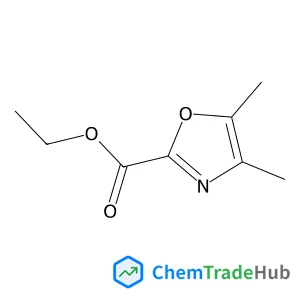
![(4-Methyl-1H-benzo[d]imidazol-2-yl)methanamine structure](https://cnstatic.chemtradehub.com/structs/933/933756-31-1-7b0b.webp "(4-Methyl-1H-benzo[d]imidazol-2-yl)methanamine structure")
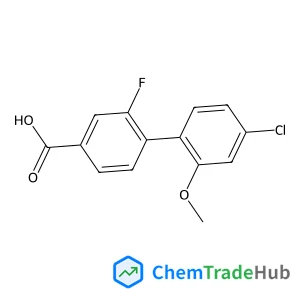
![2-Azaspiro[4.5]decane-3,8-dione structure](https://cnstatic.chemtradehub.com/structs/914/914780-96-4-e94b.webp "2-Azaspiro[4.5]decane-3,8-dione structure")
推荐供应商





免责声明
本页面提供的学术期刊信息仅供参考和研究使用。我们与任何期刊出版商均无关联,也不处理投稿事宜。如有投稿相关咨询,请直接联系相关期刊出版商。
如发现页面信息有误,请发送邮件至 support@chemtradehub.com 联系我们。我们将及时核实并处理您的问题。