



Emergence of magnetic nanoparticles in photothermal and ferroptotic therapies
文献信息
发布日期
2023-09-14
DOI
10.1039/D3MH00831B
影响因子
13.266
作者
Aurore Van de Walle, Ana Espinosa, Claire Wilhelm
查看原文
摘要
With their distinctive physicochemical features, nanoparticles have gained recognition as effective multifunctional tools for biomedical applications, with designs and compositions tailored for specific uses. Notably, magnetic nanoparticles stand out as first-in-class examples of multiple modalities provided by the iron-based composition. They have long been exploited as contrast agents for magnetic resonance imaging (MRI) or as anti-cancer agents generating therapeutic hyperthermia through high-frequency magnetic field application, known as magnetic hyperthermia (MHT). This review focuses on two more recent applications in oncology using iron-based nanomaterials: photothermal therapy (PTT) and ferroptosis. In PTT, the iron oxide core responds to a near-infrared (NIR) excitation and generates heat in its surrounding area, rivaling the efficiency of plasmonic gold-standard nanoparticles. This opens up the possibility of a dual MHT + PTT approach using a single nanomaterial. Moreover, the iron composition of magnetic nanoparticles can be harnessed as a chemotherapeutic asset. Degradation in the intracellular environment triggers the release of iron ions, which can stimulate the production of reactive oxygen species (ROS) and induce cancer cell death through ferroptosis. Consequently, this review emphasizes these emerging physical and chemical approaches for anti-cancer therapy facilitated by magnetic nanoparticles, combining all-in-one functionalities.
相关文献
Ln3+-doped hydroxyapatite nanocrystals: controllable synthesis and cell imaging
Xiaoyan Zheng, Meiying Liu, Daidi Fan, Haixia Ma, Yaoyu Wang, Yen Wei
2015-07-01
Paper
DOI: 10.1039/C5CP01845E
Is formamide a geochemically plausible prebiotic solvent?
Jeffrey L. Bada, John H. Chalmers
2016-05-24
Perspective
DOI: 10.1039/C6CP03290G
Electromagnetic interference shielding in 1–18 GHz frequency and electrical property correlations in poly(vinylidene fluoride)–multi-walled carbon nanotube composites
G. Sudheer Kumar, D. Vishnupriya, Anupama Joshi, Suwarna Datar, T. Umasankar Patro
2015-07-07
Paper
DOI: 10.1039/C5CP02585K
From underwear to non-equilibrium thermodynamics: physical chemistry informs the origin of life
Mattanjah S. de Vries
2016-07-08
Editorial
DOI: 10.1039/C6CP90169G
Topography evolution of 500 keV Ar4+ ion beam irradiated InP(100) surfaces – formation of self-organized In-rich nano-dots and scaling laws
Indra Sulania, Dinesh C. Agarwal, Manish Kumar, Sunil Kumar, Pravin Kumar
2016-07-04
Paper
DOI: 10.1039/C6CP03409H
Interlayer coupling in two-dimensional titanium carbide MXenes
Chao Zhang, Jingyang Wang, Xiaohui Wang
2016-05-16
Communication
DOI: 10.1039/C6CP01699E
The unique Raman fingerprint of boron nitride substitution patterns in graphene
Marco Lorenz, Daniele Pullini, Mauro Sgroi
2016-07-04
Communication
DOI: 10.1039/C6CP02101H
The non-dominance of counterions in charge-asymmetric electrolytes: non-monotonic precedence of electrostatic screening and local inversion of the electric field by multivalent coions
Guillermo Iván Guerrero-García, Enrique González-Tovar, Manuel Quesada-Pérez, Alberto Martín-Molina
2016-07-08
Paper
DOI: 10.1039/C6CP03483G
The ferroelectric polarization of Y2CoMnO6 aligns along the b-axis: the first-principles calculations
C. Y. Ma, S. Dong, P. X. Zhou, Z. Z. Du, M. F. Liu, H. M. Liu, Z. B. Yan
2015-07-02
Paper
DOI: 10.1039/C5CP02501J
您可能还喜欢
化合物问答
4-[4-三氟甲基苯基]恶唑(CAS号:1126636-40-5)通常如何合成?
4-[4-三氟甲基苯基]恶唑通常通过将4-三氟甲基苯酚与异硫氰酸苯酯在有机溶剂中进行酯化反应合成。该反应可在无水条件下,使用适当的催化剂,如四丁基氢氧化铵,以提...
1126636-40-54-(4-(Trifluoromethy...
59729-32-71-[3-(Dimethylamino)...
化合物问答
RockPhos Pd G3(CAS号:2009020-38-4)通常如何合成?
RockPhos Pd G3 通常通过钯催化偶联反应合成,使用配体 (2'-Amino-2-biphenylyl)(methanesulfonato-kappa...
2009020-38-4(2'-Amino-2-biphenyl...
化合物问答
1-哌啶甲酰胺(CAS号:2158-03-4)的市场或研究趋势如何?
1-哌啶甲酰胺作为有机合成中的重要中间体,其市场需求主要受医药、农药、染料等行业推动。近年来,随着新药开发和绿色化学的发展,该化合物的研究趋势集中在开发更高效、...
2158-03-41-Piperidinecarboxam...
化合物问答
2-(二苯基膦基)乙胺(CAS号:4848-43-5)适用哪些法规指南?
2-(二苯基膦基)乙胺适用于多种法规指南,包括但不限于《全球化学品统一分类和标签制度》(GHS),欧盟《化学品注册、评估、授权和限制》法规(REACH),以及美...
4848-43-52-(Diphenylphosphino...
化合物问答
如何储存间苯二甲酸二烯丙酯(CAS号:1087-21-4)?
间苯二甲酸二烯丙酯应储存在阴凉、干燥、通风良好的地方,远离火源和热源。储存容器应密封,避免光照和高温。储存温度应控制在25℃以下,相对湿度应低于80%。避免与其...
1087-21-4Diallyl isophthalate
化合物问答
什么是间甲苯异硫代异氰酸酯(CAS号:621-30-7)?
间甲苯异硫代异氰酸酯是一种有机化合物,分子式为C7H7NO2S,具有刺激性气味。它是一种重要的有机合成中间体,在合成其他化合物时广泛应用。
621-30-71-Isothiocyanato-3-m...
化合物问答
在合成中是否有N-Boc-D-苯丙氨醇(CAS号:106454-69-7)的替代品?
在合成中,可以考虑使用N-Cbz-D-苯丙氨醇或N-Fmoc-D-苯丙氨醇作为替代品。这些化合物同样具有保护氨基的功能,且在合成过程中表现出良好的反应性能。
106454-69-72-Methyl-2-propanyl ...
化合物问答
3-羟甲基-2-氧异丙基吡啶(CAS号:954240-50-7)的主要用途是什么?
3-羟甲基-2-氧异丙基吡啶主要用于有机合成领域,可以作为合成其他药物、农药或精细化学品的中间体。此外,它还可能在实验室研究中作为特定反应的前体或溶剂。
954240-50-7(2-Isopropoxy-3-pyri...
化合物问答
6-氨基-9-甲基嘌呤(CAS号:700-00-5)应用于哪些行业?
6-氨基-9-甲基嘌呤目前主要应用于医药行业,作为某些药物的中间体。此外,它还可能用于聚合物、传感器和半导体的某些领域,作为功能性单体或掺杂剂。
700-00-59-Methyl-9H-purin-6-...
来源期刊
Materials Horizons
CiteScore:
18.9
自引率:
3.3%
年发文量:
511
Materials Horizons is a leading journal for the publication of exceptionally high quality, innovative materials science.The journal places an emphasis on original research that demonstrates a new concept or a new way of thinking (a conceptual advance), rather than primarily reporting technological improvements. However, outstanding articles featuring truly breakthrough developments such as record performance of materials alone may also be published in the journal. For work to be published it must be of significant general interest to our community-spanning readership. All articles published in Materials Horizons from 2021 onwards will be indexed in MEDLINE©
推荐化合物
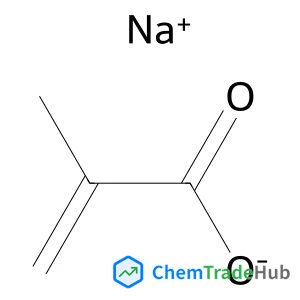
![[2',6'-bis(propan-2-yloxy)-[1,1'-biphenyl]-3-yl]dicyclohexylphosphane structure](https://cnstatic.chemtradehub.com/structs/787/787618-22-8-dda2.webp "[2',6'-bis(propan-2-yloxy)-[1,1'-biphenyl]-3-yl]dicyclohexylphosphane structure")
[2',6'-bis(propan-2-yloxy)-[1,1'-biphenyl]-3-yl]dicyclohexylphosphane
CAS号:
787618-22-8
分子式:
C30H43O2P
推荐供应商





免责声明
本页面提供的学术期刊信息仅供参考和研究使用。我们与任何期刊出版商均无关联,也不处理投稿事宜。如有投稿相关咨询,请直接联系相关期刊出版商。
如发现页面信息有误,请发送邮件至 support@chemtradehub.com 联系我们。我们将及时核实并处理您的问题。