



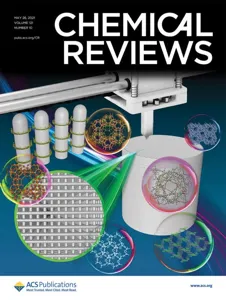

Overview of the design of bionic fine hierarchical structures for fog collection
文献信息
发布日期
2023-09-05
DOI
10.1039/D3MH01094E
影响因子
13.266
作者
Danyan Zhan
查看原文
摘要
Nature always uses its special wisdom to construct elegant and suitable schemes. Consequently, organisms in the flora and fauna are endowed with fine hierarchical structures (HS) to adapt to the harsh environment due to many years of evolution. Water is one of the most important resources; however, easy access to it is one the biggest challenges faced by human beings. In this case, fog collection (FC) is considered an efficient method to collect water, where bionic HS can be the bridge to efficiently facilitate the process of the FC. In this review, firstly, we discuss the basic principles of FC. Secondly, the role of HS in FC is analyzed in terms of the microstructure of typical examples of plants and animals. Simultaneously, the water-harvesting function of HS in a relatively new organism, fungal filament, is also presented. Thirdly, the HS design in each representative work is analyzed from a biomimetic perspective (single to multiple biomimetic approaches). The role of HS in FC, and then the FC performance of each work are analyzed in order of spatial dimension from a bionic perspective. Finally, the challenges at this stage and the outlook for the future are presented.
相关文献
Triple decker sandwiches and related compounds of the first row transition metals with cyclopentadienyl and hexafluorobenzene rings: remarkable effects of fluorine substitution
Shida Gong, Qiong Luo, Xiangfei Feng, Qian-shu Li, Yaoming Xie, Henry F. Schaefer III
2015-06-08
Paper
DOI: 10.1039/C5CP01648G
Behaviour of NBD-head group labelled phosphatidylethanolamines in POPC bilayers: a molecular dynamics study
2015-05-22
Paper
DOI: 10.1039/C5CP01596K
Electromagnetic interference shielding in 1–18 GHz frequency and electrical property correlations in poly(vinylidene fluoride)–multi-walled carbon nanotube composites
G. Sudheer Kumar, D. Vishnupriya, Anupama Joshi, Suwarna Datar, T. Umasankar Patro
2015-07-07
Paper
DOI: 10.1039/C5CP02585K
Facile synthesis of S, N co-doped carbon dots and investigation of their photoluminescence properties
Yue Zhang, Junhui He
2015-07-16
Paper
DOI: 10.1039/C5CP03498A
Photochemical etiology of promising ancestors of the RNA nucleobases
M. M. Brister, M. Pollum, C. E. Crespo-Hernández
2016-02-17
Communication
DOI: 10.1039/C6CP00639F
Tunable dipole induced hydrogen bonds between a hydrogen molecule and alkali halides
Bolong Huang, Jianfu Li, Zhenyi Jiang, Bo Wang, Zhigang Wang, Rui-Qin Zhang
2015-07-07
Paper
DOI: 10.1039/C5CP02598B
Reverse solvatochromism in solvent binary mixtures: a case study using a 4-(nitrostyryl)phenolate as a probe
Rafaela I. Stock, Adriana D. S. Schramm, Marcos C. Rezende, Vanderlei G. Machado
2016-07-05
Communication
DOI: 10.1039/C6CP03875A
An ultrafast spectroscopic and quantum mechanical investigation of multiple emissions in push–pull pyridinium derivatives bearing different electron donors
B. Carlotti, E. Benassi, A. Cesaretti, C. G. Fortuna, A. Spalletti, V. Barone, F. Elisei
2015-07-08
Paper
DOI: 10.1039/C5CP03207E
The properties of substituted 3D-aromatic neutral carboranes: the potential for σ-hole bonding
Rabindranath Lo, Jindřich Fanfrlík, Martin Lepšík
2015-07-20
Paper
DOI: 10.1039/C5CP03617H
A theoretical study of sum-frequency generation for chiral solutions near electronic resonance
Ren-hui Zheng, Wen-mei Wei, Qiang Shi
2015-07-06
Paper
DOI: 10.1039/C5CP02136G
您可能还喜欢
化合物问答
4-[4-三氟甲基苯基]恶唑(CAS号:1126636-40-5)通常如何合成?
4-[4-三氟甲基苯基]恶唑通常通过将4-三氟甲基苯酚与异硫氰酸苯酯在有机溶剂中进行酯化反应合成。该反应可在无水条件下,使用适当的催化剂,如四丁基氢氧化铵,以提...
1126636-40-54-(4-(Trifluoromethy...
59729-32-71-[3-(Dimethylamino)...
化合物问答
RockPhos Pd G3(CAS号:2009020-38-4)通常如何合成?
RockPhos Pd G3 通常通过钯催化偶联反应合成,使用配体 (2'-Amino-2-biphenylyl)(methanesulfonato-kappa...
2009020-38-4(2'-Amino-2-biphenyl...
化合物问答
1-哌啶甲酰胺(CAS号:2158-03-4)的市场或研究趋势如何?
1-哌啶甲酰胺作为有机合成中的重要中间体,其市场需求主要受医药、农药、染料等行业推动。近年来,随着新药开发和绿色化学的发展,该化合物的研究趋势集中在开发更高效、...
2158-03-41-Piperidinecarboxam...
化合物问答
2-(二苯基膦基)乙胺(CAS号:4848-43-5)适用哪些法规指南?
2-(二苯基膦基)乙胺适用于多种法规指南,包括但不限于《全球化学品统一分类和标签制度》(GHS),欧盟《化学品注册、评估、授权和限制》法规(REACH),以及美...
4848-43-52-(Diphenylphosphino...
化合物问答
如何储存间苯二甲酸二烯丙酯(CAS号:1087-21-4)?
间苯二甲酸二烯丙酯应储存在阴凉、干燥、通风良好的地方,远离火源和热源。储存容器应密封,避免光照和高温。储存温度应控制在25℃以下,相对湿度应低于80%。避免与其...
1087-21-4Diallyl isophthalate
化合物问答
什么是间甲苯异硫代异氰酸酯(CAS号:621-30-7)?
间甲苯异硫代异氰酸酯是一种有机化合物,分子式为C7H7NO2S,具有刺激性气味。它是一种重要的有机合成中间体,在合成其他化合物时广泛应用。
621-30-71-Isothiocyanato-3-m...
化合物问答
在合成中是否有N-Boc-D-苯丙氨醇(CAS号:106454-69-7)的替代品?
在合成中,可以考虑使用N-Cbz-D-苯丙氨醇或N-Fmoc-D-苯丙氨醇作为替代品。这些化合物同样具有保护氨基的功能,且在合成过程中表现出良好的反应性能。
106454-69-72-Methyl-2-propanyl ...
化合物问答
3-羟甲基-2-氧异丙基吡啶(CAS号:954240-50-7)的主要用途是什么?
3-羟甲基-2-氧异丙基吡啶主要用于有机合成领域,可以作为合成其他药物、农药或精细化学品的中间体。此外,它还可能在实验室研究中作为特定反应的前体或溶剂。
954240-50-7(2-Isopropoxy-3-pyri...
化合物问答
6-氨基-9-甲基嘌呤(CAS号:700-00-5)应用于哪些行业?
6-氨基-9-甲基嘌呤目前主要应用于医药行业,作为某些药物的中间体。此外,它还可能用于聚合物、传感器和半导体的某些领域,作为功能性单体或掺杂剂。
700-00-59-Methyl-9H-purin-6-...
来源期刊
Materials Horizons

CiteScore:
18.9
自引率:
3.3%
年发文量:
511
Materials Horizons is a leading journal for the publication of exceptionally high quality, innovative materials science.The journal places an emphasis on original research that demonstrates a new concept or a new way of thinking (a conceptual advance), rather than primarily reporting technological improvements. However, outstanding articles featuring truly breakthrough developments such as record performance of materials alone may also be published in the journal. For work to be published it must be of significant general interest to our community-spanning readership. All articles published in Materials Horizons from 2021 onwards will be indexed in MEDLINE©
推荐化合物

推荐供应商




免责声明
本页面提供的学术期刊信息仅供参考和研究使用。我们与任何期刊出版商均无关联,也不处理投稿事宜。如有投稿相关咨询,请直接联系相关期刊出版商。
如发现页面信息有误,请发送邮件至 support@chemtradehub.com 联系我们。我们将及时核实并处理您的问题。