




Two new 6-nitrobenzimidazole ligand-modified polymolybdate-based metal–organic complexes with excellent capacitive and electrocatalytic performances
文献信息
发布日期
2023-12-08
DOI
10.1039/D3NJ04841A
影响因子
3.591
作者
Ju-Ju Liang, Yu-Chen Zhang, Zhi-Han Chang, Yong-Zhen Chen, Ke-Ke Chen, Jun-Jun Lu, Xiu-Li Wang
查看原文
摘要
By targeted introduction of 6-nitrobenzimidazole into polymolybdate, two new polymolybdate-based copper-organic complexes were successfully synthesized, namely {Cu2(6-nbm)4[β-Mo8O26](H2O)2}·(6-nbm)2·4H2O (1) and H2{Cu2(6-nbm)4[TeMo6O24](H2O)4}·(6-nbm)2·4H2O (2) (6-nbm = 6-nitrobenzimidazole), and structurally characterized by single-crystal X-ray diffraction, IR spectroscopy and powder X-ray diffraction (PXRD). Complexes 1 and 2 are both one-dimensional (1D) chain structures, in which 6-nbm hangs on the 1D chain in a monodentate coordination mode, appearing with a butterfly-like configuration. Complexes 1 and 2 both display bifunctional electrocatalytic activity toward the reduction of KNO2, as well as the oxidation of ascorbic acid (AA). The title complexes, used to prepare bulk-modified carbon paste electrodes (1–CPE and 2–CPE), can be used as electrochemical sensors, which show lower detection limit, good selectivity and anti-interference ability. In addition, the carbon cloth-based electrode modified with complex 1 (1–CC) exhibits ideal capacitance and long-term cycle stability, indicating that complex 1 can be a potential candidate for a pseudocapacitive material. In addition, complexes 1 and 2 show catalytic activity for the CO2 reduction reaction.
相关文献
Base-amplifying silicone resins generating aliphatic secondary amines autocatalytically: synthesis, characterization and application to positive-working photoresists
K. Arimitsu, H. Kobayashi, M. Furutani, T. Gunji, Y. Abe
2014-09-12
Paper
DOI: 10.1039/C4PY01096E
In situ and readily prepared metal catalysts and initiators for living cationic polymerization of isobutyl vinyl ether: dual-purpose salphen as a ligand framework for ZrCl4 and an initiating proton source
Sensho Kigoshi, Arihiro Kanazawa, Shokyoku Kanaoka, Sadahito Aoshima
2014-09-02
Communication
DOI: 10.1039/C4PY01012D
Low bandgap poly(thienylenemethine) derivatives bearing terarylene moieties in the side chains
Sangbum Ahn, Kazuki Yabumoto, Yongsoo Jeong, Kazuo Akagi
2014-08-26
Paper
DOI: 10.1039/C4PY00849A
Dendrimer-like conjugated microporous polymers
Ting Wang, Wei Huang, Jia-Xing Jiang, Zhengkun Du, Fa-Kuen Shieh, Renqiang Yang
2016-01-04
Paper
DOI: 10.1039/C5PY01767J
Fatty acid-based (bis) 6-membered cyclic carbonates as efficient isocyanate free poly(hydroxyurethane) precursors
Carine Alfos
2014-07-15
Communication
DOI: 10.1039/C4PY00922C
A fluorescent hyperbranched supramolecular polymer based on triple hydrogen bonding interactions
Xin Fu, Qiwei Zhang, Gang Wu, Wei Zhou, Qiao-Chun Wang, Da-Hui Qu
2014-08-14
Communication
DOI: 10.1039/C4PY00894D
A core–shell structure of polyaniline coated protonic titanate nanobelt composites for both Cr(vi) and humic acid removal
Tao Wen, Qiaohui Fan, Xiaoli Tan, Yuantao Chen, Changlun Chen, Anwu Xu
2015-11-30
Paper
DOI: 10.1039/C5PY01721A
Olefin cross-metathesis, a mild, modular approach to functionalized cellulose esters
2014-09-02
Paper
DOI: 10.1039/C4PY01102C
CdS nanorods assisted thermal oxidation of polythiol segments of PS-b-polythiols to produce core cross-linking micellar clusters
Chengsha Wei, Mingming Chen, Jiaojiao Tao, Xibo Wu, Majid Khan, Dong Liu, Ningdong Huang
2014-08-26
Paper
DOI: 10.1039/C4PY00946K
您可能还喜欢
化合物问答
什么是5-Fluoro-4-iodo-2-methylaniline(CAS号:307306-08-7)?
5-氟-4-碘-2-甲氨基苯属于芳香族化合物,其分子式为C8H7FN2I。该化合物具有一定的反应活性,在有机合成和药物化学领域有一定的应用。
307306-08-75-Fluoro-4-iodo-2-me...
化合物问答
4-氟-3-硝基三氟甲苯(CAS号:367-86-2)通常如何合成?
4-氟-3-硝基三氟甲苯通常通过将三氟甲基苯在酸性条件下催化氧化为三氟甲基硝基苯,然后进行氟化反应得到目标化合物。该过程需要使用催化剂,如三氟乙酸,反应产率较高...
367-86-21-Fluoro-2-nitro-4-(...
化合物问答
6-氯-9-(2,3,5-三苯甲酰氧基-2-C-甲基-beta-D-呋喃核糖基)-9H-嘌呤(CAS号:205171-05-7)的物理化学性质是什么?
该化合物为白色至类白色晶体,分子量约为1046.95。它在水中几乎不溶,在有机溶剂如乙腈和甲醇中具有一定的溶解性。该化合物具有良好的化学稳定性和生物活性。
205171-05-76-Chloro-9-(2-C-meth...
化合物问答
如何储存6-氟喹啉-4-羧酸(CAS号:220844-73-5)?
6-氟喹啉-4-羧酸应储存在阴凉、干燥、通风良好的地方,避免阳光直射。储存在密闭容器中,避免与空气中的水分接触。储存温度应控制在室温以下,避免高温。
220844-73-56-Fluoroquinoline-4-...
化合物问答
(2S,2'S,3S,3'S)-3,3'-di-tert-butyl-4,4'-bis(2,6-dimethoxyphenyl)-2,2',3,3'-tetrahydro-2,2'-bibenzo[d][1,3]oxaphosphole(CAS号:1435940-21-8)通常如何合成?
该化合物通常通过芳香族化合物的亲核取代反应合成,首先将2,6-二甲氧基苯基引入到双环结构中,然后通过特定条件下的还原或氧化反应引入二叔丁基。反应过程中使用了钯作...
1435940-21-8(2S,2'S,3S,3'S)-4,4'...
化合物问答
如何储存KY02111(CAS号:1118807-13-8)?
KY02111应储存于阴凉、干燥、通风良好的地方,避免阳光直射和高温环境。应使用合适的密闭容器储存,并确保容器密封良好,防止水分和潮气进入。在储存期间,应注意检...
1118807-13-8N-(6-chlorobenzo[d]t...
化合物问答
如何储存4-(4-氯苯氧基)丁酸乙酯(CAS号:59227-79-1)?
4-(4-氯苯氧基)丁酸乙酯应储存在阴凉、干燥、通风良好的地方,远离火源和热源。避免阳光直射,防止容器破裂导致泄漏。储存时应保持容器密封,避免与空气中的水蒸气接...
59227-79-1Ethyl 4-(4-chlorophe...
化合物问答
4-庚基苯乙酮(CAS号:37593-03-6)安全吗?
4-庚基苯乙酮相对安全,但在使用和储存时仍需注意。应避免吸入其蒸气,避免皮肤接触,使用时需佩戴防护眼镜和手套。储存时应远离火源和热源,保持容器密封,放置于阴凉、...
37593-03-61-(4-Heptylphenyl)et...
化合物问答
什么是乙基2-氨基-4-(3-溴苯基)噻吩-3-羧酸乙酯(CAS号:438218-48-5)?
乙基2-氨基-4-(3-溴苯基)噻吩-3-羧酸乙酯是一种有机化合物,分子式为C16H12BrN2O2S。它是一种含有噻吩环、氨基、溴苯基和羧酸酯结构的化合物。这...
438218-48-5ethyl 2-amino-4-(3-b...
化合物问答
什么是(9ci)-2-氨基-6-甲基-苯甲酰胺(CAS号:1885-31-0)?
(9ci)-2-氨基-6-甲基-苯甲酰胺是一种化学化合物,其英文名称为2-Amino-6-methylbenzamide,CAS号为1885-31-0。该化合物...
1885-31-02-Amino-6-methylbenz...
来源期刊
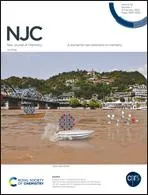
New Journal of Chemistry
CiteScore:
5.3
自引率:
3.7%
年发文量:
2153
NJC (New Journal of Chemistry) is a broad-based primary journal encompassing all branches of chemistry and its sub-disciplines. It contains full research articles, communications, perspectives and focus articles. This well-established journal, owned by the Centre National de la Recherche Scientifique (CNRS) of France, has been co-published with the Royal Society of Chemistry since January 1998. NJC is the forum for the publication of high-quality, original and significant work that opens new directions in chemistry or other scientific disciplines. In addition to having a significant chemical component, work published in NJC must demonstrate that it will have an impact on areas of research other than that of the reported work.
推荐化合物
推荐供应商





免责声明
本页面提供的学术期刊信息仅供参考和研究使用。我们与任何期刊出版商均无关联,也不处理投稿事宜。如有投稿相关咨询,请直接联系相关期刊出版商。
如发现页面信息有误,请发送邮件至 support@chemtradehub.com 联系我们。我们将及时核实并处理您的问题。