


Highly asymmetric aldol reaction of isatins and ketones catalyzed by chiral bifunctional primary-amine organocatalyst on water
文献信息
发布日期
2023-10-13
DOI
10.1039/D3OB01227A
影响因子
3.876
作者
Xiao-Xiong Lv, Ning Liu, Fei Chen, Hao Zhang, Zhi-Hong Du, Pei Wang, Meng Yuan, Chao Shan Da
查看原文
摘要
Herein, we have reported an environmentally friendly asymmetric aldol reaction between isatins and ketones catalyzed by double-hydrogen-bonded primary amine organocatalysts on water under mild conditions. Enantioenriched 3-hydroxy-2-oxindoles were obtained in high yields (up to 99%) and excellent stereoselectivities (up to 99 : 1 dr and 99% ee) under optimal conditions. Furthermore, the model reaction involving isatin and cyclohexanone was successfully scaled to 10 mmol with no reduction in yield or stereoselectivity. In addition, the catalyst was recovered via simple filtration and was subsequently reused on water, which highlights its good application potential.
期刊推荐

Physical Chemistry Chemical Physics
Photochemical & Photobiological Sciences
Journal of Enzyme inhibition and Medicinal Chemistry
Green Chemistry
Faraday Discussions
Environmental Toxicology and Pharmacology
Coloration Technology
CrystEngComm
Angewandte Chemie International Edition
Nature Reviews Drug Discovery
相关文献
Controlled self-sorting in the assembly of ‘multi-gelator’ gels‡
Jamie R. Moffat, David K. Smith
2008-11-19
Communication
DOI: 10.1039/B818058J
Lengthening alkyl spacers to increase SBA-15-anchored Rh–P complex activities in 1-octene hydroformylation
Wei Zhou, Dehua He
2008-10-01
Communication
DOI: 10.1039/B812910J
Selective dimerization of 1,6-diynes catalyzed by ionic liquid-supported nickel complexes in an ionic liquid/toluene biphasic system
Avijit Goswami, Taichi Ito, Naoko Saino, Kouki Kase, Chikashi Matsuno, Sentaro Okamoto
2008-11-18
Communication
DOI: 10.1039/B816850D
A cavitand with a fluorous rim acts as an amine receptor
Richard J. Hooley, Per Restorp, Julius Rebek Jr
2008-11-06
Communication
DOI: 10.1039/B814069C
Glycosylated asterisks are among the most potent low valency inducers of Concanavalin A aggregation
Mazen Sleiman, Annabelle Varrot, Jean-Manuel Raimundo, Marc Gingras, Peter G. Goekjian
2008-11-07
Communication
DOI: 10.1039/B814816C
Sn(iv) phosphonates as catalysts in solvent-free Baeyer–Villiger oxidations using H2O2
Sharath Kirumakki, Sandani Samarajeewa, Robert Harwell, Atashi Mukherjee, Rolfe H. Herber, Abraham Clearfield
2008-10-08
Communication
DOI: 10.1039/B807938B
Multiradiate calcium phosphate patterns derived from a gradating polysaccharide-acidic protein system‡
Yi Shi, Yahong Zhang, Wuli Yang, Yi Tang
2008-11-19
Communication
DOI: 10.1039/B814095B
Trimacrocyclic arylamine and its polycationic states
Akihiro Ito, Yuko Yamagishi, Koji Fukui, Syuuzi Inoue, Yasukazu Hirao, Ko Furukawa, Tatsuhisa Kato
2008-11-12
Communication
DOI: 10.1039/B816311A
Thermoresponsive dendronized polymers with tunable lower critical solution temperatures
Wen Li, A. Dieter Schlüter
2008-09-23
Communication
DOI: 10.1039/B811464A
您可能还喜欢
化合物问答
4-[4-三氟甲基苯基]恶唑(CAS号:1126636-40-5)通常如何合成?
4-[4-三氟甲基苯基]恶唑通常通过将4-三氟甲基苯酚与异硫氰酸苯酯在有机溶剂中进行酯化反应合成。该反应可在无水条件下,使用适当的催化剂,如四丁基氢氧化铵,以提...
1126636-40-54-(4-(Trifluoromethy...
59729-32-71-[3-(Dimethylamino)...
化合物问答
RockPhos Pd G3(CAS号:2009020-38-4)通常如何合成?
RockPhos Pd G3 通常通过钯催化偶联反应合成,使用配体 (2'-Amino-2-biphenylyl)(methanesulfonato-kappa...
2009020-38-4(2'-Amino-2-biphenyl...
化合物问答
1-哌啶甲酰胺(CAS号:2158-03-4)的市场或研究趋势如何?
1-哌啶甲酰胺作为有机合成中的重要中间体,其市场需求主要受医药、农药、染料等行业推动。近年来,随着新药开发和绿色化学的发展,该化合物的研究趋势集中在开发更高效、...
2158-03-41-Piperidinecarboxam...
化合物问答
2-(二苯基膦基)乙胺(CAS号:4848-43-5)适用哪些法规指南?
2-(二苯基膦基)乙胺适用于多种法规指南,包括但不限于《全球化学品统一分类和标签制度》(GHS),欧盟《化学品注册、评估、授权和限制》法规(REACH),以及美...
4848-43-52-(Diphenylphosphino...
化合物问答
如何储存间苯二甲酸二烯丙酯(CAS号:1087-21-4)?
间苯二甲酸二烯丙酯应储存在阴凉、干燥、通风良好的地方,远离火源和热源。储存容器应密封,避免光照和高温。储存温度应控制在25℃以下,相对湿度应低于80%。避免与其...
1087-21-4Diallyl isophthalate
化合物问答
什么是间甲苯异硫代异氰酸酯(CAS号:621-30-7)?
间甲苯异硫代异氰酸酯是一种有机化合物,分子式为C7H7NO2S,具有刺激性气味。它是一种重要的有机合成中间体,在合成其他化合物时广泛应用。
621-30-71-Isothiocyanato-3-m...
化合物问答
在合成中是否有N-Boc-D-苯丙氨醇(CAS号:106454-69-7)的替代品?
在合成中,可以考虑使用N-Cbz-D-苯丙氨醇或N-Fmoc-D-苯丙氨醇作为替代品。这些化合物同样具有保护氨基的功能,且在合成过程中表现出良好的反应性能。
106454-69-72-Methyl-2-propanyl ...
化合物问答
3-羟甲基-2-氧异丙基吡啶(CAS号:954240-50-7)的主要用途是什么?
3-羟甲基-2-氧异丙基吡啶主要用于有机合成领域,可以作为合成其他药物、农药或精细化学品的中间体。此外,它还可能在实验室研究中作为特定反应的前体或溶剂。
954240-50-7(2-Isopropoxy-3-pyri...
化合物问答
6-氨基-9-甲基嘌呤(CAS号:700-00-5)应用于哪些行业?
6-氨基-9-甲基嘌呤目前主要应用于医药行业,作为某些药物的中间体。此外,它还可能用于聚合物、传感器和半导体的某些领域,作为功能性单体或掺杂剂。
700-00-59-Methyl-9H-purin-6-...
来源期刊
Organic & Biomolecular Chemistry
CiteScore:
3.4
自引率:
10.3%
年发文量:
1041
Organic & Biomolecular Chemistry (OBC) publishes original and high impact research and reviews in organic chemistry. We welcome research that shows new or significantly improved protocols or methodologies in total synthesis, synthetic methodology or physical and theoretical organic chemistry as well as research that shows a significant advance in the organic chemistry or molecular design aspects of chemical biology, catalysis, supramolecular and macromolecular chemistry, theoretical chemistry, mechanism-oriented physical organic chemistry, medicinal chemistry or natural products. Articles published in the journal should report new work which makes a highly-significant impact in the field. Routine and incremental work is generally not suitable for publication in the journal. More details about key areas of our scope are below. In all cases authors should include in their article clear rationale for why their research has been carried out.
推荐化合物
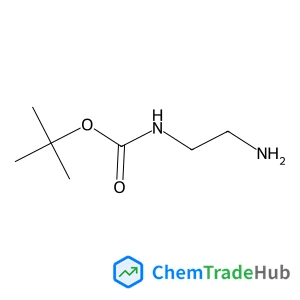
推荐供应商



免责声明
本页面提供的学术期刊信息仅供参考和研究使用。我们与任何期刊出版商均无关联,也不处理投稿事宜。如有投稿相关咨询,请直接联系相关期刊出版商。
如发现页面信息有误,请发送邮件至 support@chemtradehub.com 联系我们。我们将及时核实并处理您的问题。