



Support studies toward the hicksoane alkaloids reveal cascade reactions of a (tryptophanamido)methylglycinate
文献信息
发布日期
2023-10-18
DOI
10.1039/D3OB01596C
影响因子
3.876
作者
Stephanie Lee, Tilo Söhnel, Jonathan Sperry
查看原文
摘要
Herein we report unanticipated results that emerged from a synthetic study targeting the unique triazocane present in the hicksoane alkaloids. An initial strategy focused on the cyclisation-ring expansion of a 3-(tryptophyl)imidazolidin-4-one failed due to the high reactivity of the imide unit; passing a methanolic solution of this compound through a weakly basic ion exchange resin led to methanolysis to form a (tryptophanamido)methylglycinate. Attempted lactamisation of this (tryptophanamido)methylglycinate led to the formation of a (tryptophyl)imidazolidin-4-one, a rare imidazopyrido[3,4-b]indolone and a β-carboline. Control reactions informed a mechanistic rationale for these cascade processes.
相关文献
Preparation of active and robust palladium nanoparticlecatalysts stabilized by diamine-functionalized mesoporous polymers
Rong Xing, Yueming Liu, Haihong Wu, Xiaohong Li, Mingyuan He, Peng Wu
2008-10-27
Communication
DOI: 10.1039/B815186E
Solvothermal synthesis of N-doped TiO2nanotubes for visible-light-responsive photocatalysis
Fan Yang, Nianjun Luo, Bryan T. T. Chu, Deyin Sun, Huahong Shi, Tiancun Xiao, Peter P. Edwards
2008-11-04
Communication
DOI: 10.1039/B815430A
Organic electrosynthesis using toluates as simple and versatile radical precursors
Kevin Lam, István E. Markó
2008-11-17
Communication
DOI: 10.1039/B813545B
Aqueous dispersions of TCNQ-anion-stabilized graphene sheets
Rui Hao, Wen Qian, Luhui Zhang, Yanglong Hou
2008-11-12
Communication
DOI: 10.1039/B816971C
Dynamic kinetic resolution of β-keto sulfonesvia asymmetric transfer hydrogenation
Zhenhua Ding, Jin Yang, Ting Wang, Zongxuan Shen, Yawen Zhang
2008-12-19
Communication
DOI: 10.1039/B818257D
2-Phenylpyrimidine skeleton-based electron-transport materials for extremely efficient green organic light-emitting devices
Hisahiro Sasabe, Takayuki Chiba, Shi-Jian Su, Yong-Jin Pu, Ken-ichi Nakayama, Junji Kido
2008-10-03
Communication
DOI: 10.1039/B812270A
Rapid analysis of isotopically unmodified amino acids by high-resolution 14N-edited 1H–13C correlation NMR spectroscopy
Jean-Paul Amoureux, Bingwen Hu, Olivier Lafon, Julien Trébosc, Feng Deng
2008-11-07
Communication
DOI: 10.1039/B816362F
Fluorescent method for platinum detection in buffers and serums for cancer medicine and occupational hazards
Amanda L. Garner, Kazunori Koide
2008-11-17
Communication
DOI: 10.1039/B817220J
Photoinitiated polymerisation of monolithic stationary phases in polyimide coated capillaries using visible region LEDs
Zarah Walsh, Silvija Abele, Brian Lawless, Dominik Heger, Petr Klán, Michael C. Breadmore, Brett Paull, Mirek Macka
2008-11-07
Communication
DOI: 10.1039/B816958F
Polyfunctional benzylic zinc chlorides by the direct insertion of magnesium into benzylic chlorides in the presence of LiCl and ZnCl2
Albrecht Metzger, Fabian M. Piller, Paul Knochel
2008-10-01
Communication
DOI: 10.1039/B812396A
您可能还喜欢
化合物问答
4-[4-三氟甲基苯基]恶唑(CAS号:1126636-40-5)通常如何合成?
4-[4-三氟甲基苯基]恶唑通常通过将4-三氟甲基苯酚与异硫氰酸苯酯在有机溶剂中进行酯化反应合成。该反应可在无水条件下,使用适当的催化剂,如四丁基氢氧化铵,以提...
1126636-40-54-(4-(Trifluoromethy...
59729-32-71-[3-(Dimethylamino)...
化合物问答
RockPhos Pd G3(CAS号:2009020-38-4)通常如何合成?
RockPhos Pd G3 通常通过钯催化偶联反应合成,使用配体 (2'-Amino-2-biphenylyl)(methanesulfonato-kappa...
2009020-38-4(2'-Amino-2-biphenyl...
化合物问答
1-哌啶甲酰胺(CAS号:2158-03-4)的市场或研究趋势如何?
1-哌啶甲酰胺作为有机合成中的重要中间体,其市场需求主要受医药、农药、染料等行业推动。近年来,随着新药开发和绿色化学的发展,该化合物的研究趋势集中在开发更高效、...
2158-03-41-Piperidinecarboxam...
化合物问答
2-(二苯基膦基)乙胺(CAS号:4848-43-5)适用哪些法规指南?
2-(二苯基膦基)乙胺适用于多种法规指南,包括但不限于《全球化学品统一分类和标签制度》(GHS),欧盟《化学品注册、评估、授权和限制》法规(REACH),以及美...
4848-43-52-(Diphenylphosphino...
化合物问答
如何储存间苯二甲酸二烯丙酯(CAS号:1087-21-4)?
间苯二甲酸二烯丙酯应储存在阴凉、干燥、通风良好的地方,远离火源和热源。储存容器应密封,避免光照和高温。储存温度应控制在25℃以下,相对湿度应低于80%。避免与其...
1087-21-4Diallyl isophthalate
化合物问答
什么是间甲苯异硫代异氰酸酯(CAS号:621-30-7)?
间甲苯异硫代异氰酸酯是一种有机化合物,分子式为C7H7NO2S,具有刺激性气味。它是一种重要的有机合成中间体,在合成其他化合物时广泛应用。
621-30-71-Isothiocyanato-3-m...
化合物问答
在合成中是否有N-Boc-D-苯丙氨醇(CAS号:106454-69-7)的替代品?
在合成中,可以考虑使用N-Cbz-D-苯丙氨醇或N-Fmoc-D-苯丙氨醇作为替代品。这些化合物同样具有保护氨基的功能,且在合成过程中表现出良好的反应性能。
106454-69-72-Methyl-2-propanyl ...
化合物问答
3-羟甲基-2-氧异丙基吡啶(CAS号:954240-50-7)的主要用途是什么?
3-羟甲基-2-氧异丙基吡啶主要用于有机合成领域,可以作为合成其他药物、农药或精细化学品的中间体。此外,它还可能在实验室研究中作为特定反应的前体或溶剂。
954240-50-7(2-Isopropoxy-3-pyri...
化合物问答
6-氨基-9-甲基嘌呤(CAS号:700-00-5)应用于哪些行业?
6-氨基-9-甲基嘌呤目前主要应用于医药行业,作为某些药物的中间体。此外,它还可能用于聚合物、传感器和半导体的某些领域,作为功能性单体或掺杂剂。
700-00-59-Methyl-9H-purin-6-...
来源期刊
Organic & Biomolecular Chemistry
CiteScore:
3.4
自引率:
10.3%
年发文量:
1041
Organic & Biomolecular Chemistry (OBC) publishes original and high impact research and reviews in organic chemistry. We welcome research that shows new or significantly improved protocols or methodologies in total synthesis, synthetic methodology or physical and theoretical organic chemistry as well as research that shows a significant advance in the organic chemistry or molecular design aspects of chemical biology, catalysis, supramolecular and macromolecular chemistry, theoretical chemistry, mechanism-oriented physical organic chemistry, medicinal chemistry or natural products. Articles published in the journal should report new work which makes a highly-significant impact in the field. Routine and incremental work is generally not suitable for publication in the journal. More details about key areas of our scope are below. In all cases authors should include in their article clear rationale for why their research has been carried out.
推荐化合物
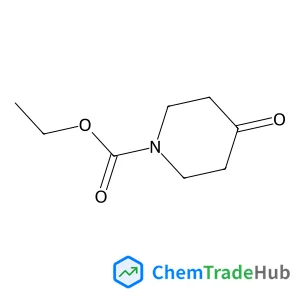
![3-[(4-Nitrobenzyl)oxy]-3-oxopropanoic Acid structure](https://cnstatic.chemtradehub.com/structs/773/77359-11-6-0d04.webp "3-[(4-Nitrobenzyl)oxy]-3-oxopropanoic Acid structure")
推荐供应商




免责声明
本页面提供的学术期刊信息仅供参考和研究使用。我们与任何期刊出版商均无关联,也不处理投稿事宜。如有投稿相关咨询,请直接联系相关期刊出版商。
如发现页面信息有误,请发送邮件至 support@chemtradehub.com 联系我们。我们将及时核实并处理您的问题。