


Polycyclic aromatic hydrocarbons containing antiaromatic chalcogenopyrano[3,2-b]-chalcogenopyrans
文献信息
发布日期
2023-11-23
DOI
10.1039/D3QO01708G
影响因子
5.281
作者
Weinan Chen, Yujie Xie, Jianping Xu, Jia-Wei Cai, Gang Zhou
查看原文
摘要
Bicyclic chalcogenopyrano[3,2-b]chalcogenopyran with two six-membered chalcogenopyran rings fused with each other contains 12 π-electrons, and thus is antiaromatic and unstable. Polycyclic compounds containing such an antiaromatic subunit have been rarely reported due to the difficult synthesis and poor stability. Herein, two series of chalcogenopyran-fused polycyclic compounds containing chalcogenopyrano[3,2-b]chalcogenopyran subunits: i.e., thiopyrano[3,2-b]thiopyran, selenopyrano[3,2-b]thiopyran, and selenopyrano[3,2-b]selenopyran, have been successfully synthesized via ring-expansion reactions from functionalized chalcogenopheno[3,2-b]chalcogenophene precursors. Interestingly, upon fusing two cyclopentadiene rings, the antiaromatic chalcogenopyrano[3,2-b]chalcogenopyrans switched to stable aromatic subunits in these polycyclic aromatic hydrocarbons (PAHs), which was verified by the calculated nucleus-independent chemical shift (NICS) values, anisotropy of the induced current density (AICD) plots, and two-dimensional isochemical shielding surface (2D-ICSS) maps. Single-crystal X-ray structural analysis revealed that the dioctyl substituted PAHs SS2, SSe2, and SeSe2 exhibited slipped π-stacking structures with short chalcogen–chalcogen contacts, while the tetraoctyl functionalized PAHs SS4, SSe4, and SeSe4 exhibited much looser honeycomb packing motifs. Consequently, the charge carrier mobilities of the OFET devices based on the dioctyl PAH series were higher than those for the tetraoctyl PAH series. Moreover, a clear exchange effect of the chalcogen atoms can be found and the highest hole mobility was achieved for an SSe2 based OFET due to the higher charge density of the Se atom and the moderate interplanar distance. Overall, this work provides not only synthetic protocols for chalcogen-embedded polycyclic compounds, but also a construction strategy towards stable organic semiconductors containing antiaromatic subunits.
期刊推荐
Russian Journal of Bioorganic Chemistry

Crystallography Reports
Drug Discovery Today
Journal of Peptide Science
Current Opinion in Colloid & Interface Science
Acta Materialia
Saudi Pharmaceutical Journal
Russian Journal of Organic Chemistry
Russian Journal of Applied Chemistry

Chemistry Education Research and Practice
相关文献
Graphical prediction of quantum interference-induced transmission nodes in functionalized organic molecules
Troels Markussen, Robert Stadler, Kristian S. Thygesen
2011-06-28
Paper
DOI: 10.1039/C1CP20924H
Questioning the photophysical model for the indolechromophore in the light of evidence obtained by controlling the non-specific effect of the medium with 1-chlorobutane as solvent
Juan Pablo Catalán
2011-07-14
Paper
DOI: 10.1039/C1CP21380F
Hydroxideoxidation and peroxide formation at embedded binuclear transition metal sites; TM = Cr, Mn, Fe, Co
M. Busch, E. Ahlberg, I. Panas
2011-07-20
Paper
DOI: 10.1039/C1CP20487D
Hierarchical micro/nano structures of carbon composites as anodes for microbial fuel cells
Yong Zhao
2011-07-25
Paper
DOI: 10.1039/C1CP21813A
Sensitive triplet exciton detection in polyfluorene using Pd-coordinated porphyrin
Maria Antonietta Loi
2011-07-06
Communication
DOI: 10.1039/C1CP21146C
Diffusional effects on the reversible excited-state proton transfer. From experiments to Brownian dynamics simulations‡
Alexander V. Popov, Elizabeth-Ann Gould, Michael A. Salvitti, Rigoberto Hernandez, Kyril M. Solntsev
2011-07-14
Paper
DOI: 10.1039/C1CP20952C
Photo-deactivation pathways of a double H-bonded photochromic Schiff base investigated by combined theoretical calculations and experimental time-resolved studies
Carlos Randino, Marcin Ziółek, Ricard Gelabert, Juan Angel Organero, Michal Gil, Miquel Moreno, José M. Lluch, Abderrazzak Douhal
2011-07-14
Paper
DOI: 10.1039/C1CP21039D
Thermodynamic and kinetic properties of hydrogen defect pairs in SrTiO3 from density functional theory
Nikolaos Bonanos, Jan Rossmeisl, Tejs Vegge
2011-07-18
Paper
DOI: 10.1039/C1CP20406H
Nonequilibrium transport in quantum impurity models: exact path integral simulations
Dvira Segal, Andrew J. Millis, David R. Reichman
2011-06-15
Paper
DOI: 10.1039/C1CP20702D
Modus operandi of controlled release from mesoporous matrices: a theoretical perspective
Tina Ukmar, Miran Gaberšček, Franci Merzel, Aljaž Godec
2011-07-26
Paper
DOI: 10.1039/C1CP20636B
您可能还喜欢
化合物问答
N-2,2-丙烯基-2-丙烯酰胺(CAS号:2555-13-7)通常如何合成?
N-2,2-丙烯基-2-丙烯酰胺通常通过丙烯酰胺与丙烯基卤化物的缩合反应合成。该反应通常在温和的条件下进行,使用适量的碱如吡啶作为催化剂。反应的选择性良好,产率...
2555-13-7N-Allylacrylamide
化合物问答
什么是1,2-二碘四氟代乙烷(CAS号:354-65-4)?
1,2-二碘四氟代乙烷是一种有机化合物,化学式为C2F4I2,CAS号为354-65-4。它是一种无色透明液体,具有特殊的化学性质和物理性质,包括高沸点、低挥发...
354-65-41,1,2,2-Tetrafluoro-...
化合物问答
3-溴-1H-吡咯[3,2-c]吡啶-4-碳腈(CAS号:1000341-71-8)适用哪些法规指南?
根据GHS(全球化学品统一分类和标签制度),3-溴-1H-吡咯[3,2-c]吡啶-4-碳腈被归类为第2类易燃液体。在欧盟,该化合物需要符合REACH法规的要求,...
1000341-71-83-Bromo-1H-pyrrolo[3...
化合物问答
1-氯甲基萘磺酸(CAS号:87491-79-0)安全吗?
1-氯甲基萘磺酸在使用时需要谨慎,因为它具有一定的刺激性和腐蚀性。操作时应佩戴适当的防护装备,如防化服、手套、护目镜等,避免直接接触皮肤和吸入其蒸汽。
87491-79-01-((Chloromethyl)sul...
化合物问答
二氯(二环戊二烯)铂(CAS号:12083-92-0)的主要用途是什么?
该化合物主要用于催化剂领域,特别是在有机合成中的催化氧化反应以及作为某些药物合成的中间体。此外,它还被研究用于纳米材料的制备。
12083-92-0(1S,7R)-Tricyclo[5.2...
化合物问答
3-溴-7-氯噻吩并[3,2-b]吡啶-6-甲腈(CAS号:798574-82-0)安全吗?
3-溴-7-氯噻吩并[3,2-b]吡啶-6-甲腈在处理时需要谨慎,因其含有溴和氯等强卤素,可能具有一定的刺激性和腐蚀性。使用时应佩戴适当的个人防护装备,避免皮肤...
798574-82-03-Bromo-7-chlorothie...
化合物问答
(R)-1-((R)-2-(2’-二环己基膦苯基)三戊铁基]乙基(双-3,5-三氟甲基苯基)膦(CAS号:494227-32-6)的主要用途是什么?
该化合物主要用于有机合成领域,特别是作为催化剂或配体,在有机合成反应中发挥重要作用。此外,它还可能应用于催化加氢反应、偶联反应等。
494227-32-6Walphos SL-W008-1
化合物问答
3-[6-(Diphenylphosphoryl)-2-naphthyl]-1,10-phenanthroline(CAS号:1480371-38-7)安全吗?
3-[6-(Diphenylphosphoryl)-2-naphthyl]-1,10-phenanthroline在正常使用条件下相对安全,但在操作时应穿戴适当...
1480371-38-73-[6-(Diphenylphosph...
化合物问答
在合成中是否有ETHYL 2-(4-(4,4,5,5-TETRAMETHYL-1,3,2-DIOXABOROLAN-2-YL)CYCLOHEX-3-ENYL)ACETATE(CAS号:1166829-70-4)的替代品?
可以考虑使用类似结构的化合物作为替代品,如2-(4-环戊基环己烯基)乙酸酯,这种化合物在结构上相似,可能在某些合成路径中作为替代品。
1166829-70-4Ethyl [4-(4,4,5,5-te...
化合物问答
如何处理含有3-(3-氨基丙基)丙酮缩甘油(CAS号:131606-42-3)的废料?
处理含有3-(3-氨基丙基)丙酮缩甘油的废料时,首先应确保遵守当地的环保法规。对于危险废物,应进行分类收集,然后送至专业的废物处理设施进行焚烧或安全填埋。在处理...
131606-42-33-[(2,2-Dimethyl-1,3...
来源期刊
Organic Chemistry Frontiers
CiteScore:
7.8
自引率:
8.7%
年发文量:
724
Organic Chemistry Frontiers publishes high-quality research from across organic chemistry. Emphases are placed on studies that make significant contributions to the field of organic chemistry by reporting either new or significantly improved protocols or methodologies. Topics include, but are not limited to the following: Organic synthesis Development of synthetic methodologies Catalysis Natural products Functional organic materials Supramolecular and macromolecular chemistry Physical and computational organic chemistry
推荐化合物
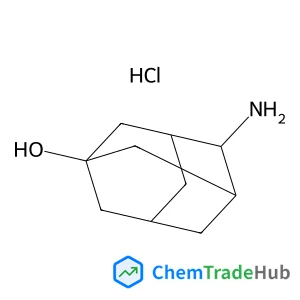
![2-Methyl-2-propanyl {3-[4-(4,4,5,5-tetramethyl-1,3,2-dioxaborolan-2-yl)phenyl]-3-oxetanyl}carbamate structure](https://cnstatic.chemtradehub.com/structs/127/1279090-25-3-1b84.webp "2-Methyl-2-propanyl {3-[4-(4,4,5,5-tetramethyl-1,3,2-dioxaborolan-2-yl)phenyl]-3-oxetanyl}carbamate structure")
推荐供应商





免责声明
本页面提供的学术期刊信息仅供参考和研究使用。我们与任何期刊出版商均无关联,也不处理投稿事宜。如有投稿相关咨询,请直接联系相关期刊出版商。
如发现页面信息有误,请发送邮件至 support@chemtradehub.com 联系我们。我们将及时核实并处理您的问题。