







Access to pyrrolines and fused diaziridines by selective radical addition to homoallylic diazirines‡
文献信息
发布日期
2023-12-29
DOI
10.1039/D3SC04886A
影响因子
9.825
作者
Zhigang Ma, Xinxin Wu, Haotian Li, Zhu Cao
查看原文
摘要
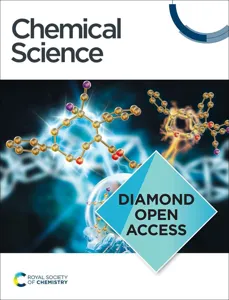
Pyrroline derivatives are common in bioactive natural products and therapeutic agents. We report here a synthesis of pyrrolines and fused diaziridines by divergent radical cyclization of homoallylic diazirines, which can serve as an internal radical trap and a nitrogen source. This reaction proceeds by selective radical addition to CC or NN bonds followed by intramolecular cyclization. Frontier molecular orbital analysis provides a deep insight into the origin of the selectivity. The reaction demonstrates a new cyclization mode, broad functional group compatibility and high product diversity, and reveals a much broader chemical space for diazirine studies.
相关文献
Role of ion hydration for the differential capacitance of an electric double layer
Guilherme V. Bossa, Vinicius M. de Oliveira, Matthew A. Brown, Sidney J. de Carvalho, Sylvio May
2016-09-21
Paper
DOI: 10.1039/C6CP04199J
Liquid silver tris(perfluoroethyl)trifluorophosphate salts as new media for propene/propane separation
Daniel Pliquett, Peter S. Schulz, Frank W. Heinemann, Angela Bause, Peter Wasserscheid
2016-09-26
Paper
DOI: 10.1039/C6CP05653A
Cation–cation and anion–anion complexes stabilized by halogen bonds
David Quiñonero, Ibon Alkorta, José Elguero
2016-09-09
Paper
DOI: 10.1039/C6CP03662G
Broadband anti-Stokes white emission of Sr2CeO4 nanocrystals induced by laser irradiation
W. Strek, R. Tomala, L. Marciniak, M. Lukaszewicz, B. Cichy, M. Stefanski, D. Hreniak, A. Kedziorski, M. Krosnicki, L. Seijo
2016-09-12
Paper
DOI: 10.1039/C6CP04904D
Structure and Li+ ion transport in a mixed carbonate/LiPF6 electrolyte near graphite electrode surfaces: a molecular dynamics study
Mathew J. Boyer, Linas Vilčiauskas, Gyeong S. Hwang
2016-09-22
Paper
DOI: 10.1039/C6CP05140E
Physical chemistry of hybrid perovskite solar cells
Aron Walsh, Nitin P. Padure, Sang Il Seok
2016-09-02
Editorial
DOI: 10.1039/C6CP90212J
Initial dissolution of D2O at the gas–liquid interface of the ionic liquid [C4min][NTf2] associated with hydrogen-bond network formation
H. Ohoyama, T. Teramoto
2016-09-26
Paper
DOI: 10.1039/C6CP03448A
Maximizing ion current rectification in a bipolar conical nanopore fluidic diode using optimum junction location
2016-09-15
Paper
DOI: 10.1039/C6CP05280K
Helium droplet infrared spectroscopy of glycine and glycine–water aggregates
Matin Kaufmann, Daniel Leicht, Raffael Schwan, Devendra Mani, Gerhard Schwaab, Martina Havenith
2016-09-21
Paper
DOI: 10.1039/C6CP05042E
您可能还喜欢
化合物问答
什么是3-表南美楝属二醇(CAS号:19942-04-2)?
3-表南美楝属二醇是一种具有特定立体化学结构的化合物,其分子式为C31H52O2,属于甾醇类化合物。它具有光学活性,是一种复杂的有机分子,主要存在于一些植物中。
19942-04-2(3S,5R,8R,9R,10R,13R...
化合物问答
3-羧基-5-碘苯甲酸甲酯(CAS号:50765-22-5)应用于哪些行业?
3-羧基-5-碘苯甲酸甲酯主要应用于医药行业,作为合成某些药物中间体的重要原料。此外,它还可能用于聚合物的改性、传感器的制备以及半导体材料的制备等领域。
50765-22-5Methyl 3-hydroxy-5-i...
化合物问答
什么是3-Bromoindolin-2-one(CAS号:22942-87-6)?
3-Bromoindolin-2-one是一种含有溴代基团的吲哚酮衍生物,分子式为C9H7BrNO。它是一种无色固体,具有一定的挥发性,熔点为158-159°C...
22942-87-63-Bromoindolin-2-one
化合物问答
如何处理含有L-Lysyl-L-phenylalanyl-L-isoleucylglycyl-L-leucyl-L-methioninamide(CAS号:2990-43-4)的废料?
对于含有该化合物的废液,应先进行中和处理,然后根据其毒性和活性选择合适的处置方法。可以考虑焚烧处理或由专业的化学品废物处理公司进行无害化处理。处理过程中需注意环...
2990-43-4L-Lysyl-L-phenylalan...
化合物问答
ANGIOTENSIN 1/2 + A (2 - 8)(CAS号:51833-76-2)的物理化学性质是什么?
ANGIOTENSIN 1/2 + A (2 - 8)是一种蛋白质类化合物,具有典型的蛋白质性质。它的分子量约为5900 Da。该化合物在水中具有一定的溶解性,...
51833-76-2ANGIOTENSIN 1/2 + A ...
化合物问答
如何储存2-甲基硫代嘧啶-5-硼酸频那酯(CAS号:940284-18-4)?
应将该化合物存放在阴凉干燥、通风良好的地方,避免阳光直射。建议将化合物密封保存在避光的、干燥的容器中,远离火源和高温环境。
940284-18-42-(Methylthio)-5-(4,...
化合物问答
什么是苏丹红IV氘代物 标准品(CAS号:1014689-18-9)?
苏丹红IV氘代物 标准品是一种含有氘代标记的苏丹红IV化合物,是一种用于化合物分析、结构确证以及代谢研究的标准物质。
1014689-18-91-[(E)-{2-Methyl-4-[...
化合物问答
(+)-2-Amino-6-propionamido-d3-tetrahydrobenzothiazole(CAS号:1217680-69-7)适用哪些法规指南?
该化合物需要遵循《全球化学品统一分类和标签制度》(GHS)中的分类和标签要求,具体分类需依据其毒性和物理化学性质。此外,还需要符合《欧盟化学品注册、评估、授权和...
1217680-69-7(+)-2-Amino-6-propio...
化合物问答
如何储存2-氨基-2-(2-吡啶)乙酸乙酯(CAS号:55243-15-7)?
2-氨基-2-(2-吡啶)乙酸乙酯应储存于阴凉、干燥、通风良好的环境中,避免高温和光照。应使用密封容器储存,并远离易燃物、氧化剂和其他危险化学品。
55243-15-7Ethyl 2-amino-2-(pyr...
化合物问答
3-羟基-4-甲氧基吡啶-2-羧酸(CAS号:210300-09-7)的主要用途是什么?
3-羟基-4-甲氧基吡啶-2-羧酸主要用于合成其他有机化合物,如药物合成、农药合成和染料合成等。此外,它还可用作中间体和试剂,在化学研究领域也有一定的应用。
210300-09-73-Hydroxy-4-methoxy-...
来源期刊
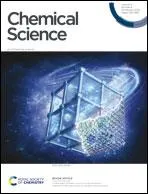
Chemical Science
CiteScore:
14.4
自引率:
3.9%
年发文量:
1413
Our journal has a wide-ranging scope which covers the full breadth of the chemical sciences. The research we publish contains the sorts of novel ideas, challenging questions and progressive thinking that bring undiscovered breakthroughs within reach. Your paper could focus on a single area, or cross many. It could be beyond the accepted bounds of the chemical sciences. It might address an immediate challenge, contribute to a future breakthrough or be wholly conceptual. We’re a team from every field of the chemical sciences, and know from experience that breakthroughs that drive the solutions to global challenges can come from anywhere, at any time. You could even start an entirely new area of research. Too bold? Too progressive? No such thing
推荐化合物
![3-[4-(difluoromethoxy)phenyl]-2-({[(9H-fluoren-9-yl)methoxy]carbonyl}amino)propanoic acid structure](https://cnstatic.chemtradehub.com/structs/149/1496564-27-2-952e.webp "3-[4-(difluoromethoxy)phenyl]-2-({[(9H-fluoren-9-yl)methoxy]carbonyl}amino)propanoic acid structure")
推荐供应商





免责声明
本页面提供的学术期刊信息仅供参考和研究使用。我们与任何期刊出版商均无关联,也不处理投稿事宜。如有投稿相关咨询,请直接联系相关期刊出版商。
如发现页面信息有误,请发送邮件至 support@chemtradehub.com 联系我们。我们将及时核实并处理您的问题。