




Recent advances in energy storage with graphene oxide for supercapacitor technology
文献信息
发布日期
2023-09-21
DOI
10.1039/D3SE00867C
影响因子
6.367
作者
Seyyed Mojtaba Mousavi, Seyyed Alireza Hashemi, Masoomeh Yari Kalashgrani, Ahmad Gholami, Mojtaba Binazadeh, Wei-Hung Chiang, Mohammed M. Rahman
查看原文
摘要
Generally, graphene oxide (GO) has emerged as a promising material for revolutionizing supercapacitor (SC) technology due to its exceptional properties and versatile characteristics. This review explores the potential of graphene oxide in enhancing the performance and energy storage capabilities of SCs. GO, a two-dimensional (2D) nanomaterial derived from graphite, exhibits remarkable electrical conductivity, high surface area, and excellent mechanical strength. These attributes make it an ideal candidate for SC electrodes, enabling efficient charge storage and rapid energy release. The functional groups present on the GO surface offer enhanced solubility and ease of processing, facilitating its integration into SC devices. Furthermore, the tunable properties of graphene oxide allow for precise control over the electrode's surface chemistry and morphology, leading to improved capacitance and charge–discharge rates. GO-based SCs demonstrate superior energy and power densities compared to conventional energy storage systems, making them ideal for applications requiring quick energy bursts or high-power output. Moreover, the compatibility of graphene oxide with various electrolyte systems and its exceptional stability contribute to the long-term reliability of SCs. Additionally, the abundant availability and cost-effectiveness of GO make it a viable alternative to expensive and resource-intensive materials currently used in SC technology. In conclusion, GO holds significant potential in advancing SC technology, offering enhanced energy storage capabilities, improved performance, and cost-effective solutions.
期刊推荐
Angewandte Chemie International Edition

Coloration Technology
Photochemical & Photobiological Sciences
Journal of Medical Biochemistry
Mini-Reviews in Medicinal Chemistry
Lab on a Chip

Molecular Diversity

Foundations of Chemistry
Journal of Enzyme inhibition and Medicinal Chemistry

Nature Reviews Drug Discovery
相关文献
Electrochemical impedance spectroscopyversuscyclic voltammetry for the electroanalytical sensing of capsaicin utilising screen printed carbon nanotube electrodes
Edward P. Randviir, Jonathan P. Metters, John Stainton, Craig E. Banks
2013-03-28
Paper
DOI: 10.1039/C3AN00368J
Selective sensing of vapors of similar dielectric constants using peptide-capped gold nanoparticles on individual multivariable transducers
Nandini Nagraj, Joseph M. Slocik, David M. Phillips, Nancy Kelley-Loughnane, Rajesh R. Naik, Radislav A. Potyrailo
2013-04-17
Paper
DOI: 10.1039/C3AN00088E
Determination of cell cycle phases in live B16 melanoma cells using IRMS
Diana E. Bedolla, Saša Kenig, Elisa Mitri, Paolo Ferraris, Alessandro Marcello, Gianluca Grenci, Lisa Vaccari
2013-04-11
Paper
DOI: 10.1039/C3AN00318C
A theophyllinequartz crystal microbalance biosensor based on recognition of RNA aptamer and amplification of signal
Zong-Mu Dong, Guang-Chao Zhao
2013-02-14
Paper
DOI: 10.1039/C3AN36775D
Cyanide SERS as a platform for detection of volatile organic compounds and hazardous transition metal ions
Kwan Kim, Ji Won Lee, Kuan Soo Shin
2013-04-03
Paper
DOI: 10.1039/C3AN00105A
An iTRAQ based quantitative proteomic strategy to explore novel secreted proteins in metastatic hepatocellular carcinoma cell lines
Yanyan Yu, Xiuwen Pan, Ying Ding, Xiaohui Liu, Hailin Tang, Chengpin Shen, Huali Shen, Pengyuan Yang
2013-04-23
Paper
DOI: 10.1039/C3AN00517H
Injection-ultrasound-assisted emulsification microextraction based on using low-density organic solvent followed by high-performance liquid chromatography for the determination of pyrethroids in water samples
Kailin Xu, Bing Liang, Yanfang Li, Yuan Cheng, Yuyan Feng
2012-12-18
Paper
DOI: 10.1039/C2AN36549A
Qualitative and quantitative evaluation of derivatization reagents for different types of protein-bound carbonyl groups
2013-07-05
Paper
DOI: 10.1039/C3AN00724C
Glucose level determination with a multi-enzymatic cascade reaction in a functionalized glass chip
Francesca Costantini, Roald Tiggelaar, Simona Sennato, Francesco Mura, Stefan Schlautmann, Federico Bordi, Han Gardeniers, Cesare Manetti
2013-06-20
Paper
DOI: 10.1039/C3AN00806A
A turn-on fluorescent probe for detection of tyrosinase activity
Changcheng Wang, Shengyong Yan, Rong Huang, Shuo Feng, Boshi Fu, Xiaocheng Weng
2013-03-21
Communication
DOI: 10.1039/C3AN00272A
您可能还喜欢
化合物问答
什么是2,6-二溴-4,8-双[(2-乙基己基)氧基]苯并[1,2-b:4,5-b']二噻吩(CAS号:1226782-13-3)?
2,6-二溴-4,8-双[(2-乙基己基)氧基]苯并[1,2-b:4,5-b']二噻吩是一种有机化合物,分子式为C23H32Br2O2S2。该化合物具有芳香性和...
1226782-13-32,6-Dibromo-4,8-bis[...
化合物问答
木聚硫钠(CAS号:37319-17-8)的物理化学性质是什么?
木聚硫钠通常为无色或白色结晶性粉末,具有吸湿性。其分子量约为121.11 g/mol。木聚硫钠易溶于水,不溶于醇类和其他非极性溶剂。在酸性或碱性溶液中,木聚硫钠...
37319-17-8Pentosan
化合物问答
2-甲氧基-4-(三氟甲基)苄溴, JRD(CAS号:886500-59-0)适用哪些法规指南?
该化合物在合成、储存和运输过程中需遵循《全球化学品统一分类和标签制度》(GHS)的健康、环境和物理危险分类。在欧洲还需符合《化学品注册、评估、授权和限制》(RE...
886500-59-02-Methoxy-4-(trifluo...
化合物问答
1,4-Diazoniabicyclo[2.2.2]octane-1,4-disulfinate(CAS号:119752-83-9)的主要用途是什么?
1,4-二氮杂双环[2.2.2]辛烷-1,4-二硫酸二酯主要用于有机合成中的保护基团,特别是在保护胺基和硫醇基方面具有广泛应用。此外,它还用于一些特殊化学反应的...
119752-83-91,4-Diazabicyclo[2.2...
化合物问答
如何处理含有4-(Bromomethyl)-2-fluorobenzenesulphonamide(CAS号:1645275-47-3)的废料?
含有4-(Bromomethyl)-2-fluorobenzenesulphonamide的废液应首先进行中和处理,以降低pH值,避免对环境造成腐蚀性影响。随后...
1645275-47-34-(Bromomethyl)-2-fl...
化合物问答
Loureiriol(CAS号:479195-44-3)的物理化学性质是什么?
Loureiriol是一种天然化合物,其分子式为C15H22O4。Loureiriol为无色结晶性粉末,具有较高的熔点和良好的热稳定性。其相对分子质量为262....
479195-44-3Loureiriol
化合物问答
在合成中是否有3-氨基苯甲酰苯胺(CAS号:14315-16-3)的替代品?
在合成过程中,可以考虑使用类似结构的化合物作为3-氨基苯甲酰苯胺的替代品,例如N-苯基-3-氰基苯胺或N-苯基-3-硝基苯胺等,这些化合物具有相似的化学性质,可...
14315-16-33-Amino-N-phenylbenz...
化合物问答
4-异氰酰苯基硼酸频哪醇酯(CAS号:380430-64-8)的市场或研究趋势如何?
4-异氰酰苯基硼酸频哪醇酯主要应用于有机合成、药物化学和材料科学领域。随着绿色化学的发展,该化合物因其高效的官能团转化能力和环境友好性而受到越来越多的关注。近年...
380430-64-82-(4-Isocyanatopheny...
化合物问答
如何储存3β-乙酰氧基-7,25-甘遂二烯-24(R)-醇(CAS号:1352001-09-2)?
3β-乙酰氧基-7,25-甘遂二烯-24(R)-醇应储存在阴凉、干燥、通风良好的地方,避免直接光照。储存容器应密封,防止空气中的水分和氧气影响化合物的稳定性。建...
1352001-09-23β-acetoxy-eupha- 7,...
化合物问答
如何储存4-氟-2-甲基-1H-吲哚(CAS号:1260383-51-4)?
应将4-氟-2-甲基-1H-吲哚存放在阴凉、干燥、通风良好的地方,避免直接暴露在光照下。容器应密封,避免与空气中的水蒸气接触。建议在避光、温度不超过25℃的环境...
1260383-51-44-Fluoro-2-methyl-1H...
来源期刊
推荐化合物
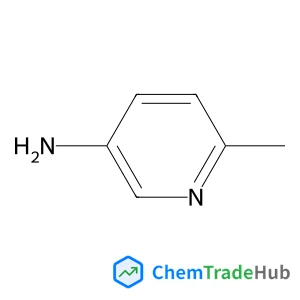
![3-[(4-Nitrobenzyl)oxy]-3-oxopropanoic Acid structure](https://cnstatic.chemtradehub.com/structs/773/77359-11-6-0d04.webp "3-[(4-Nitrobenzyl)oxy]-3-oxopropanoic Acid structure")
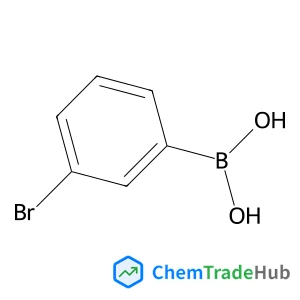
推荐供应商




免责声明
本页面提供的学术期刊信息仅供参考和研究使用。我们与任何期刊出版商均无关联,也不处理投稿事宜。如有投稿相关咨询,请直接联系相关期刊出版商。
如发现页面信息有误,请发送邮件至 support@chemtradehub.com 联系我们。我们将及时核实并处理您的问题。