



Dendrite-free deposition and side-reaction suppression of zinc anodes achieved via constructing synergistic interface buffer layers
文献信息
发布日期
2023-12-09
DOI
10.1039/D3SE01334K
影响因子
6.367
作者
Ting Li, Zhongfu Yan, Mengjiao Liu, Xinyu Liu, Liang Liu, Jiahao Chen, Jianping Long
查看原文
摘要
Aqueous zinc metal batteries (ZMBs) are expected to be used in grid-scale storage systems due to their superior intrinsic safety and the low manufacturing cost of zinc anodes. However, uncontrolled dendrite deposition and side-reaction pose challenges to the durable operation of ZMBs on a large scale. Herein, we construct a bifunctional buffer layer for zinc anodes (δ-MnO2@Zn), aiming to achieve dendrite-free deposition and side-reaction suppression of zinc anodes that are suitable for large-scale use. Density functional theory calculations and electric field simulations revealed that the δ-MnO2 coating facilitates the desolvation of Zn2+ and promotes uniform diffusion and deposition of Zn2+ on the Zn anode surface. In addition, the porous δ-MnO2 coating acts as a physical buffer layer, and can reduce rampant dendrite deposition by regulating the Zn2+ concentration field and reducing the local current density. Furthermore, the zincophilic δ-MnO2 coating acts as a chemical buffer layer, reducing the amount of bound water in the Zn2+ solvent shell and inhibiting unfavorable side-reaction of the Zn anode. As expected, the δ-MnO2@Zn symmetric cell demonstrates a lifespan of more than 1000 h at a rate of 0.5 mA cm−2 with 0.25 mA h cm−2. Moreover, the full battery assembled with a carbon-based cathode demonstrated outstanding cycling behavior of over 11 500 cycles at 2 A g−1. The conclusions demonstrate the principle of a synergistic interfacial buffer layer on the Zn anode surface, guiding the development of advanced artificial interface layers.
期刊推荐

Saudi Pharmaceutical Journal

Russian Journal of Bioorganic Chemistry

Chemistry Education Research and Practice

Journal of Saudi Chemical Society

Russian Journal of Applied Chemistry
Drug Discovery Today

New Journal of Chemistry

Organic Process Research & Development

Chemical Communications
Russian Journal of Coordination Chemistry
相关文献
Chemistry of materials under extreme high pressure-high-temperature conditions
2003-03-27
Focus
DOI: 10.1039/B300963G
Influence of substrate on self-assembled photonic crystal
Sachiko I. Matsushita
2004-02-09
Communication
DOI: 10.1039/B313410E
Chiral self-dimerization of vanadium complexes on a SiO2 surface: the first heterogeneous catalyst for asymmetric 2-naphthol coupling
Mizuki Tada, Toshiaki Taniike, Lakshmi M. Kantam, Yasuhiro Iwasawa
2004-10-04
Communication
DOI: 10.1039/B410307F
Efficient immobilisation of Rh-MonoPhos on the aluminosilicate AlTUD-1
Ulf Hanefeld, Isabel W. C. E. Arends, Adriaan J. Minnaard, Thomas Maschmeyer, Roger A. Sheldon
2004-10-26
Communication
DOI: 10.1039/B411506F
Ring-opening reactions of methylenecyclopropanes with diphenyl diselenide upon heating; formation of 3-phenylselenyl-2,5-dihydrofuran derivatives
Le-Ping Liu, Min Shi
2004-10-25
Communication
DOI: 10.1039/B412823K
Ni(iii) vs. Ni(ii)-thiyl radical: charge-delocalisation in a binuclear Ni(iii)Ni(ii)-dithiolate complex
Neil D. J. Branscombe, Andrew J. Atkins, Armando Marin-Becerra, Eric J. L. McInnes, Frank E. Mabbs, Jonathan McMaster, Martin Schröder
2003-04-02
Communication
DOI: 10.1039/B300245D
A highly efficient catalytic system for cross-coupling of aryl chlorides and bromides with malononitrile anion by palladium carbene complexes
Chengwei Gao, Xiaochun Tao, Yanlong Qian, Jiling Huang
2003-05-20
Communication
DOI: 10.1039/B302890A
Phase-transfer alkylation reactions using microreactors
Masaharu Ueno, Hideaki Hisamoto, Takehiko Kitamori, Shū Kobayashi
2003-03-27
Communication
DOI: 10.1039/B301638B
Direct intramolecular arylation of unactivated arenes: application to the synthesis of aporphine alkaloids
Marc Lafrance, Nicole Blaquière, Keith Fagnou
2004-10-25
Communication
DOI: 10.1039/B410394G
您可能还喜欢
化合物问答
如何处理含有8-氯咪唑并[1,2-A]吡嗪(CAS号:69214-33-1)的废料?
处理含有8-氯咪唑并[1,2-A]吡嗪的废料时,应首先将其收集并进行化学回收或降解。如果无法回收,需采用安全的化学处理方法,如中和、氧化还原或沉淀。处理过程中需...
69214-33-18-chloroimidazo[1,2-...
化合物问答
Calhex 231 hydrochloride(CAS号:2387505-78-2)适用哪些法规指南?
Calhex 231 hydrochloride 需要遵循《全球化学品统一分类和标签制度》(GHS)的分类和标签要求,以及欧盟的《化学品注册、评估、授权和限制条...
2387505-78-24-Chloro-N-[(1S,2S)-...
化合物问答
11-Beta,17-alpha,21-三羟基-5-beta-孕烯-3,20-二酮(CAS号:1482-50-4)的物理化学性质是什么?
11-Beta,17-alpha,21-三羟基-5-beta-孕烯-3,20-二酮是一种无色结晶性粉末,分子量为372.45 g/mol。该化合物在水中的溶解度...
1482-50-45β-Dihydrocortisol
化合物问答
处理5-异丙基-1,3,4-恶二唑-2-羧酸(CAS号:944907-13-5)时应注意哪些实验室安全事项?
处理5-异丙基-1,3,4-恶二唑-2-羧酸时应注意以下安全事项:穿戴适当的个人防护装备,包括实验室外套、手套和护目镜;操作应在通风橱中进行,以减少吸入或接触有...
944907-13-55-Isopropyl-1,3,4-ox...
化合物问答
benzyl 3-bromopropanoate(CAS号:90841-55-7)安全吗?
Benzyl 3-bromopropanoate属于有毒物质,吸入、摄入或皮肤接触均可能对人体造成伤害。操作时应佩戴防护眼镜、口罩和手套,避免吸入蒸汽和直接接触...
90841-55-7Benzyl 3-bromopropan...
化合物问答
什么是(R)-N-苄氧羰基-3,4-二氢-1H-异喹啉羧酸(CAS号:151004-88-5)?
(R)-N-苄氧羰基-3,4-二氢-1H-异喹啉羧酸是一种含有苄氧羰基和异喹啉环结构的化合物,分子式为C17H15NO3。它是一种有机化合物,具有一定的生物活性...
151004-88-5(1R)-2-[(Benzyloxy)c...
化合物问答
在合成中是否有1-苄基吡啶嗡-3-羧酸盐(CAS号:15990-43-9)的替代品?
可以考虑使用1-苄基吡啶-3-羧酸盐作为1-苄基吡啶嗡-3-羧酸盐的替代品。此外,还可以探索其他类似物,如1-苄基吡啶-3-氨基甲酸酯等。具体的替代品选择需根据...
15990-43-91-Benzyl-3-pyridiniu...
化合物问答
(2,6-二甲基吡啶-3-基)甲醇(CAS号:582303-10-4)安全吗?
(2,6-二甲基吡啶-3-基)甲醇在使用时需注意安全,应避免吸入其蒸汽,接触皮肤和眼睛。操作应在通风良好的环境中进行,佩戴适当的个人防护装备。
582303-10-4(2,6-Dimethyl-3-pyri...
化合物问答
5-溴-2-乙烯基吡啶(CAS号:226883-52-9)的物理化学性质是什么?
5-溴-2-乙烯基吡啶是一种有机化合物,外观为白色固体,具有良好的结晶性。分子量约为190.03 g/mol。它的溶解性在水中较差,但在有机溶剂如二氯甲烷、甲醇...
226883-52-95-Bromo-2-vinylpyrid...
化合物问答
2-羟基-3-硝基-5-甲基吡啶(CAS号:7464-14-4)应用于哪些行业?
2-羟基-3-硝基-5-甲基吡啶主要应用于医药、聚合物和半导体行业。在医药领域,它可以用作合成其他药物的中间体。在聚合物领域,它可以作为功能性单体参与聚合反应,...
7464-14-45-Methyl-3-nitro-2(1...
来源期刊
推荐化合物
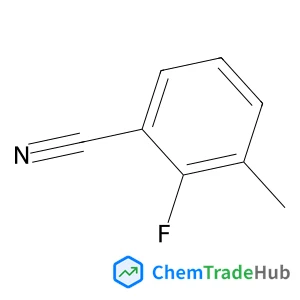
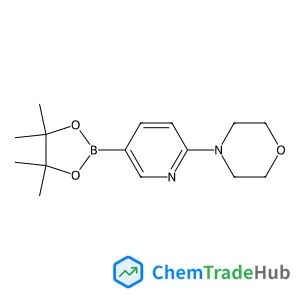
4-(5-(4,4,5,5-tetramethyl-1,3,2-dioxaborolan-2-yl)pyridin-2-yl)morpholine
CAS号:
485799-04-0
分子式:
C15H23BN2O3
推荐供应商






免责声明
本页面提供的学术期刊信息仅供参考和研究使用。我们与任何期刊出版商均无关联,也不处理投稿事宜。如有投稿相关咨询,请直接联系相关期刊出版商。
如发现页面信息有误,请发送邮件至 support@chemtradehub.com 联系我们。我们将及时核实并处理您的问题。