



From brew to clean fuel: harnessing distillery wastewater for electrolysis H2 generation using nano scale nickle selenide water oxidation catalysts
文献信息
发布日期
2023-11-24
DOI
10.1039/D3SE01445B
影响因子
6.367
作者
Michael Walsh, Jeannie Z. Y. Tan, Sanjay Nagarajan, Kenneth Macgregor, John M. Andresen, M. Mercedes Maroto-Valer, Sudhagar Pitchaimuthu
查看原文
摘要
This study reports a promising and innovative approach for electrochemical green H2 generation using distillery industry wastewater. We employed solvothermally derived Ni2Se3 nanoparticles with a particle size of ∼50 nm as the anode catalyst material to effectively oxidise the acetic acid present in the distillery wastewater. The utilisation of a Ni2Se3 nanoparticle-coated stainless steel electrode significantly enhanced the current density (282 mA cm−2) in the electrochemical cell compared to the pristine SS (stainless steel) electrode (146 mA cm−2) at 2 V RHE. Also, the distillery wastewater electrolyte based cell exhibits higher current density compared to conventional freshwater (i.e., NaOH-based) electrolyte. The distillery wastewater electrolyte demonstrated remarkable H2 gas evolution (∼15 mL h−1 cm−2), showcasing its potential for sustainable H2 generation. However, it was observed that the aggressive bubbling effect at the cathode led to a lower H2 evolution reaction activity when compared to the freshwater-based electrolyte, which displayed a H2 production rate of ∼22 mL h−1 cm−2. These findings underscore the potential of employing Ni2Se3 as an effective oxidation catalyst in the production of H2 gas from pre-treated brewery wastewater H2 gas. The utilisation of Ni2Se3 nanoscale water oxidation catalysts in this context opens up new possibilities for both wastewater treatment and H2 production, paving the way for a more sustainable and resource-efficient future.
期刊推荐

Chemistry Education Research and Practice
Nature Medicine
Russian Journal of Applied Chemistry
Drug Discovery Today
Russian Journal of Coordination Chemistry
Russian Journal of General Chemistry
Journal of Saudi Chemical Society
Russian Journal of Bioorganic Chemistry
Crystallography Reports
Saudi Pharmaceutical Journal
相关文献
Trimethyltriazacyclohexane as bridging ligand for triangular Cu3 units and C–H hydride abstraction into a Cu6 cluster
Randolf D. Köhn, Zhida Pan, Mary F. Mahon, Gabriele Kociok-Köhn
2003-05-02
Communication
DOI: 10.1039/B302670A
Zeolite coated ATR crystals for new applications in FTIR-ATRspectroscopy
Zheng Wang, Margareta L. Larsson, Mattias Grahn, Allan Holmgren, Jonas Hedlund
2004-10-25
Communication
DOI: 10.1039/B410314A
Selective growth of a less stable polymorph of 2-iodo-4-nitroaniline on a self-assembled monolayer template
Rupa Hiremath, Stephen W. Varney, Jennifer A. Swift
2004-10-15
Communication
DOI: 10.1039/B411649F
Highly efficient bromination of aromatic compounds using 3-methylimidazolium tribromide as reagent/solvent
Cinzia Chiappe, Elsa Leandri, Daniela Pieraccini
2004-09-30
Communication
DOI: 10.1039/B410796A
Electrical property and water repellency of a networked monolayer film prepared from Au nanoparticles
Hiroshi Shiigi, Yojiro Yamamoto, Hidetaka Yakabe, Shiho Tokonami, Tsutomu Nagaoka
2003-04-02
Communication
DOI: 10.1039/B212226J
Highly enantioselective hydrolysis of alicyclic meso-epoxides with a bacterial epoxide hydrolase from Sphingomonas sp. HXN-200: simple syntheses of alicyclic vicinal trans-diols
Dongliang Chang, Zunsheng Wang, Maarten F. Heringa, Renato Wirthner, Bernard Witholt, Zhi Li
2003-03-18
Communication
DOI: 10.1039/B300435J
CoII5(OH)6(SO4)2(H2O)4: the first ferromagnet based on a layered cobalt–hydroxide pillared by inorganic ⋯OSO3–Co(H2O)4–O3SO⋯
Serge Vilminot, Mireille Richard-Plouet, Gilles André, Tahar Mhiri, Mohamedally Kurmoo
2004-10-06
Communication
DOI: 10.1039/B411304G
Gold and silver nanoparticles functionalized with known numbers of oligonucleotides per particle for DNA detection
Yang Chen, Jenny Aveyard, Robert Wilson
2004-11-18
Communication
DOI: 10.1039/B411181H
Crystallography and magnetism of radicals with hindered hydroxyl groups: 2-(3,5-di-tert-butyl-4-hydroxyphenyl)-4,4,5,5-tetramethyl-4,5-dihydro-1H-imidazole-3-oxide-1-oxyl and 2-(3,5-di-tert-butyl-4-hydroxyphenyl)-4,4,5,5-tetramethyl-4,5-dihydro-1H-imidazole-1-oxyl
Patrick Taylor, Paul M. Lahti
2004-10-27
Communication
DOI: 10.1039/B411574K
您可能还喜欢
化合物问答
如何处理含有8-氯咪唑并[1,2-A]吡嗪(CAS号:69214-33-1)的废料?
处理含有8-氯咪唑并[1,2-A]吡嗪的废料时,应首先将其收集并进行化学回收或降解。如果无法回收,需采用安全的化学处理方法,如中和、氧化还原或沉淀。处理过程中需...
69214-33-18-chloroimidazo[1,2-...
化合物问答
Calhex 231 hydrochloride(CAS号:2387505-78-2)适用哪些法规指南?
Calhex 231 hydrochloride 需要遵循《全球化学品统一分类和标签制度》(GHS)的分类和标签要求,以及欧盟的《化学品注册、评估、授权和限制条...
2387505-78-24-Chloro-N-[(1S,2S)-...
化合物问答
11-Beta,17-alpha,21-三羟基-5-beta-孕烯-3,20-二酮(CAS号:1482-50-4)的物理化学性质是什么?
11-Beta,17-alpha,21-三羟基-5-beta-孕烯-3,20-二酮是一种无色结晶性粉末,分子量为372.45 g/mol。该化合物在水中的溶解度...
1482-50-45β-Dihydrocortisol
化合物问答
处理5-异丙基-1,3,4-恶二唑-2-羧酸(CAS号:944907-13-5)时应注意哪些实验室安全事项?
处理5-异丙基-1,3,4-恶二唑-2-羧酸时应注意以下安全事项:穿戴适当的个人防护装备,包括实验室外套、手套和护目镜;操作应在通风橱中进行,以减少吸入或接触有...
944907-13-55-Isopropyl-1,3,4-ox...
化合物问答
benzyl 3-bromopropanoate(CAS号:90841-55-7)安全吗?
Benzyl 3-bromopropanoate属于有毒物质,吸入、摄入或皮肤接触均可能对人体造成伤害。操作时应佩戴防护眼镜、口罩和手套,避免吸入蒸汽和直接接触...
90841-55-7Benzyl 3-bromopropan...
化合物问答
什么是(R)-N-苄氧羰基-3,4-二氢-1H-异喹啉羧酸(CAS号:151004-88-5)?
(R)-N-苄氧羰基-3,4-二氢-1H-异喹啉羧酸是一种含有苄氧羰基和异喹啉环结构的化合物,分子式为C17H15NO3。它是一种有机化合物,具有一定的生物活性...
151004-88-5(1R)-2-[(Benzyloxy)c...
化合物问答
在合成中是否有1-苄基吡啶嗡-3-羧酸盐(CAS号:15990-43-9)的替代品?
可以考虑使用1-苄基吡啶-3-羧酸盐作为1-苄基吡啶嗡-3-羧酸盐的替代品。此外,还可以探索其他类似物,如1-苄基吡啶-3-氨基甲酸酯等。具体的替代品选择需根据...
15990-43-91-Benzyl-3-pyridiniu...
化合物问答
(2,6-二甲基吡啶-3-基)甲醇(CAS号:582303-10-4)安全吗?
(2,6-二甲基吡啶-3-基)甲醇在使用时需注意安全,应避免吸入其蒸汽,接触皮肤和眼睛。操作应在通风良好的环境中进行,佩戴适当的个人防护装备。
582303-10-4(2,6-Dimethyl-3-pyri...
化合物问答
5-溴-2-乙烯基吡啶(CAS号:226883-52-9)的物理化学性质是什么?
5-溴-2-乙烯基吡啶是一种有机化合物,外观为白色固体,具有良好的结晶性。分子量约为190.03 g/mol。它的溶解性在水中较差,但在有机溶剂如二氯甲烷、甲醇...
226883-52-95-Bromo-2-vinylpyrid...
化合物问答
2-羟基-3-硝基-5-甲基吡啶(CAS号:7464-14-4)应用于哪些行业?
2-羟基-3-硝基-5-甲基吡啶主要应用于医药、聚合物和半导体行业。在医药领域,它可以用作合成其他药物的中间体。在聚合物领域,它可以作为功能性单体参与聚合反应,...
7464-14-45-Methyl-3-nitro-2(1...
来源期刊
推荐化合物
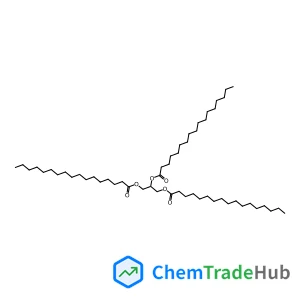
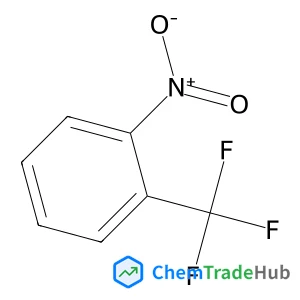
![N-[(9H-Fluoren-9-ylmethoxy)carbonyl]-beta-phenyl-L-phenylalanine structure](https://cnstatic.chemtradehub.com/structs/201/201484-50-6-c2fc.webp "N-[(9H-Fluoren-9-ylmethoxy)carbonyl]-beta-phenyl-L-phenylalanine structure")
推荐供应商






免责声明
本页面提供的学术期刊信息仅供参考和研究使用。我们与任何期刊出版商均无关联,也不处理投稿事宜。如有投稿相关咨询,请直接联系相关期刊出版商。
如发现页面信息有误,请发送邮件至 support@chemtradehub.com 联系我们。我们将及时核实并处理您的问题。