



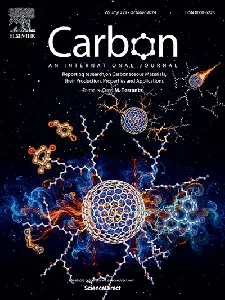


AI-guided electro-decomposition of persistent organic pollutants: a long-awaited vision becoming reality?
文献信息
发布日期
2023-08-12
DOI
10.1039/D3VA00175J
影响因子
0
作者
Lin Zhu, Lei Du, Guodong Cao
查看原文
摘要
Existing and emerging persistent organic pollutants (POPs) constitute great threats to human health and cause great economic loss. The persistence of these chemicals made it necessary to develop proper mitigation strategies to remove or degrade them from the natural environment. Various methods for electrocatalytic degradation of POPs have been developed under lab conditions, while challenges including harmful byproducts, limited working time, etc. still limit their practical use. As the core of electrocatalytic degradation is the optimization of electrocatalysts, we outlined why high-entropy alloys could be ideal materials as catalysts in this perspective work, and further discussed how AI could be utilized in facilitating and accelerating the design–characterize–test cycle for electrocatalyst development. The potential challenges, negative effects and solutions of applying AI in this process were also discussed. By leveraging AI's power, it is expected that the vast potential of new catalyst materials including high-entropy alloys could be fully explored in a timely manner, which would contribute to developing a practical electro-degradation strategy for POP mitigation. A broad perspective of AI in designing high-entropy alloy catalysts was also included.
相关文献
Creation of mesopores in carbon nanotubes with improved capacities for lithium ion batteries
Jiang Gong, Ryszard J. Kalenczuk, Ewa Mijiowska, Wenbin Liu, Tao Tang
2014-10-15
Paper
DOI: 10.1039/C4CP04386C
Insights into the reversible oxygen reduction reaction in a series of phosphonium-based ionic liquids
Cristina Pozo-Gonzalo, Patrick C. Howlett, Jennifer L. Hodgson, Louis A. Madsen, Douglas R. MacFarlane, Maria Forsyth
2014-10-15
Paper
DOI: 10.1039/C4CP04101A
Three-dimensional attosecond resonant stimulated X-ray Raman spectroscopy of electronic excitations in core-ionized glycine
Yu Zhang, Jason D. Biggs, Weijie Hua, Konstantin E. Dorfman, Shaul Mukamel
2014-09-19
Paper
DOI: 10.1039/C4CP03361B
Probing the microenvironment of unimicelles constituted of amphiphilic hyperbranched polyethyleneimine using 1-methyl-8-oxyquinolinium betaine
Agustín S. Picco, Gustavo F. Silbestri, R. Darío Falcone, Omar Azzaroni, Marcelo Ceolín, N. Mariano Correa
2014-05-19
Paper
DOI: 10.1039/C4CP01333F
Electron driven reactions in sulphur containing analogues of uracil: the case of 2-thiouracil
J. Kopyra, H. Abdoul-Carime, F. Kossoski, M. T. do N. Varella
2014-10-14
Paper
DOI: 10.1039/C4CP03544E
Electrolyte layering at the calcite(104)–water interface indicated by Rb+- and Se(vi) K-edge resonant interface diffraction
F. Heberling, P. Eng, M. A. Denecke, J. Lützenkirchen, H. Geckeis
2014-05-06
Paper
DOI: 10.1039/C4CP00672K
Unexpected effects of the alteration of structure and stability of myoglobin and hemoglobin in ammonium-based ionic liquids
Indrani Jha, Pankaj Attri, Pannuru Venkatesu
2013-12-17
Paper
DOI: 10.1039/C3CP54398F
Red-shifting the optical response of firefly oxyluciferin with group 15/16 substitutions
2014-10-15
Paper
DOI: 10.1039/C4CP04347B
Spin mixing at level anti-crossings in the rotating frame makes high-field SABRE feasible
Hans-Martin Vieth
2014-10-03
Communication
DOI: 10.1039/C4CP03765K
您可能还喜欢
化合物问答
4-[4-三氟甲基苯基]恶唑(CAS号:1126636-40-5)通常如何合成?
4-[4-三氟甲基苯基]恶唑通常通过将4-三氟甲基苯酚与异硫氰酸苯酯在有机溶剂中进行酯化反应合成。该反应可在无水条件下,使用适当的催化剂,如四丁基氢氧化铵,以提...
1126636-40-54-(4-(Trifluoromethy...
59729-32-71-[3-(Dimethylamino)...
化合物问答
RockPhos Pd G3(CAS号:2009020-38-4)通常如何合成?
RockPhos Pd G3 通常通过钯催化偶联反应合成,使用配体 (2'-Amino-2-biphenylyl)(methanesulfonato-kappa...
2009020-38-4(2'-Amino-2-biphenyl...
化合物问答
1-哌啶甲酰胺(CAS号:2158-03-4)的市场或研究趋势如何?
1-哌啶甲酰胺作为有机合成中的重要中间体,其市场需求主要受医药、农药、染料等行业推动。近年来,随着新药开发和绿色化学的发展,该化合物的研究趋势集中在开发更高效、...
2158-03-41-Piperidinecarboxam...
化合物问答
2-(二苯基膦基)乙胺(CAS号:4848-43-5)适用哪些法规指南?
2-(二苯基膦基)乙胺适用于多种法规指南,包括但不限于《全球化学品统一分类和标签制度》(GHS),欧盟《化学品注册、评估、授权和限制》法规(REACH),以及美...
4848-43-52-(Diphenylphosphino...
化合物问答
如何储存间苯二甲酸二烯丙酯(CAS号:1087-21-4)?
间苯二甲酸二烯丙酯应储存在阴凉、干燥、通风良好的地方,远离火源和热源。储存容器应密封,避免光照和高温。储存温度应控制在25℃以下,相对湿度应低于80%。避免与其...
1087-21-4Diallyl isophthalate
化合物问答
什么是间甲苯异硫代异氰酸酯(CAS号:621-30-7)?
间甲苯异硫代异氰酸酯是一种有机化合物,分子式为C7H7NO2S,具有刺激性气味。它是一种重要的有机合成中间体,在合成其他化合物时广泛应用。
621-30-71-Isothiocyanato-3-m...
化合物问答
在合成中是否有N-Boc-D-苯丙氨醇(CAS号:106454-69-7)的替代品?
在合成中,可以考虑使用N-Cbz-D-苯丙氨醇或N-Fmoc-D-苯丙氨醇作为替代品。这些化合物同样具有保护氨基的功能,且在合成过程中表现出良好的反应性能。
106454-69-72-Methyl-2-propanyl ...
化合物问答
3-羟甲基-2-氧异丙基吡啶(CAS号:954240-50-7)的主要用途是什么?
3-羟甲基-2-氧异丙基吡啶主要用于有机合成领域,可以作为合成其他药物、农药或精细化学品的中间体。此外,它还可能在实验室研究中作为特定反应的前体或溶剂。
954240-50-7(2-Isopropoxy-3-pyri...
化合物问答
6-氨基-9-甲基嘌呤(CAS号:700-00-5)应用于哪些行业?
6-氨基-9-甲基嘌呤目前主要应用于医药行业,作为某些药物的中间体。此外,它还可能用于聚合物、传感器和半导体的某些领域,作为功能性单体或掺杂剂。
700-00-59-Methyl-9H-purin-6-...
来源期刊
推荐化合物
![[2',6'-bis(propan-2-yloxy)-[1,1'-biphenyl]-3-yl]dicyclohexylphosphane structure](https://cnstatic.chemtradehub.com/structs/787/787618-22-8-dda2.webp "[2',6'-bis(propan-2-yloxy)-[1,1'-biphenyl]-3-yl]dicyclohexylphosphane structure")
[2',6'-bis(propan-2-yloxy)-[1,1'-biphenyl]-3-yl]dicyclohexylphosphane
CAS号:
787618-22-8
分子式:
C30H43O2P
![1-(Hexopyranosyloxy)-4a,5-dihydroxy-7-methyl-1,4a,5,6,7,7a-hexahydrocyclopenta[c]pyran-7-yl 3-phenylacrylate structure](https://cnstatic.chemtradehub.com/structs/192/19210-12-9-ecae.webp "1-(Hexopyranosyloxy)-4a,5-dihydroxy-7-methyl-1,4a,5,6,7,7a-hexahydrocyclopenta[c]pyran-7-yl 3-phenylacrylate structure")
推荐供应商






免责声明
本页面提供的学术期刊信息仅供参考和研究使用。我们与任何期刊出版商均无关联,也不处理投稿事宜。如有投稿相关咨询,请直接联系相关期刊出版商。
如发现页面信息有误,请发送邮件至 support@chemtradehub.com 联系我们。我们将及时核实并处理您的问题。