


![2-Bromodibenzo[b,d]furan structure](https://cnstatic.chemtradehub.com/structs/86-/86-76-0-1814.webp "2-Bromodibenzo[b,d]furan structure")
Arabian Journal of Geosciences
基本信息
期刊简写:
ARAB J GEOSCI
影响因子:
1.827
ISSN:
1866-7511
研究领域:
GEOSCIENCE
h-index:
33
自引率:
11.9%
年发文量:
1281
SCI收录来源:
Science Citation Index Expanded
期刊官网:
https://www.springer.com/12517
期刊介绍:
The Arabian Journal of Geosciences (AJGS) is the official journal of the Saudi Society for Geosciences and publishes peer-reviewed original and review articles on the entire range of Earth Science themes, focused on, but not limited to, those that have regional significance to the Middle East and the Euro-Mediterranean Zone. The AJGS invites submissions across 15 research tracks: Track 1. Atmospheric Sciences, Meteorology, Climatology, Oceanography Track 2. Biogeochemistry, Geobiology, Geoecology, Geoagronomy Track 3. Earthquake Seismology and Geodesy Track 4. Environmental Earth Sciences Track 5. Applied & Theoretical Geophysics Track 6. Geo-Informatics and Remote Sensing Track 7. Geochemistry, Mineralogy, Petrology, Volcanology Track 8. Geological Engineering, Geotechnical Engineering Track 9. Geomorphology, Geography, Soil Science, Glaciology, Geoarchaeology, Geoheritage Track 10. Hydrology, Hydrogeology, Hydrochemistry Track 11. Marine Geosciences, Historical Geology, Paleoceanography, Paleoclimatology Track 12. Numerical and Analytical Methods in Mining Sciences and Geomechanics Track 13. Petroleum and Energy Engineering, Petroleum Geochemistry Track 14. Sedimentology, Stratigraphy, Paleontology, Geochronology Track 15. Structural Geology, Tectonics and Geodynamics, Petroleum Geology The AJGS publishes 24 issues throughout the year following the Continuous Article Publishing (CAP). This ensures that articles are made available online as soon as they are ready to avoid unnecessary delays in getting content publicly available. All manuscripts are subject to a single-blind peer review process during at least 2 rounds coordinated by a Chief Editor responsible for the respective submission track. The AJGS is committed to upholding the integrity of the scientific record. As a member of the Committee on Publication Ethics (COPE) the journal will follow the COPE guidelines on how to deal with potential acts of misconduct. Authors should refrain from misrepresenting research results which could damage the trust in the journal and ultimately the entire scientific endeavor. Maintaining integrity of the research and its presentation can be achieved by following the rules of good scientific practice as detailed at https://www.springer.com/us/editorial-policies.
CiteScore
CiteScore
2.3
SJR
0.406
SNIP
0.871
| 学科 | 排名 | 百分位 |
|---|---|---|
Earth and Planetary SciencesGeneral Earth and Planetary Sciences |
88 / 191 | 54% |
期刊统计
Quarterly
期/年
Submission to first decision (median): 22 days
审稿周期
£2090/$2990/€2390
论文处理费
投稿信息
投稿网址:
https://www.editorialmanager.com/ajgs/期刊推荐

Journal of Chemical Sciences

Main Group Chemistry
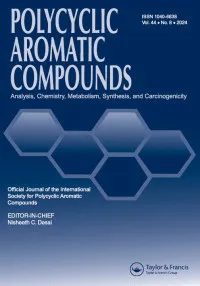
Polycyclic Aromatic Compounds

Electroanalysis

Critical Reviews in Solid State and Materials Sciences

Journal of the Indian Institute of Science

Medicinal Chemistry Research

Heteroatom Chemistry

Acta Metallurgica Sinica-English Letters

Biocatalysis and Biotransformation
相关文献
Selectivity control in enantioselective four-component reactions of aryl diazoacetates with alcohols, aldehydes and amines: an efficient approach to synthesizing chiral β-amino-α-hydroxyesters
Xinfang Xu, Jing Zhou, Liping Yang, Wenhao Hu
2008-11-11
Communication
DOI: 10.1039/B816104F
Morphological changes in the self-assembly of a radial oligo-phenylene ethynylene amphiphilic system
Gustavo Fernández, Fátima García, Luis Sánchez
2008-11-12
Communication
DOI: 10.1039/B818378C
One-phase synthesis of small gold nanoparticles coated by a horizontal porphyrin monolayer
Junya Ohyama, Yasuhiro Higuchi, Masashi Shinagawa, Hidefumi Mukai, Masahito Kodera, Kentaro Teramura, Tetsuya Shishido, Tsunehiro Tanaka
2008-10-28
Communication
DOI: 10.1039/B815100H
Organic electrosynthesis using toluates as simple and versatile radical precursors
Kevin Lam, István E. Markó
2008-11-17
Communication
DOI: 10.1039/B813545B
Direct coupling of alcohols with alkenylsilanes catalyzed by indium trichloride or bismuth tribromide
Yoshihiro Nishimoto, Masayuki Kajioka, Takahiro Saito, Makoto Yasuda, Akio Baba
2008-11-04
Communication
DOI: 10.1039/B816072D
Disulfide-cross-linked PEG-poly(amino acid)s copolymer micelles for glutathione-mediated intracellular drug delivery
Ahn Na Koo, Hong Jae Lee, Sung Eun Kim, Jeong Ho Chang, Chiyoung Park, Chulhee Kim, Jae Hyung Park, Sang Cheon Lee
2008-11-12
Communication
DOI: 10.1039/B815918A
Tandem conjugate addition–elimination reaction promoted by chiral pyrrolidinyl sulfonamide (CPS)‡
2008-09-24
Communication
DOI: 10.1039/B810905M
Tin triflate-mediated total synthesis of circumdatin F, sclerotigenin, asperlicin C, and other quinazolino[3,2-a][1,4]benzodiazepines
Ming-Chung Tseng, Chi-Yu Lai, Yu-Wan Chu, Yen-Ho Chu
2008-11-19
Communication
DOI: 10.1039/B813880J
Shuffling lithiated mixed aggregates: NMR and Car–Parrinello molecular dynamics reveal an unexpected associative pathway
Franck Paté, Hélène Gérard, Hassan Oulyadi, Aurélien de la Lande, Anne Harrison-Marchand, Olivier Parisel, Jacques Maddaluno
2008-11-21
Communication
DOI: 10.1039/B814961E
A template-free nano-wrapping technique for the fabrication of copper hollow nanospheres smaller than 20 nm
Frank Leung-Yuk Lam, Tommy Chi-Yan Martin, Xijun Hu
2008-11-04
Communication
DOI: 10.1039/B812651H
您可能还喜欢
化合物问答
4-[4-三氟甲基苯基]恶唑(CAS号:1126636-40-5)通常如何合成?
4-[4-三氟甲基苯基]恶唑通常通过将4-三氟甲基苯酚与异硫氰酸苯酯在有机溶剂中进行酯化反应合成。该反应可在无水条件下,使用适当的催化剂,如四丁基氢氧化铵,以提...
1126636-40-54-(4-(Trifluoromethy...
59729-32-71-[3-(Dimethylamino)...
化合物问答
RockPhos Pd G3(CAS号:2009020-38-4)通常如何合成?
RockPhos Pd G3 通常通过钯催化偶联反应合成,使用配体 (2'-Amino-2-biphenylyl)(methanesulfonato-kappa...
2009020-38-4(2'-Amino-2-biphenyl...
化合物问答
1-哌啶甲酰胺(CAS号:2158-03-4)的市场或研究趋势如何?
1-哌啶甲酰胺作为有机合成中的重要中间体,其市场需求主要受医药、农药、染料等行业推动。近年来,随着新药开发和绿色化学的发展,该化合物的研究趋势集中在开发更高效、...
2158-03-41-Piperidinecarboxam...
化合物问答
2-(二苯基膦基)乙胺(CAS号:4848-43-5)适用哪些法规指南?
2-(二苯基膦基)乙胺适用于多种法规指南,包括但不限于《全球化学品统一分类和标签制度》(GHS),欧盟《化学品注册、评估、授权和限制》法规(REACH),以及美...
4848-43-52-(Diphenylphosphino...
化合物问答
如何储存间苯二甲酸二烯丙酯(CAS号:1087-21-4)?
间苯二甲酸二烯丙酯应储存在阴凉、干燥、通风良好的地方,远离火源和热源。储存容器应密封,避免光照和高温。储存温度应控制在25℃以下,相对湿度应低于80%。避免与其...
1087-21-4Diallyl isophthalate
化合物问答
什么是间甲苯异硫代异氰酸酯(CAS号:621-30-7)?
间甲苯异硫代异氰酸酯是一种有机化合物,分子式为C7H7NO2S,具有刺激性气味。它是一种重要的有机合成中间体,在合成其他化合物时广泛应用。
621-30-71-Isothiocyanato-3-m...
化合物问答
在合成中是否有N-Boc-D-苯丙氨醇(CAS号:106454-69-7)的替代品?
在合成中,可以考虑使用N-Cbz-D-苯丙氨醇或N-Fmoc-D-苯丙氨醇作为替代品。这些化合物同样具有保护氨基的功能,且在合成过程中表现出良好的反应性能。
106454-69-72-Methyl-2-propanyl ...
化合物问答
3-羟甲基-2-氧异丙基吡啶(CAS号:954240-50-7)的主要用途是什么?
3-羟甲基-2-氧异丙基吡啶主要用于有机合成领域,可以作为合成其他药物、农药或精细化学品的中间体。此外,它还可能在实验室研究中作为特定反应的前体或溶剂。
954240-50-7(2-Isopropoxy-3-pyri...
化合物问答
6-氨基-9-甲基嘌呤(CAS号:700-00-5)应用于哪些行业?
6-氨基-9-甲基嘌呤目前主要应用于医药行业,作为某些药物的中间体。此外,它还可能用于聚合物、传感器和半导体的某些领域,作为功能性单体或掺杂剂。
700-00-59-Methyl-9H-purin-6-...
推荐化合物
![3-[(4-Nitrobenzyl)oxy]-3-oxopropanoic Acid structure](https://cnstatic.chemtradehub.com/structs/773/77359-11-6-0d04.webp "3-[(4-Nitrobenzyl)oxy]-3-oxopropanoic Acid structure")
推荐供应商






免责声明
本页面提供的学术期刊信息仅供参考和研究使用。我们与任何期刊出版商均无关联,也不处理投稿事宜。如有投稿相关咨询,请直接联系相关期刊出版商。
如发现页面信息有误,请发送邮件至 support@chemtradehub.com 联系我们。我们将及时核实并处理您的问题。