


Biomolecular NMR Assignments
基本信息
期刊简写:
BIOMOL NMR ASSIGN
影响因子:
0.8
ISSN:
1874-2718
研究领域:
BIOLOGICAL
h-index:
14
自引率:
12.5%
年发文量:
45
SCI收录来源:
Science Citation Index Expanded
期刊官网:
https://www.springer.com/12104
期刊介绍:
Biomolecular NMR Assignments provides a forum for publishing sequence-specific resonance assignments for proteins and nucleic acids as Assignment Notes. Chemical shifts for NMR-active nuclei in macromolecules contain detailed information on molecular conformation and properties. Publication of resonance assignments in Biomolecular NMR Assignments ensures that these data are deposited into a public database at BioMagResBank (BMRB; https://bmrb.io), where they are available to other researchers. Assignment Notes are processed for rapid online publication and are published in biannual printed editions in June and December. Proteins An Assignment Note generally will be considered for a protein of at least 100 amino acid residues in size based on data collected under non-denaturating conditions for the active form of the protein. Residues added in the cloning process that are not part of the native sequence are not to be included in the residue count, and the size of a homo-oligomeric protein is evaluated on the basis of its monomer chain length. An Assignment Note for a cooperatively folded protein of less than 100 amino acid residues or of unfolded/non-native states may be considered, provided that the authors present a convincing reason for publication of the data in the cover letter accompanying submission. Assignment Notes documenting assignments of proteins by solid-state NMR spectroscopy are encouraged: use of solid-state NMR is an acceptable justification for assignments of cooperatively folded proteins of less than 100 residues. Complete backbone assignments and complete or nearly complete side chain assignments are required. Assignments for only the polypeptide backbone in large proteins may be considered, provided that the authors present a convincing reason for publication of the data in the cover letter accompanying submission. Nucleic Acids An Assignment Note generally will be considered for a nucleic acid molecule of at least 10 nucleotides; however, Assignment Notes for regular duplex B-form DNA and A-form RNA usually are not acceptable. Authors should describe in the cover letter accompanying submission the significance of the nucleic acid molecule justifying publication of an Assignment Note. Complete or nearly complete base and sugar assignments are required. More limited assignments, especially in large nucleic acid molecules may be considered, provided that the authors present a convincing reason for publication of the data in the cover letter accompanying submission.
CiteScore
CiteScore
1.7
SJR
0.397
SNIP
0.217
| 学科 | 排名 | 百分位 |
|---|---|---|
Biochemistry, Genetics and Molecular BiologyBiochemistry |
366 / 438 | 16% |
期刊统计
Semiannual
期/年
Submission to first decision (median): 21 days
审稿周期
£2490/$3690/€2890
论文处理费
投稿信息
投稿网址:
https://www.editorialmanager.com/bnmr/期刊推荐

Colloid Journal

Chinese Journal of Chemistry

Cellulose

Critical Reviews in Solid State and Materials Sciences
Medicinal Chemistry Research

Journal of Asian Natural Products Research

Electroanalysis

Bioorganic & Medicinal Chemistry Letters
Acta Metallurgica Sinica-English Letters

Journal of the Indian Institute of Science
相关文献
Evaluation of aspirinmetabolites as inhibitors of hypoxia-inducible factor hydroxylases
Benoit M. Lienard, Ana Conejo-García, Ineke Stolze, Christoph Loenarz, Neil J. Oldham, Peter J. Ratcliffe, Christopher J. Schofield
2008-11-05
Communication
DOI: 10.1039/B814440K
Sensitive liposomes encoded with oligonucleotideamphiphiles: a biocompatible switch
Gregory Giannone
2008-09-23
Communication
DOI: 10.1039/B812398E
Trimacrocyclic arylamine and its polycationic states
Akihiro Ito, Yuko Yamagishi, Koji Fukui, Syuuzi Inoue, Yasukazu Hirao, Ko Furukawa, Tatsuhisa Kato
2008-11-12
Communication
DOI: 10.1039/B816311A
Tin triflate-mediated total synthesis of circumdatin F, sclerotigenin, asperlicin C, and other quinazolino[3,2-a][1,4]benzodiazepines
Ming-Chung Tseng, Chi-Yu Lai, Yu-Wan Chu, Yen-Ho Chu
2008-11-19
Communication
DOI: 10.1039/B813880J
Titanocene-catalyzed alkylative dimerization of vinylGrignard reagent using alkyl halides
Yuuki Fujii, Jun Terao, Yuichiro Kato, Nobuaki Kambe
2008-10-06
Communication
DOI: 10.1039/B813596G
Dynamic structural conversion in a spin-crossover cobalt(ii) compound with long alkyl chains
Shinya Hayami, Kazuhisa Murata, Daisuke Urakami, Yoshihiro Kojima, Motoko Akita
2008-11-04
Communication
DOI: 10.1039/B814415J
Ion jelly: a tailor-made conducting material for smart electrochemical devices
Pedro Vidinha, Carlos Pinheiro, Ana R. Brás, Tânia Carvalho, Teresa Santos-Silva, Abhik Mukhopadhyay, Maria J. Romão, Jorge Parola, Madalena Dionisio, Joaquim M. S. Cabral, Carlos A. M. Afonso, Susana Barreiros
2008-10-03
Communication
DOI: 10.1039/B811647D
A robust strategy for the preparation of libraries of metallopeptides. A new paradigm for the discovery of targeted molecular imaging and therapy agents
Andrea F. Armstrong, Nick Oakley, Shannon Parker, Patrick W. Causey, Jennifer Lemon, Alfredo Capretta, Craig Zimmerman, John Joyal, Francis Appoh, Jon Zubieta, John W. Babich, Gurmit Singh, John F. Valliant
2008-09-24
Communication
DOI: 10.1039/B810706H
One-phase synthesis of small gold nanoparticles coated by a horizontal porphyrin monolayer
Junya Ohyama, Yasuhiro Higuchi, Masashi Shinagawa, Hidefumi Mukai, Masahito Kodera, Kentaro Teramura, Tetsuya Shishido, Tsunehiro Tanaka
2008-10-28
Communication
DOI: 10.1039/B815100H
Preparation of active and robust palladium nanoparticlecatalysts stabilized by diamine-functionalized mesoporous polymers
Rong Xing, Yueming Liu, Haihong Wu, Xiaohong Li, Mingyuan He, Peng Wu
2008-10-27
Communication
DOI: 10.1039/B815186E
您可能还喜欢
化合物问答
4-[4-三氟甲基苯基]恶唑(CAS号:1126636-40-5)通常如何合成?
4-[4-三氟甲基苯基]恶唑通常通过将4-三氟甲基苯酚与异硫氰酸苯酯在有机溶剂中进行酯化反应合成。该反应可在无水条件下,使用适当的催化剂,如四丁基氢氧化铵,以提...
1126636-40-54-(4-(Trifluoromethy...
59729-32-71-[3-(Dimethylamino)...
化合物问答
RockPhos Pd G3(CAS号:2009020-38-4)通常如何合成?
RockPhos Pd G3 通常通过钯催化偶联反应合成,使用配体 (2'-Amino-2-biphenylyl)(methanesulfonato-kappa...
2009020-38-4(2'-Amino-2-biphenyl...
化合物问答
1-哌啶甲酰胺(CAS号:2158-03-4)的市场或研究趋势如何?
1-哌啶甲酰胺作为有机合成中的重要中间体,其市场需求主要受医药、农药、染料等行业推动。近年来,随着新药开发和绿色化学的发展,该化合物的研究趋势集中在开发更高效、...
2158-03-41-Piperidinecarboxam...
化合物问答
2-(二苯基膦基)乙胺(CAS号:4848-43-5)适用哪些法规指南?
2-(二苯基膦基)乙胺适用于多种法规指南,包括但不限于《全球化学品统一分类和标签制度》(GHS),欧盟《化学品注册、评估、授权和限制》法规(REACH),以及美...
4848-43-52-(Diphenylphosphino...
化合物问答
如何储存间苯二甲酸二烯丙酯(CAS号:1087-21-4)?
间苯二甲酸二烯丙酯应储存在阴凉、干燥、通风良好的地方,远离火源和热源。储存容器应密封,避免光照和高温。储存温度应控制在25℃以下,相对湿度应低于80%。避免与其...
1087-21-4Diallyl isophthalate
化合物问答
什么是间甲苯异硫代异氰酸酯(CAS号:621-30-7)?
间甲苯异硫代异氰酸酯是一种有机化合物,分子式为C7H7NO2S,具有刺激性气味。它是一种重要的有机合成中间体,在合成其他化合物时广泛应用。
621-30-71-Isothiocyanato-3-m...
化合物问答
在合成中是否有N-Boc-D-苯丙氨醇(CAS号:106454-69-7)的替代品?
在合成中,可以考虑使用N-Cbz-D-苯丙氨醇或N-Fmoc-D-苯丙氨醇作为替代品。这些化合物同样具有保护氨基的功能,且在合成过程中表现出良好的反应性能。
106454-69-72-Methyl-2-propanyl ...
化合物问答
3-羟甲基-2-氧异丙基吡啶(CAS号:954240-50-7)的主要用途是什么?
3-羟甲基-2-氧异丙基吡啶主要用于有机合成领域,可以作为合成其他药物、农药或精细化学品的中间体。此外,它还可能在实验室研究中作为特定反应的前体或溶剂。
954240-50-7(2-Isopropoxy-3-pyri...
化合物问答
6-氨基-9-甲基嘌呤(CAS号:700-00-5)应用于哪些行业?
6-氨基-9-甲基嘌呤目前主要应用于医药行业,作为某些药物的中间体。此外,它还可能用于聚合物、传感器和半导体的某些领域,作为功能性单体或掺杂剂。
700-00-59-Methyl-9H-purin-6-...
推荐化合物
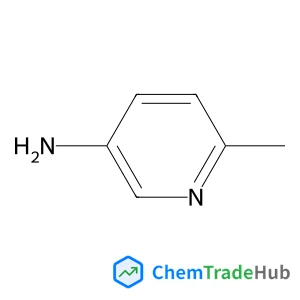
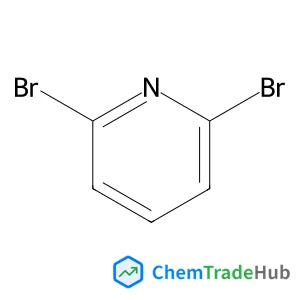

![[2',6'-bis(propan-2-yloxy)-[1,1'-biphenyl]-3-yl]dicyclohexylphosphane structure](https://cnstatic.chemtradehub.com/structs/787/787618-22-8-dda2.webp "[2',6'-bis(propan-2-yloxy)-[1,1'-biphenyl]-3-yl]dicyclohexylphosphane structure")
[2',6'-bis(propan-2-yloxy)-[1,1'-biphenyl]-3-yl]dicyclohexylphosphane
CAS号:
787618-22-8
分子式:
C30H43O2P
![Bis[(1,2,3,4,5-eta)-1-(diphenylphosphino)cyclopentadienyl]iron structure](https://cnstatic.chemtradehub.com/structs/121/12150-46-8-ecd2.webp "Bis[(1,2,3,4,5-eta)-1-(diphenylphosphino)cyclopentadienyl]iron structure")
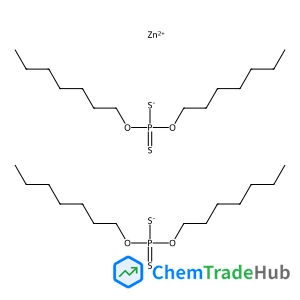
推荐供应商





免责声明
本页面提供的学术期刊信息仅供参考和研究使用。我们与任何期刊出版商均无关联,也不处理投稿事宜。如有投稿相关咨询,请直接联系相关期刊出版商。
如发现页面信息有误,请发送邮件至 support@chemtradehub.com 联系我们。我们将及时核实并处理您的问题。