





![Sodium 4-{2-[(E)-2-{(3E)-3-{(2E)-2-[3,3-dimethyl-1-(4-sulfonatobutyl)-1,3-dihydro-2H-indol-2-ylidene]ethylidene}-2-[(4-isothiocyanatophenyl)sulfanyl]-1-cyclohexen-1-yl}vinyl]-3,3-dimethyl-3H-indolium-
1-yl}-1-butanesulfonate structure](https://cnstatic.chemtradehub.com/structs/152/152111-91-6-e5df.webp "Sodium 4-{2-[(E)-2-{(3E)-3-{(2E)-2-[3,3-dimethyl-1-(4-sulfonatobutyl)-1,3-dihydro-2H-indol-2-ylidene]ethylidene}-2-[(4-isothiocyanatophenyl)sulfanyl]-1-cyclohexen-1-yl}vinyl]-3,3-dimethyl-3H-indolium-
1-yl}-1-butanesulfonate structure")
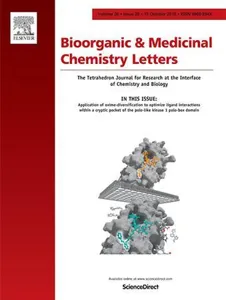
Bioorganic & Medicinal Chemistry Letters
基本信息
期刊简写:
BIOORG MED CHEM LETT
影响因子:
2.5
ISSN:
0960-894X
研究领域:
MEDICAL
h-index:
133
自引率:
4%
年发文量:
288
SCI收录来源:
Science Citation Index Expanded
期刊官网:
https://www.sciencedirect.com/journal/bioorganic-and-medicinal-chemistry-letters
期刊介绍:
BMCL (Bioorganic & Medicinal Chemistry Letters) publishes research communications of outstanding significance and timeliness on topics at the interface of chemistry and biology, together with concise review articles and perspectives. BMCL publishes reports of experimental results in medicinal chemistry, chemical biology and drug discovery and design, emphasizing new and emerging advances and concepts in these fields. The aim of BMCL is to promote a better understanding at the molecular level of life processes, and living organisms, as well as the interaction of these with chemical agents. BMCL continues to be a major forum for the first publication of new chemical entities prior to them entering clinical trials. BMCL welcomes papers on: the medicinal chemistry and associated biology (including target identification and validation) of established or new disease targets The reporting of the discovery, design or optimization of potent new compounds or biological agents the analysis and discussion of structure-activity relationships and pharmacological issues relevant to drug design and action using in vitro and in vivo models, including the use of computational techniques when closely linked to experimental data the reporting of "first-in-class" new therapeutic compounds the chemical biology or bioorganic/bioinorganic chemistry that significantly advances knowledge of a biological mechanism methodological advances that are chemistry-based and which significantly impact on medicine or biology the preparation and examination of biotherapeutics for the treatment of pathophysiological disease states the development of materials for specific therapeutic targeting Manuscripts on phytochemistry, theoretical molecular dynamics and exclusively computational papers are out of scope. All manuscripts will be rigorously peer-reviewed by independent experts following an initial assessment by the Editors. Please note that BMCL is not suitable for straightforward reports of incremental advances. Above all the presentation of a rational basis and a sound underlying hypothesis for the work is of particular importance, whatever its exact field.
CiteScore
CiteScore
5.7
SJR
0.508
SNIP
0.631
| 学科 | 排名 | 百分位 |
|---|---|---|
Pharmacology, Toxicology and PharmaceuticsPharmaceutical Science |
61 / 183 | 66% |
期刊统计
Semimonthly
期/年
Time to first decision: 5days
Review time: 56days
Submission to acceptance: 60days
Acceptance to publication: 4days
审稿周期
$3770
论文处理费
投稿信息
投稿网址:
https://www.editorialmanager.com/BMCL相关文献
Metal-ion-assisted hydrolysis of dipeptides involving a serine residue in a neutral aqueous solution
Morio Yashiro, Yoko Sonobe, Ai Yamamura, Tohru Takarada, Makoto Komiyama, Yuki Fujii
2003-01-23
Paper
DOI: 10.1039/B209565C
Experimental and quantum-mechanical investigation of the vinylsilane-iminium ion cyclization
Lisbet Kværnø, Per-Ola Norrby, David Tanner
2003-02-24
Paper
DOI: 10.1039/B212333A
Fluorescence visualization of cucurbit[8]uril-triggered dynamic host–guest assemblies
Xiaodong Zhang, Tao Sun, Xin-Long Ni
2020-06-09
Research Article
DOI: 10.1039/D0QO00649A
Total synthesis of kopsine, fruticosine, and structurally related polycyclic caged Kopsia indole alkaloids
Bo Qin, Yuan Wang, Xin Wang, Yanxing Jia
2020-11-17
Review Article
DOI: 10.1039/D0QO01165G
α-C–H difluoroalkylation of alkyl sulfoxides via intermolecular Pummerer reaction
Xin Huang, Weizhao Zhao, Yuchen Liang, Minghui Wang, Yaling Zhan, Yage Zhang, Lichun Kong, Zhi-Xiang Wang, Bo Peng
2021-01-22
Research Article
DOI: 10.1039/D0QO01513J
Recent advances in cascade radical cyclization of radical acceptors for the synthesis of carbo- and heterocycles
Jianhua Liao, Xiao Yang, Lu Ouyang, Yinlong Lai, Jiuzhong Huang, Renshi Luo
2021-01-08
Review Article
DOI: 10.1039/D0QO01453B
Rhodium-catalyzed annulation of pyrrole substituted BODIPYs with alkynes to access π-extended polycyclic heteroaromatic molecules and NIR absorption
Bixiang Zhou, Mengjie Guo, Qingjie Pan, Mingbo Zhou, Ling Xu, Yutao Rao, Kaisheng Wang, Bangshao Yin, Jie Zhou, Jianxin Song
2021-02-02
Research Article
DOI: 10.1039/D0QO01625J
Enzymatic optical resolution viaacylation–hydrolysis on a solid support
Rein V. Ulijn, Nicola Bisek, Sabine L. Flitsch
2003-01-28
Communication
DOI: 10.1039/B211887D
您可能还喜欢
化合物问答
4-[4-三氟甲基苯基]恶唑(CAS号:1126636-40-5)通常如何合成?
4-[4-三氟甲基苯基]恶唑通常通过将4-三氟甲基苯酚与异硫氰酸苯酯在有机溶剂中进行酯化反应合成。该反应可在无水条件下,使用适当的催化剂,如四丁基氢氧化铵,以提...
1126636-40-54-(4-(Trifluoromethy...
59729-32-71-[3-(Dimethylamino)...
化合物问答
RockPhos Pd G3(CAS号:2009020-38-4)通常如何合成?
RockPhos Pd G3 通常通过钯催化偶联反应合成,使用配体 (2'-Amino-2-biphenylyl)(methanesulfonato-kappa...
2009020-38-4(2'-Amino-2-biphenyl...
化合物问答
1-哌啶甲酰胺(CAS号:2158-03-4)的市场或研究趋势如何?
1-哌啶甲酰胺作为有机合成中的重要中间体,其市场需求主要受医药、农药、染料等行业推动。近年来,随着新药开发和绿色化学的发展,该化合物的研究趋势集中在开发更高效、...
2158-03-41-Piperidinecarboxam...
化合物问答
2-(二苯基膦基)乙胺(CAS号:4848-43-5)适用哪些法规指南?
2-(二苯基膦基)乙胺适用于多种法规指南,包括但不限于《全球化学品统一分类和标签制度》(GHS),欧盟《化学品注册、评估、授权和限制》法规(REACH),以及美...
4848-43-52-(Diphenylphosphino...
化合物问答
如何储存间苯二甲酸二烯丙酯(CAS号:1087-21-4)?
间苯二甲酸二烯丙酯应储存在阴凉、干燥、通风良好的地方,远离火源和热源。储存容器应密封,避免光照和高温。储存温度应控制在25℃以下,相对湿度应低于80%。避免与其...
1087-21-4Diallyl isophthalate
化合物问答
什么是间甲苯异硫代异氰酸酯(CAS号:621-30-7)?
间甲苯异硫代异氰酸酯是一种有机化合物,分子式为C7H7NO2S,具有刺激性气味。它是一种重要的有机合成中间体,在合成其他化合物时广泛应用。
621-30-71-Isothiocyanato-3-m...
化合物问答
在合成中是否有N-Boc-D-苯丙氨醇(CAS号:106454-69-7)的替代品?
在合成中,可以考虑使用N-Cbz-D-苯丙氨醇或N-Fmoc-D-苯丙氨醇作为替代品。这些化合物同样具有保护氨基的功能,且在合成过程中表现出良好的反应性能。
106454-69-72-Methyl-2-propanyl ...
化合物问答
3-羟甲基-2-氧异丙基吡啶(CAS号:954240-50-7)的主要用途是什么?
3-羟甲基-2-氧异丙基吡啶主要用于有机合成领域,可以作为合成其他药物、农药或精细化学品的中间体。此外,它还可能在实验室研究中作为特定反应的前体或溶剂。
954240-50-7(2-Isopropoxy-3-pyri...
化合物问答
6-氨基-9-甲基嘌呤(CAS号:700-00-5)应用于哪些行业?
6-氨基-9-甲基嘌呤目前主要应用于医药行业,作为某些药物的中间体。此外,它还可能用于聚合物、传感器和半导体的某些领域,作为功能性单体或掺杂剂。
700-00-59-Methyl-9H-purin-6-...
推荐化合物
![1,4-Dioxaspiro[4.5]dec-7-en-8-ylboronic acid structure](https://cnstatic.chemtradehub.com/structs/850/850567-90-7-6fff.webp "1,4-Dioxaspiro[4.5]dec-7-en-8-ylboronic acid structure")
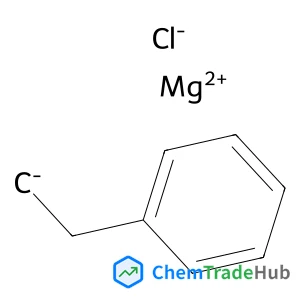
![(4-{[(2-Methyl-2-propanyl)oxy]methyl}phenyl)boronic acid structure](https://cnstatic.chemtradehub.com/structs/102/1024017-53-5-41c0.webp "(4-{[(2-Methyl-2-propanyl)oxy]methyl}phenyl)boronic acid structure")
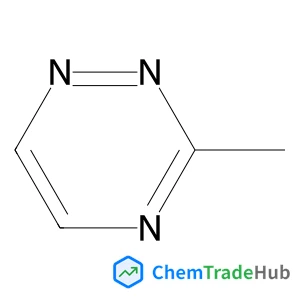
![4-{(2R,3R)-3-Methyl-5-[(1E)-1-propen-1-yl]-2,3-dihydro-1-benzofuran-2-yl}phenol structure](https://cnstatic.chemtradehub.com/structs/221/221666-27-9-20a9.webp "4-{(2R,3R)-3-Methyl-5-[(1E)-1-propen-1-yl]-2,3-dihydro-1-benzofuran-2-yl}phenol structure")
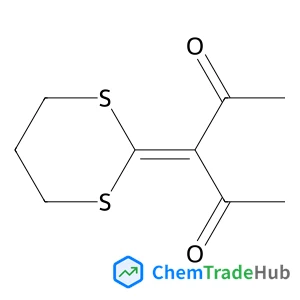
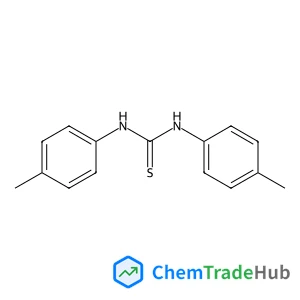
推荐供应商








免责声明
本页面提供的学术期刊信息仅供参考和研究使用。我们与任何期刊出版商均无关联,也不处理投稿事宜。如有投稿相关咨询,请直接联系相关期刊出版商。
如发现页面信息有误,请发送邮件至 support@chemtradehub.com 联系我们。我们将及时核实并处理您的问题。